


Hello book club!
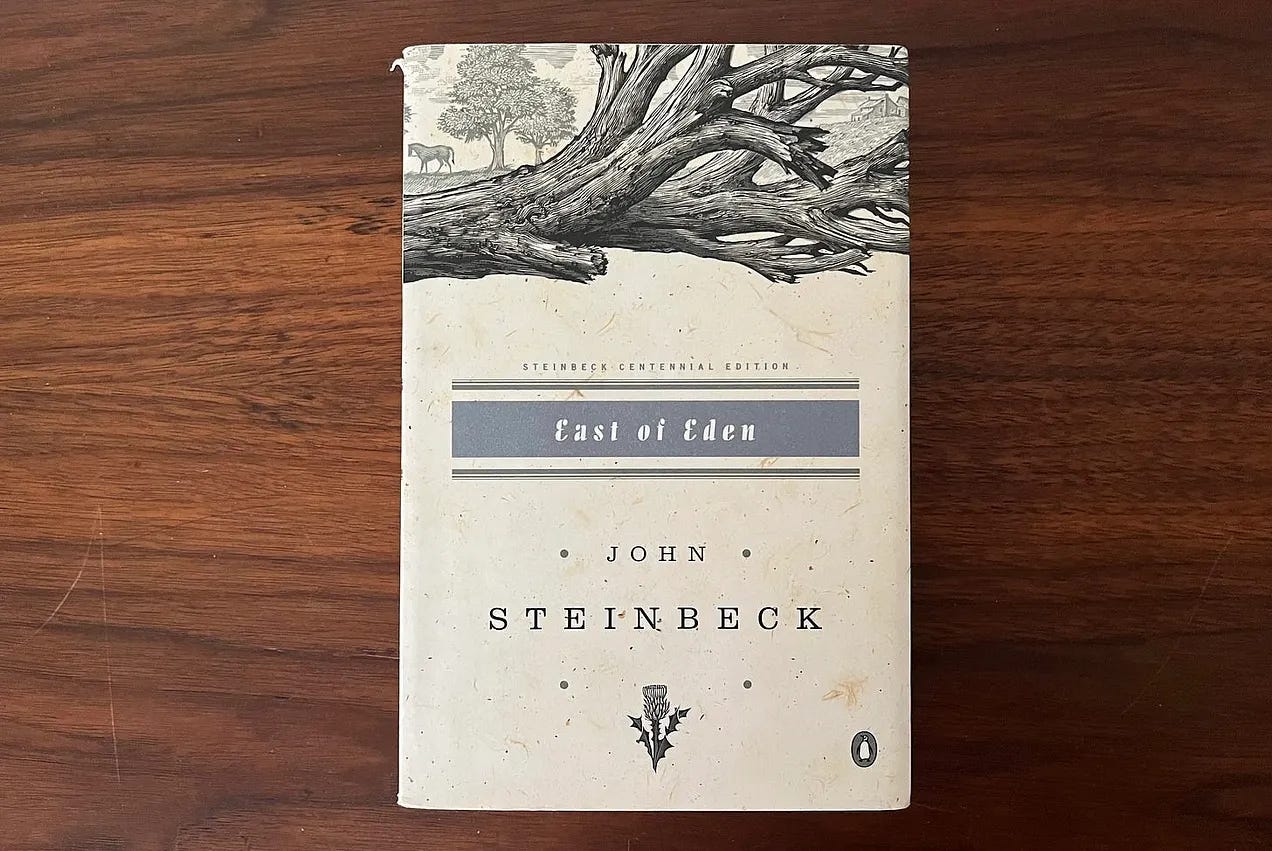
Our read-along of East of Eden is coming to an end. We meet TOMORROW, September 9, at noon Eastern Time.
If you missed the previous sessions, don’t worry. You can catch up on the recordings here.
The discussion will be live-streamed via Substack at this link.
For those joining our discussion group directly (available to all paid members), the Zoom link is at the bottom of this email…
This final third of the novel focuses on Adam’s children — Aron and Cal.
We follow them through their youth, adolescence, and early adulthood, and notice that both boys mimic the character of Adam and Charles. Specifically, Aron is beloved, gentle, and an idealist (like Adam), while Cal is described as dark, brooding, and jealous (like Charles).
Yet these boys do have quirks of their own. Aron does have a capacity for violence that Adam lacks, and Cal has a heightened conscience/sense of guilt over his violent nature that Charles lacks. In other words, though both boys seem to inherit character traits that would continue the cycle of violence between Adam and Charles, Steinbeck suggests they also have agency to choose their own destiny.
Thus Aron is not obviously going to become a saint, nor is Cal doomed to become the next Cain.
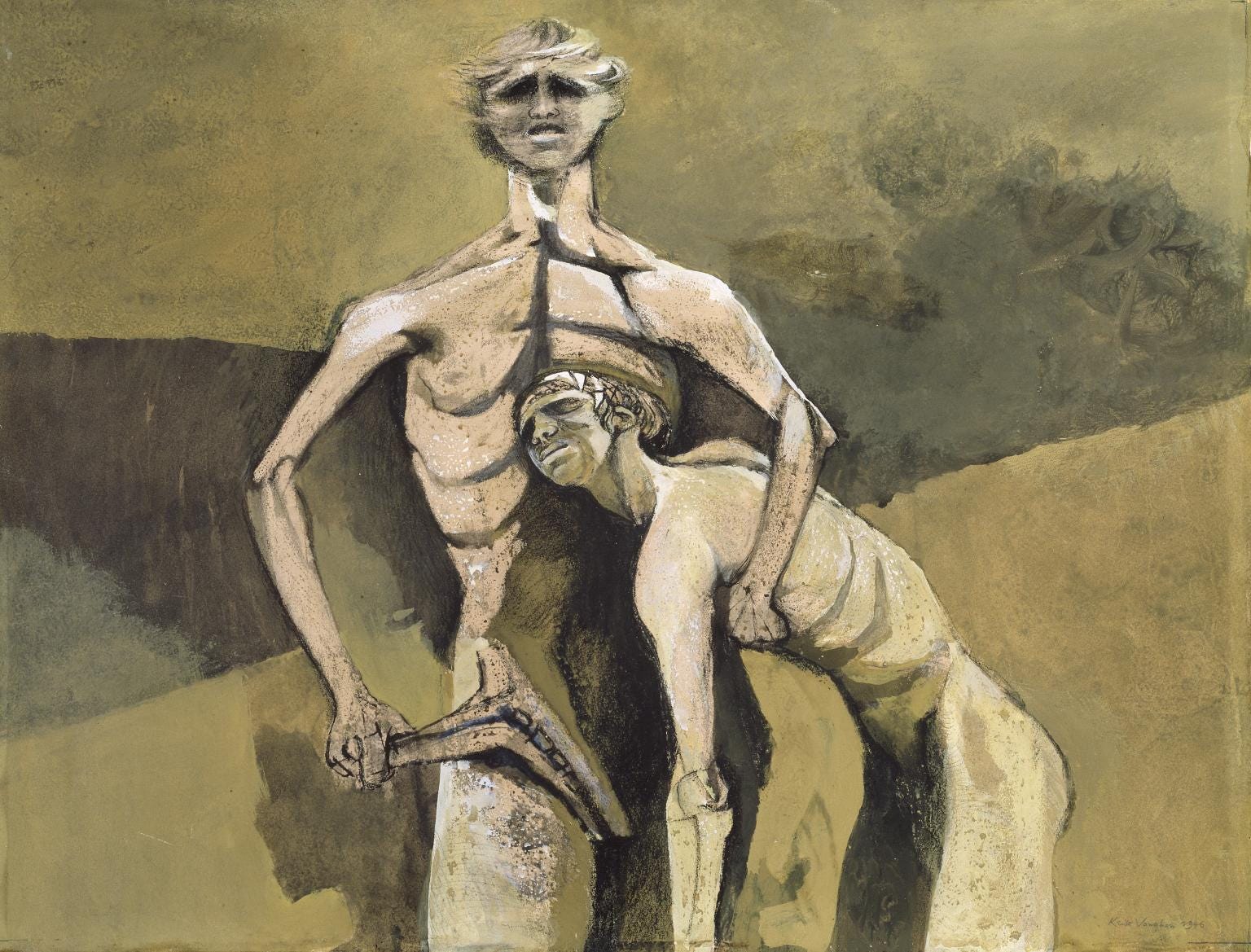
Unfortunately, however, Adam shows favoritism, just like his own father Cyrus did. Specifically, Adam loves Aron more than Cal, and is more proud of Aron’s success in university than Cal’s success in business. Although Cal tries to donate his profits to his father — hoping to restore the family’s reputation — Adam rejects the money as the gift reminds him too much of profiteering off the war. Thus, we get “Cain’s rejected sacrifice,” all over again.
Cal, crushed by his father’s rejection, seeks vengeance on Aron. Specifically he takes Aron to visit their mother, knowing the revelation that she is alive, and evil, and that Adam had lied to Aron all his life (he told her she was dead) would destroy Aron.
Indeed, Aron’s meeting with his mother is too much for him to handle. He runs away, enlists in the army, and seeks to destroy himself at war. The last action in the novel — which we’ll discuss on the call — leaves the fate of all our characters up in the air:
What will become of Aron? Did Cal doom himself to become Cain? How will Cathy handle meeting both of her sons? Can Adam the father find redemption in light of his own failings as a father?
Additionally, below are some questions to consider:
Consider again Adam’s rejection of Cal’s money, which once again repeats the “Cain and Abel,” cycle of violence. If timshel means Cal is free to choose good, why does the novel keep putting him in situations where his best effort is guaranteed to fail? Is Steinbeck undermining his own thesis from the last section?
Cal’s revenge — showing Aron their mother — is framed as his “sinful,” Cain moment. But is it actually a “sin,” to show Aron the Truth? Does Adam stand to blame for lying? Or should Aron be responsible for his own moral agency? How do we balance this with Cal’s vicious intentions?
Cathy has been the biggest challenge to Steinbeck’s thesis of timshel. He asserts all human beings have free will, yet Cathy continuously puts this idea under tension as she is monstrous to the end. And yet, do you notice any changes in Cathy during the final act of the story? Is there a semblance of a guilty conscience in her? Or does she remain adamant, monstrous, and unchanged to the end?
Share your thoughts below or in the subscriber chat, along with any questions you have — we’ll incorporate them into the discussion!