

Before C.S. Lewis was the English-speaking world’s foremost Christian apologist, he was an avowed atheist. For well over a decade, the Oxford professor argued against the Christian faith. To him, Christianity was just one mythology among many, a belief system the modern world had outgrown.
But then, one late September evening, everything changed. What began as a friendly dinner party with his friends J.R.R. Tolkien and Hugo Dyson quickly turned into a deep discussion on myth, metaphor, and the truth behind Christian claims. After dinner, the men carried their conversation onto the streets of Oxford, talking nearly till dawn the next day.
When the sun rose the following morning, Lewis discovered that his doubts about Christianity had given way to belief. Indeed, his conversation with Tolkien had changed not just his own life, but the course of history. From that moment on, Lewis became a fierce advocate of the Christian faith, writing thousands of words in its defense and inspiring millions of people throughout the world.
So what did Tolkien share with Lewis that changed his mind so dramatically?
Today, we travel back in time to discover what transpired that fateful evening, and how Tolkien turned Lewis’s understanding of the word “myth” completely on its head — because what if a myth could be true?
Don’t forget to join our book club…
We are currently reading Dostoevsky’s The Idiot — the next discussion is on October 21.
We are 100% independent, funded only by our incredible community. Become a paid member and get:
New, full-length essays like this one every week
Access to our biweekly book club and reading guides
Access to our incredible community of readers
The entire archive (200+ articles, essays, and podcasts)
A Love of Mythology
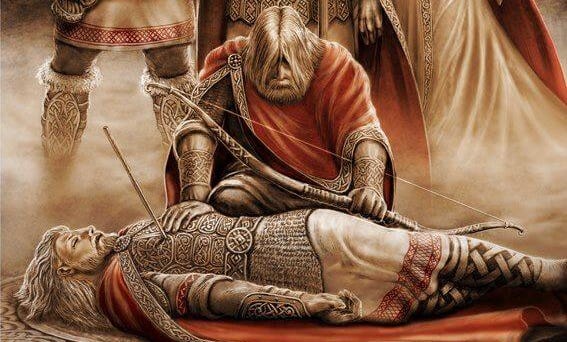
Before diving in, we have to first take a look at Lewis’s longstanding interest in mythology. From his early high school days, Lewis was obsessed with Norse, Greek, and other pagan stories. In particular, he gravitated towards myths about death and resurrection, citing the stories of “dying and reviving god[s]” like Balder, Adonis, and Bacchus as especially drawing his attention.
At the same time, he recognized the similarities between many of these myths and Christianity. The mother of Apollonius of Tyana, for example, was told she would give birth to a God-become-man, Proteus. The Norse god Balder is killed through Loki’s treachery and returns to rule the world after Ragnarök, the Norse version of the apocalypse. The similarities with the Annunciation and the second coming of Christ here are easy enough to spot.
Lewis found these myths incredibly moving when they showed up in other religions — but not when he encountered them in Christianity. Writing to his friend Arthur Greeves after his conversion, Lewis explained:
…if I met the idea of sacrifice in a Pagan story I didn’t mind it at all: again, that if I met the idea of a god sacrificing himself to himself I liked it very much and was mysteriously moved by it: again that the idea of the dying and reviving god similarly moved me provided I met it anywhere except the Gospels. The reason was that in Pagan stories I was prepared to feel the myth as profound and suggestive of meanings beyond my grasp even tho’ I could not say in cold prose ‘what it meant’.
-C.S. Lewis to Arthur Greeves, 18 Oct 1931. Emphasis added.
In the end, it would be these myths that opened the door to Lewis’s eventual embrace of Christianity. But had it not been for his friend Tolkien, things could have gone quite differently…
The Addison’s Walk
Lewis and Tolkien first met at an Oxford faculty meeting in the spring of 1926. Initially, Lewis was wary of Tolkien: the latter was not just a Catholic, but a philologist, and Lewis was prejudiced against both. However, he quickly saw Tolkien wouldn’t cause much harm, and wrote in his diary after their meeting:
No harm in him: only needs a smack or so.
Over time, the two connected over a shared love of mythology and literature. They got together regularly at a pub named the Eagle and Child (which they christened “the Bird and Baby”), and these meetings eventually turned into reunions of the group they called the Inklings. Members shared and critiqued each other’s writing, and their feedback later played a major role in shaping works like The Chronicles of Narnia and The Lord of the Rings.
But while Lewis and Tolkien shared many of the same interests, they often differed in their conclusions about them. Lewis, for example, believed that the account of Christ’s death and resurrection was just one myth among many — another iteration of the dying and reviving god — while Tolkien took it literally. Furthermore, Lewis couldn’t understand “in what sense the life and death of Christ ‘saved’ or ‘opened salvation to’ the world.”
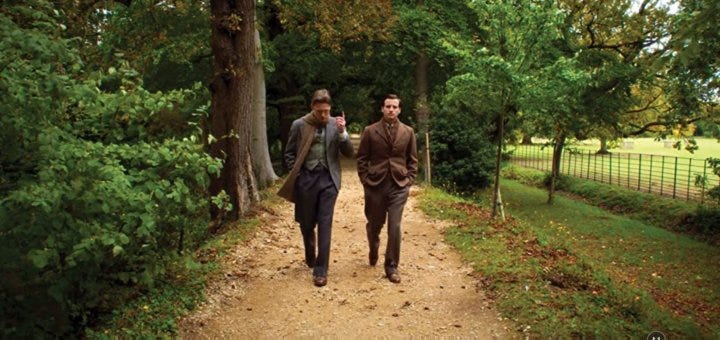
He couldn’t understand it, that is, until the evening of Saturday, 19 September 1931, when Lewis invited Tolkien and fellow professor Hugo Dyson over to dinner. As their discussion heated up, the three men spilled onto the streets of Oxford, and soon ended up on the historic footpath known as Addison’s Walk.

It was here that history changed, and after a long conversation unfolded on the topic of myth, Lewis became a Christian. But what exactly did Dyson and Tolkien tell him that changed his mind?
It all comes down to the idea that Christ’s resurrection is indeed, as Tolkien conceded, a myth — but not a human one…