



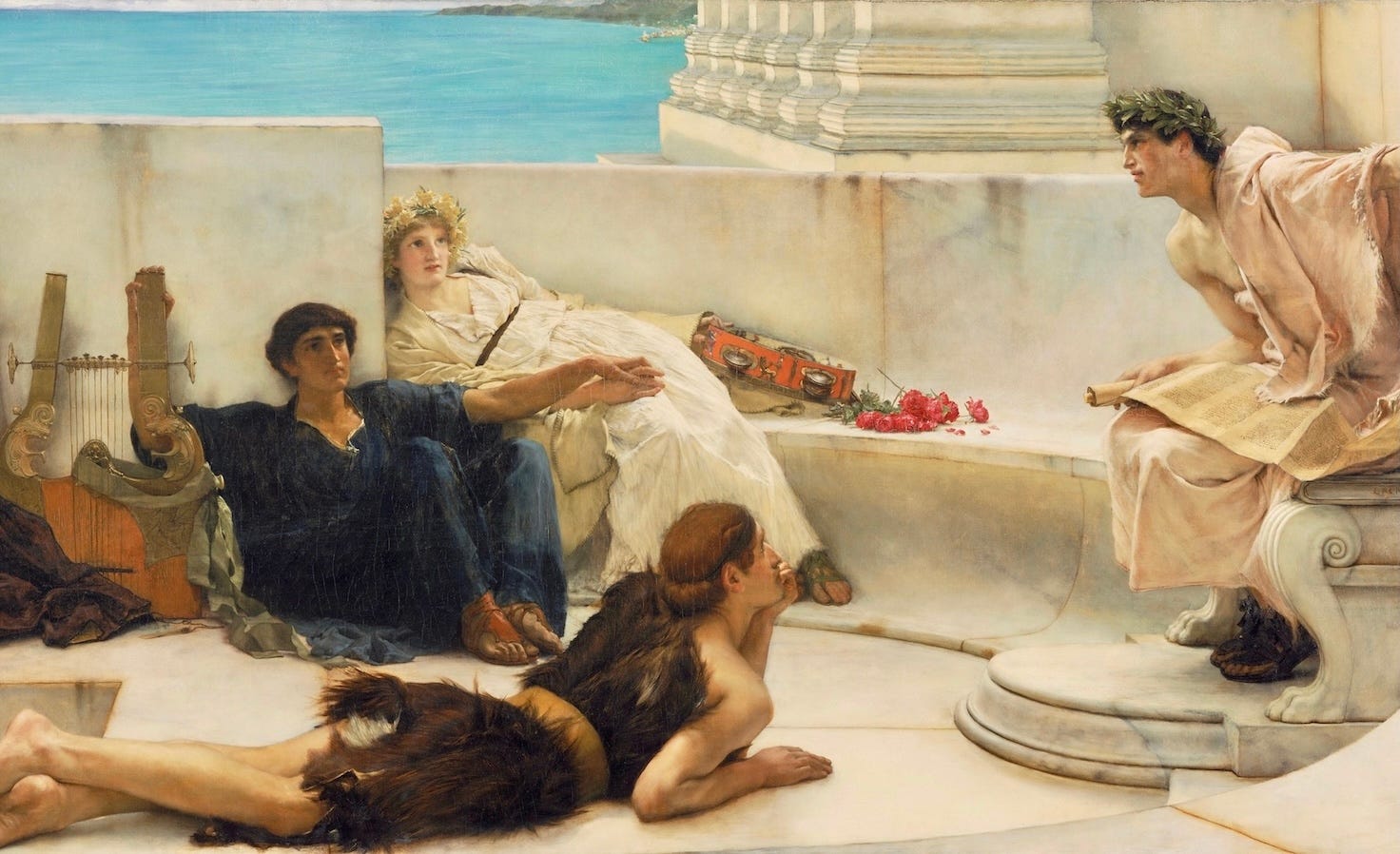
This past week, I had the pleasure of hosting my second annual “Leisure: The Basis of Culture” retreat here in Italy. Inspired by the philosopher Josef Pieper’s seminal work of the same name, the retreat was designed to help participants engage with all aspects of leisure: what it is, what it is not, and how it can serve as an antidote to a work-obsessed world.
Most people, of course, think that “leisure” is simply time to escape from the grind, blow off steam and veg out with Netflix. A slightly less common, though equally grave conception, is that it’s nothing more than time to recharge and prepare for even more work. In light of both of these misunderstandings, Pieper offers a profound and refreshing vision.
Leisure, Pieper argues, isn’t just a break from labor. Rather, it is the soul’s gateway to reality, a necessary condition for human flourishing, and the foundation of all culture.
In my own life, I’ve found Pieper’s thoughts on the topics of leisure to be incredibly compelling, which is what prompted me to begin hosting this retreat in the first place. Today, fresh on the heels of our latest outing in northern Italy, I want to share some of the main ideas we covered over the course of the week.
Having now spent well over 100 hours discussing Pieper’s work with others, I’m only all too aware that any attempt to condense his thoughts into a single article is a fool’s errand. What follows, then, is not a complete overview, but a brief crash course on the idea of leisure as the basis of culture.
It is a radical idea, yet one that just might transform your understanding of a life well lived, and what it means to be human…
Reminder: this is a teaser of our paid subscriber essays.
If you’d like to support our work, please consider a subscription. You’ll get:
New, full-length articles 2x per week
The entire archive of content (200+ articles, essays, and podcasts)
What Leisure Is Not
Our retreat began not by asking what leisure is, but what is not. As our group included people working in disparate fields such as finance, tech, and architecture, you may think their answers differed quite a bit. But across the board, people shared similar struggles in attempting to get at the heart of leisure’s true definition.

This would have been no surprise to Pieper, who in 1952 was already arguing that modern society had forgotten the true meaning of leisure. He instead claimed that it had embraced a “culture of total work” where the value of a person is tied directly to their productivity:
The original meaning of the concept of ‘leisure’ has practically been forgotten in today’s leisure-less culture of ‘total work’: in order to win our way to a real understanding of leisure, we must confront the contradiction that rises from our overemphasis on that world of work.
-Pieper, Leisure: The Basis of Culture
Work, of course, is not a bad thing. Pieper himself affirms its dignity and necessity. What he points out, however, is our overemphasis on the world of work leads to a totalizing mindset that sees all of life through the lens of utility. Little wonder, then, that most people see “leisure” as either entirely opposed to work, or as a tool to increase future productivity.
But, of course, both those ideas are mistaken. True leisure, as we discovered on our retreat, is something far more profound…
Stepping Beyond the “Merely Human”
In a purely utilitarian culture, everything bends towards utility. Education becomes job training, and art becomes entertainment. There’s little room left for the beautiful and transcendent, the things that make life worth living.
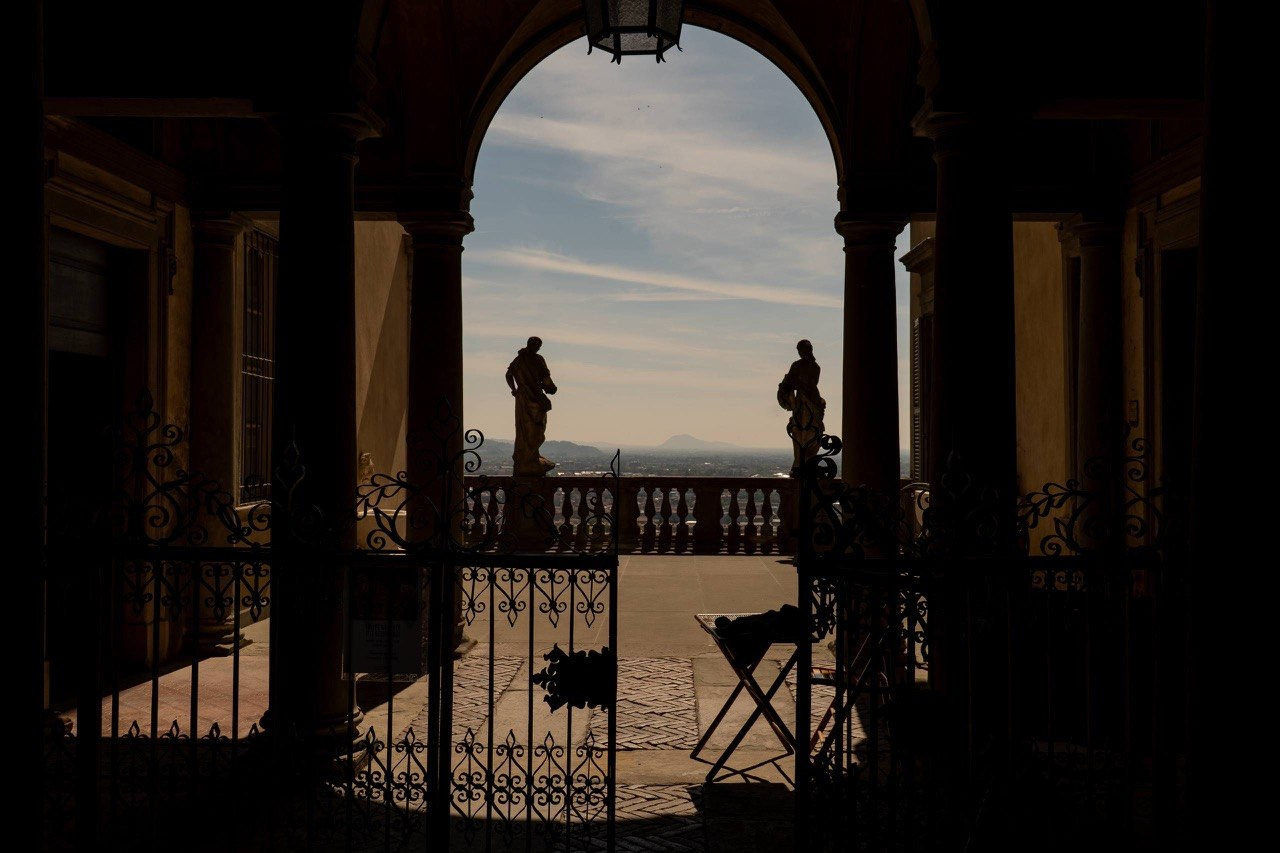
This is precisely why Pieper identifies leisure as “the basis of culture”, because it is where “the truly human is rescued and preserved precisely because the area of the ‘merely human’ is left behind.” In other words, it is what helps you step beyond the metaphorical 2D plane of ordinary existence and access a hidden, yet abundantly meaningful, “third dimension” of life.
On Day 1 of our retreat, we discussed the role of contemplation in Pieper’s understanding of leisure. Pieper agrees with Ernst Jünger’s statement that seeing is an “act of aggression”, and challenges readers to instead let life wash over them. Once you stop trying to grasp each moment and quantify its meaning, you’re able to contemplate, and this is the first step in entering into leisure.
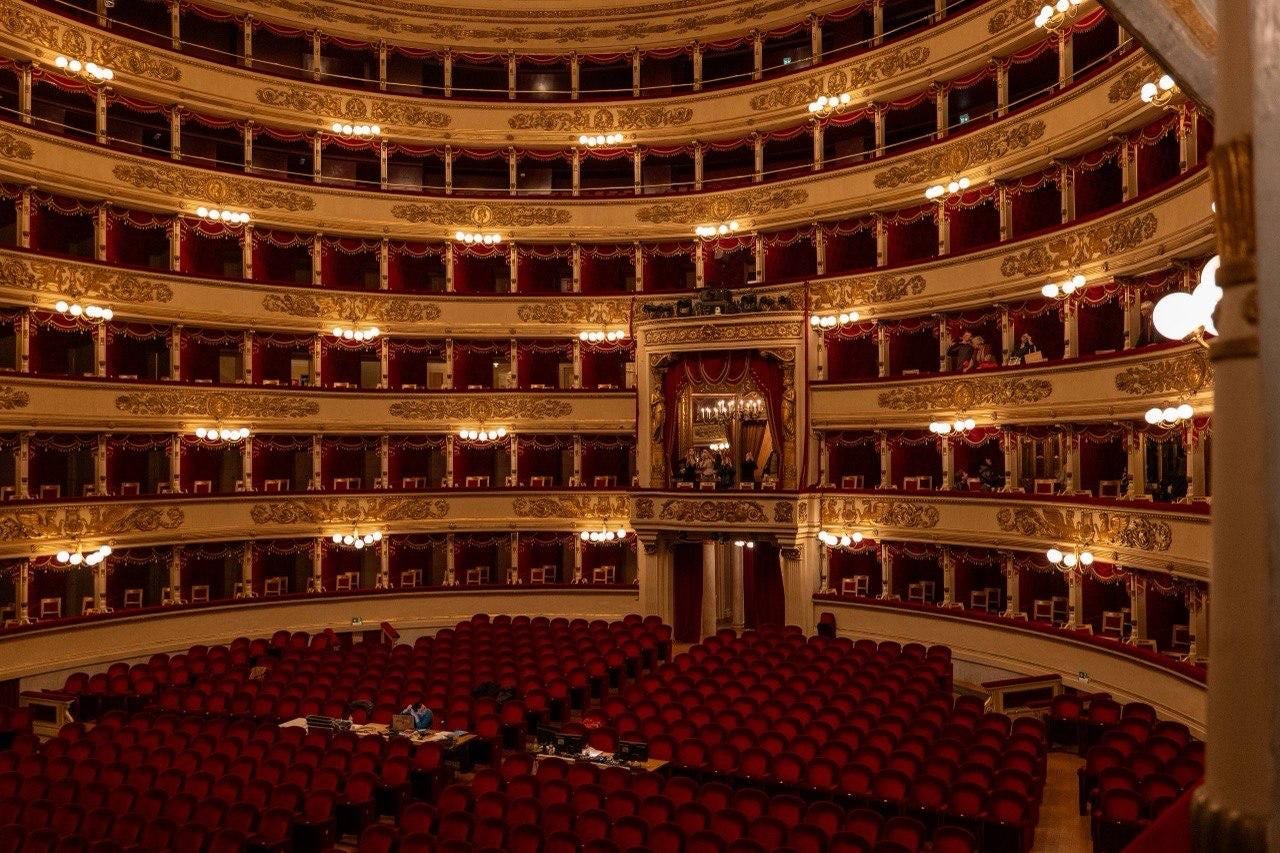
On Day 2, therefore, we traveled to Milan for some immersive experiences: the Duomo, the Galleria, the Scala opera house, and the world-famous ossuary chapel. In each of these settings, participants were encouraged to simply let the surroundings wash over them. The result, as Pieper could have well predicted, revealed one of the biggest paradoxes about the nature of leisure.
That paradox is that even though these things — a trip to the opera, the Milan duomo, exquisitely ornate public buildings — are the most “unrealistic” ones in your everyday life (in the sense that you rarely encounter them), they nonetheless point you to what is most real. They point to beauty, inspire to virtue, and provide an opportunity to glimpse the transcendent. They open up the metaphorical “third dimension”, going beyond the merely human in order to preserve the truly human.
This is why leisure, in Pieper’s understanding, isn’t simply time spent away from work. It is rather an attitude of openness, a willingness to encounter the world not as a resource to be used but as a mystery to be contemplated.
The question, then, is how do you practice it?
Pieper’s answer is much more extensive than simply making more free time for yourself. What he reveals is that leisure is ultimately rooted in cultus, and that no merely secular justification for it can hold. Without a sacred dimension, leisure collapses back into utility.
True leisure, according to Pieper, is the not the absence of activity but the presence of depth — and practicing this is how you recover what it is to be truly human…