


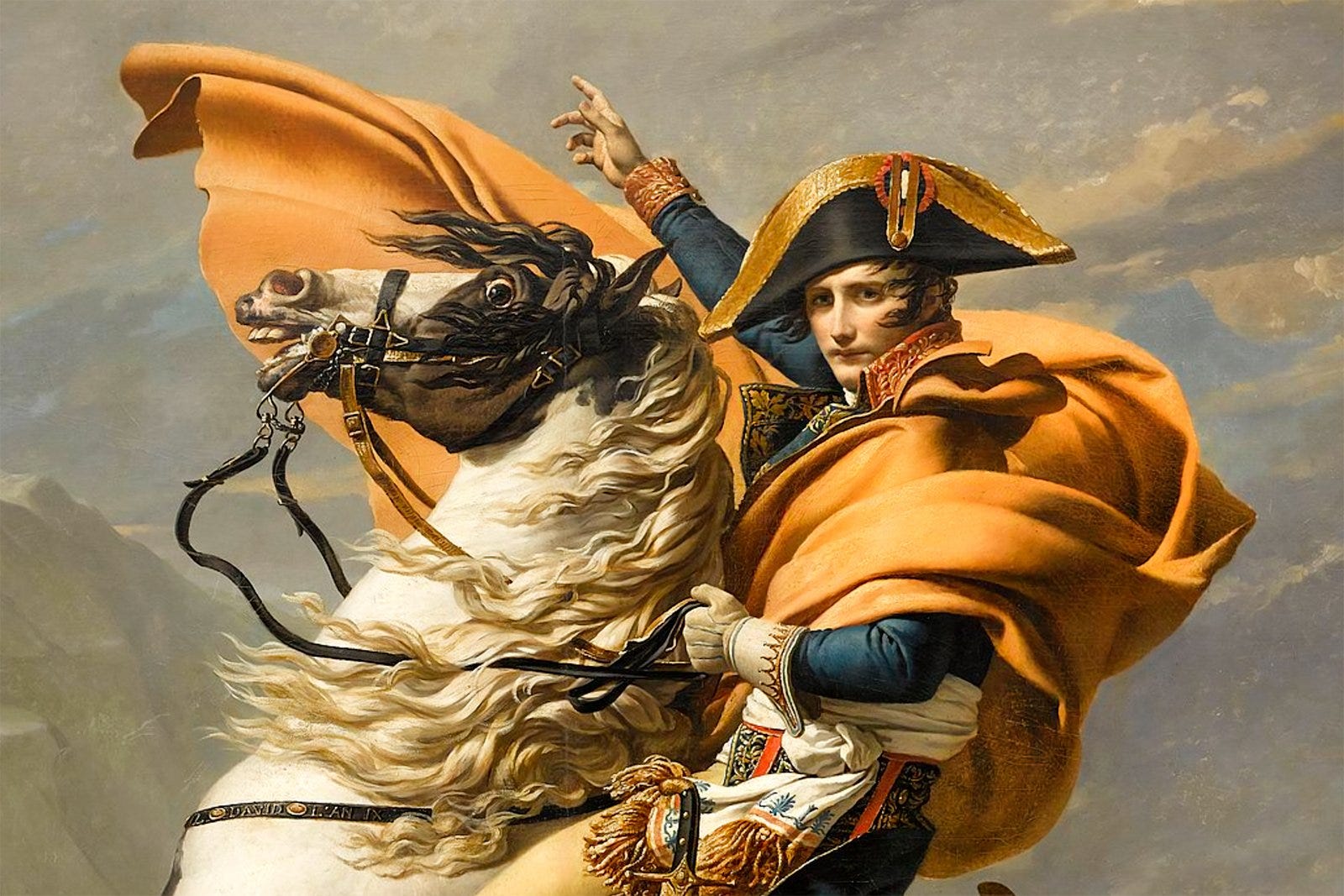
What does it take to change the world?
To be forever remembered as a “great man of history”?
Most people think great change requires heroic feats of action, but in reality, it’s far simpler. In fact, almost all of history’s most impactful figures share one specific trait in common, no matter the feats they achieved or the era in which they lived.
To demonstrate this, today we take up the example of two of history’s most archetypal “great men” — Napoleon Bonaparte and Julius Caesar. Regardless of what you think of these two men and their actions, they are helpful examples to study because between them they reveal the one trait that is perhaps most indicative of future success.
No matter the era in which you live, this quality is an absolute prerequisite for being the change you want to see in the world. If you truly want to make a difference and achieve success, you can’t afford to ignore this…
Our next book club read has just started…
We’re reading A Tale of Two Cities by Dickens! The next discussion is on November 18 — see the reading schedule here.
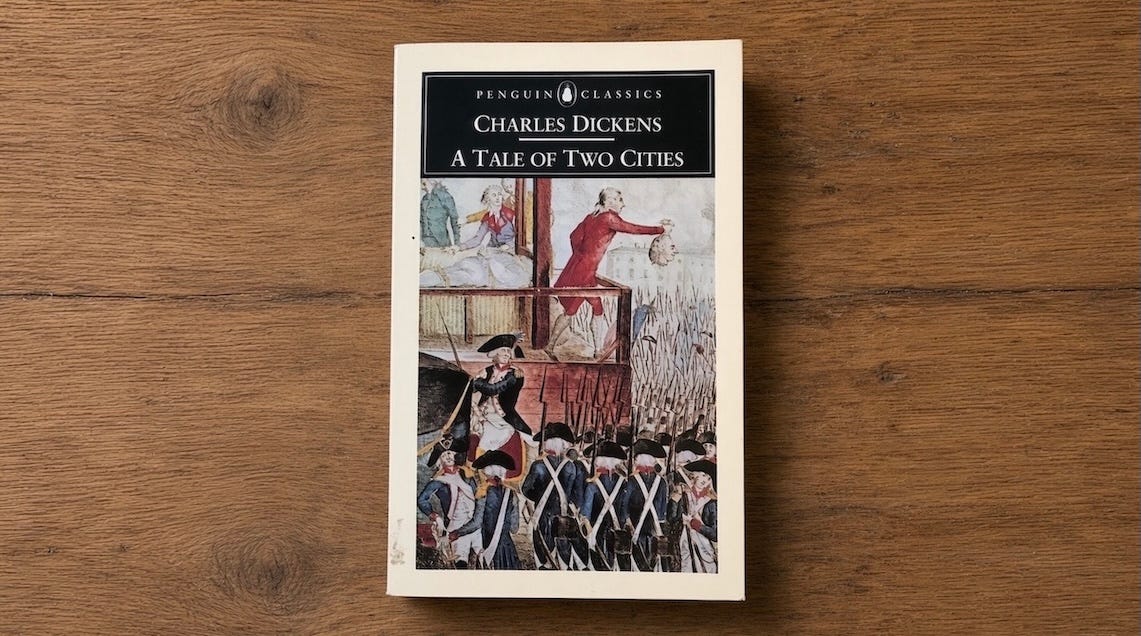
Read this great novel as a member of our book club, and you’ll get:
New, full-length essays and articles every week
Biweekly book club discussions and reading guides
Access to our incredible community of readers
The entire archive (200+ articles, essays, and podcasts)
Setting the Record Straight
Regardless of what one thinks of them, there is no disputing Napoleon and Caesar’s impact on history — the fact they are each referred to by just one name is proof enough of that! These two men lived roughly 1,800 years apart, but despite this, they shared quite a lot in common.
On the surface, they built their careers leading men into battle across many of the same rivers, mountains, and plains of Europe, a detail which is often lost on people. Additionally, the basic principles of warfare had hardly changed from Caesar’s time to that of Napoleon. Supply chains, troop movements, flanking maneuvers and more remained the same — so much so that Napoleon even wrote his Commentaries on the Wars of Julius Caesar, in which he compared his and Caesar’s exploits across remarkably similar European battlefields.
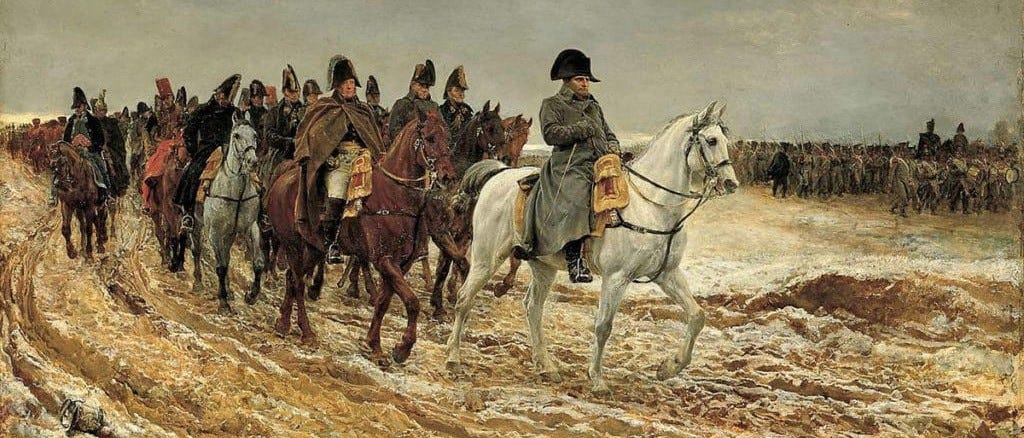
Today, both men share the fate of being unfairly cast as tyrants by their critics. In the case of Napoleon, this is largely due to the legacy of English wartime propaganda. In reality, however, European intellectuals from Goethe to Beethoven (and even many Brits) admired Napoleon and saw him as a liberal, modernizing force on society. Historian Andrew Roberts explains part of why this was the case:
The ideas that underpin our modern world—meritocracy, equality before the law, property rights, religious toleration, modern secular education, sound finances and so on—were championed, consolidated, codified and geographically extended by Napoleon. To them he added rational and efficient local administration, an end to rural banditry, the encouragement of science and the arts, the abolition of feudalism and the greatest codification of laws since the fall of the Roman Empire.
-Andrew Roberts, Napoleon: A Life
None of this, of course, is to say Napoleon was a perfect man; it is simply to push back against his reputation as a tyrant and warmonger (on that last note, he had twice as many wars declared on him as he declared on others). In the case of Julius Caesar, the historical context is more complicated, but his reputation as a tyrant is similarly unwarranted. Essentially, he was forced into an impossible position by the Roman Senate, and despite his willingness to negotiate, was put in a position of “eat or be eaten.” This is to say nothing, of course, of his famous clemency, a kindness that many historians believe resulted in his murder.
All of this bears clarifying, for it is hard to appreciate what made Caesar and Napoleon tick if you have an unfairly tainted view of them. Like all great men of history, they were complicated characters — but regardless of where you ultimately come down on them, the lesson they offer is no less insightful…
The Advantage of Being an Outsider
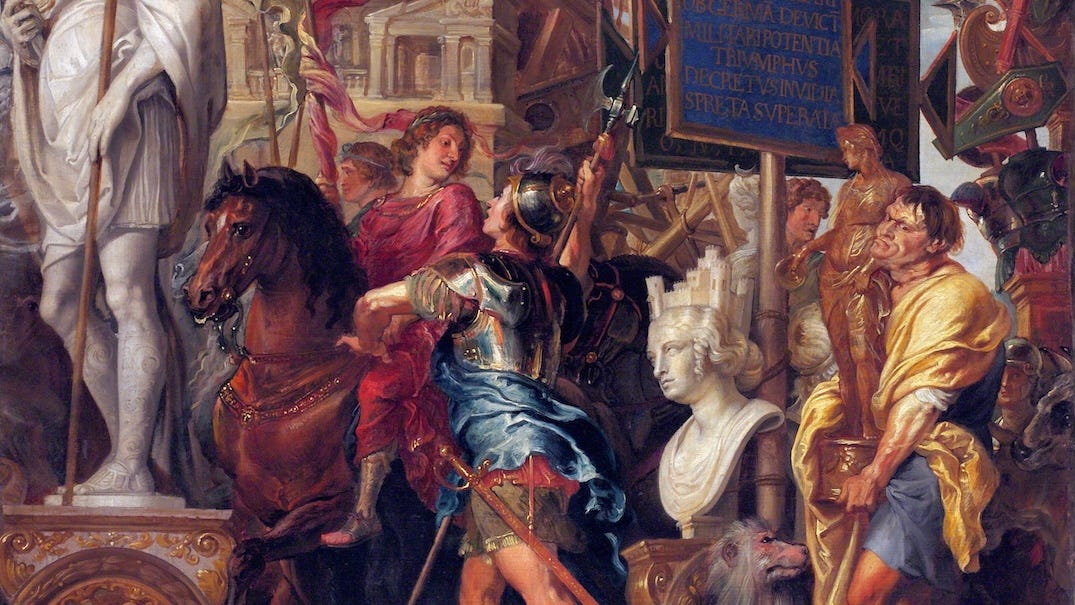
With some of the most basic misconceptions out of the way, we can now begin to look at more specifics of how these two men built their careers. In certain regards, the historical moments in which they found themselves bear many similarities to our own.
In the time of Caesar, the Roman Senate was famously corrupt, and dominated by a faction of conservative aristocrats called the optimates (trans: “the best ones”). Dysfunction in the Roman Republic was such that even the most basic reforms were impeded by politicking, and most (in)famously, the Senate refused to give promised land grants to veteran soldiers upon their return from Pompey’s enormously successful military campaigns in the East.
In opposition to this faction, Caesar allied himself with the populares, or the “supporters of the people”. He positioned himself as an anti-establishment figure, and curried favor with soldiers and common Romans alike. In this way, he was not unlike Napoleon, who after building his reputation as a general, positioned himself in opposition to the then-governing (and exorbitantly corrupt) French Directory.
On the subject of Napoleon, one of the most remarkable facts about his coup d’état is not so much what happened in its aftermath, but what didn’t happen. On the streets of Paris, where heads had rolled in the thousands just five years earlier, not a drop of blood was shed. French government bonds, which had been trading at just 13% of face value, skyrocketed to over 60% the day after the coup. Napoleon’s ascension to power, it appeared, wasn’t merely tolerated, but welcomed.
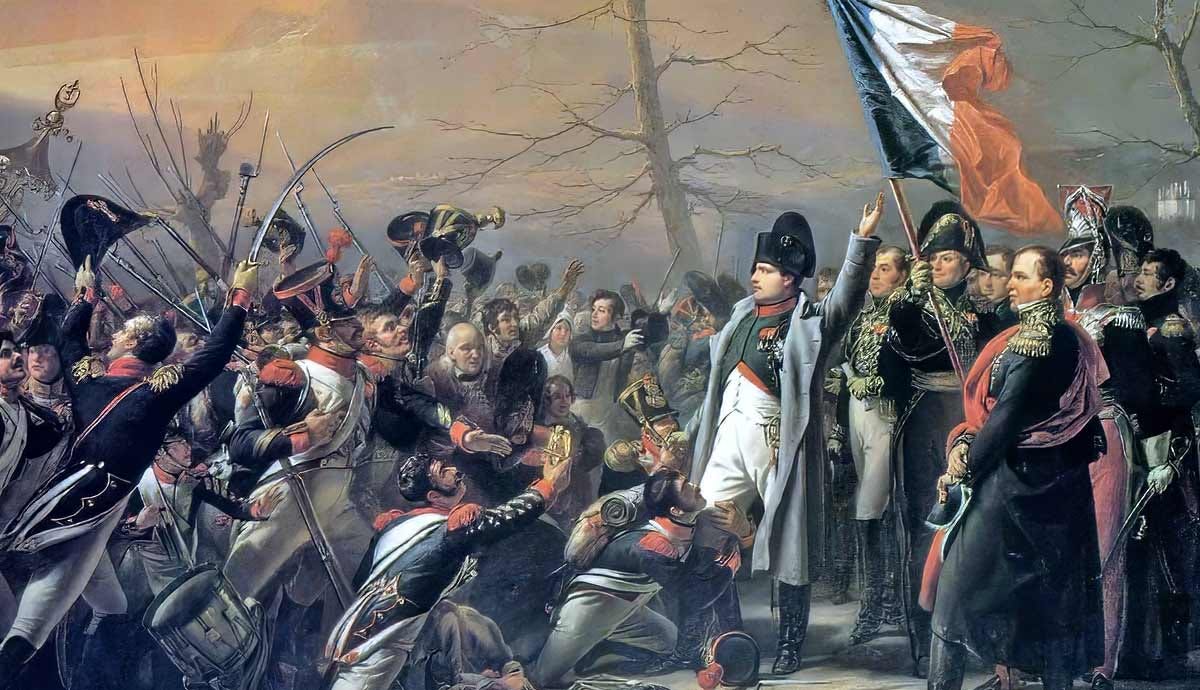
One episode in particular highlights Napoleon’s popularity better than any other. Following his return to France from exile on Elba, Napoleon began moving towards Paris, and a dispatch of troops was sent to halt and arrest him. But when they finally confronted him on the road and drew their guns, Napoleon dared them to shoot, saying:
“If there is among you a soldier who wishes to kill his Emperor, here I am!”
Not only did the soldiers refuse to fire, but they defected to Napoleon’s side and joined him in his march towards Paris.
But while anecdotes like this are impressive, none of them actually explain why Napoleon and Caesar enjoyed such tremendous success. For starters, they didn’t win political power by simply being popular and anti-establishment.
Rather, their real success is rooted in something else entirely. It has to do with their upbringing and the way they were raised differently from both the commoners they led onto the battlefield, and the elites they defeated in the political arena. They essentially had a third way that allowed them to understand both sides of the class divide, and use that knowledge to their advantage.
But crucially, their third way can be (and has been) emulated by countless people in centuries since. Many of history’s most successful politicians, scientists, actors, and immigrants have all, whether knowingly or not, followed the example of Napoleon and Caesar.
So what was the secret to these men’s success, and how can you seek to replicate it in your own life? It all starts with making yourself just enough of an outsider…