

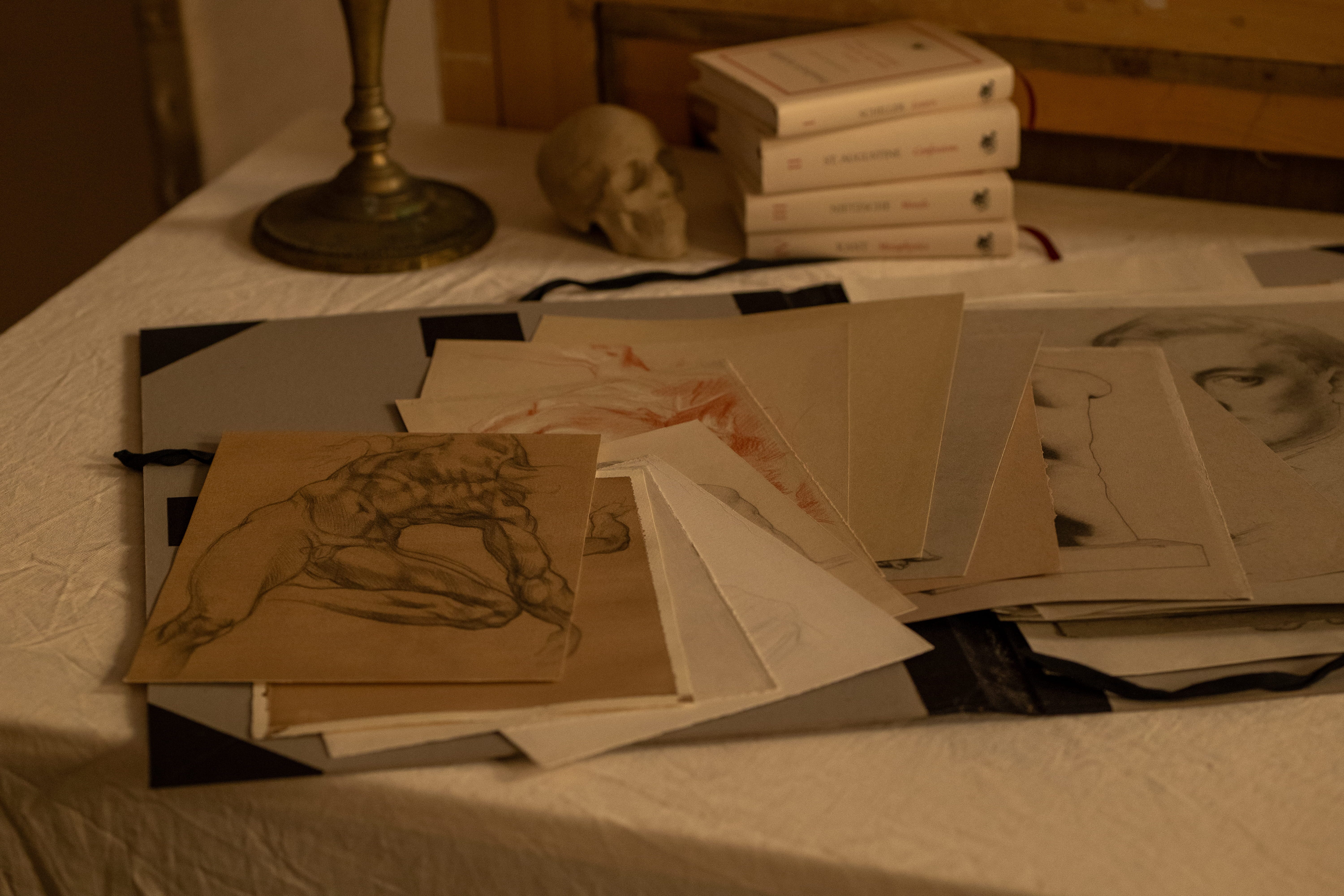
In a previous article, we asked the question “why is there no great art anymore?” We answered it by saying that actually, there is. You just need to know where to look.
This summer, we traveled to Tuscany to scout out this great art in person. Our team traveled to Florence and Siena to meet with some of today’s greatest painters and sculptors: modern-day Michelangelos in the making.
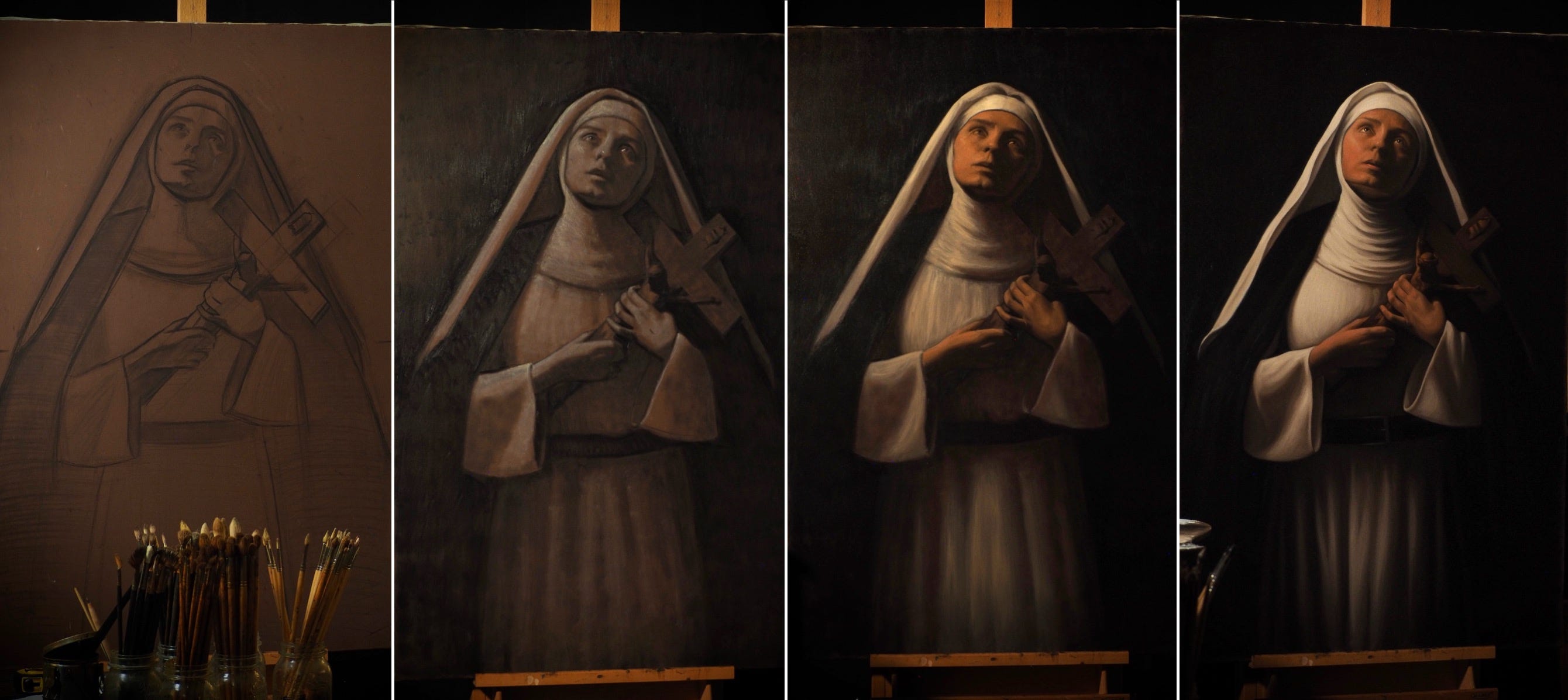
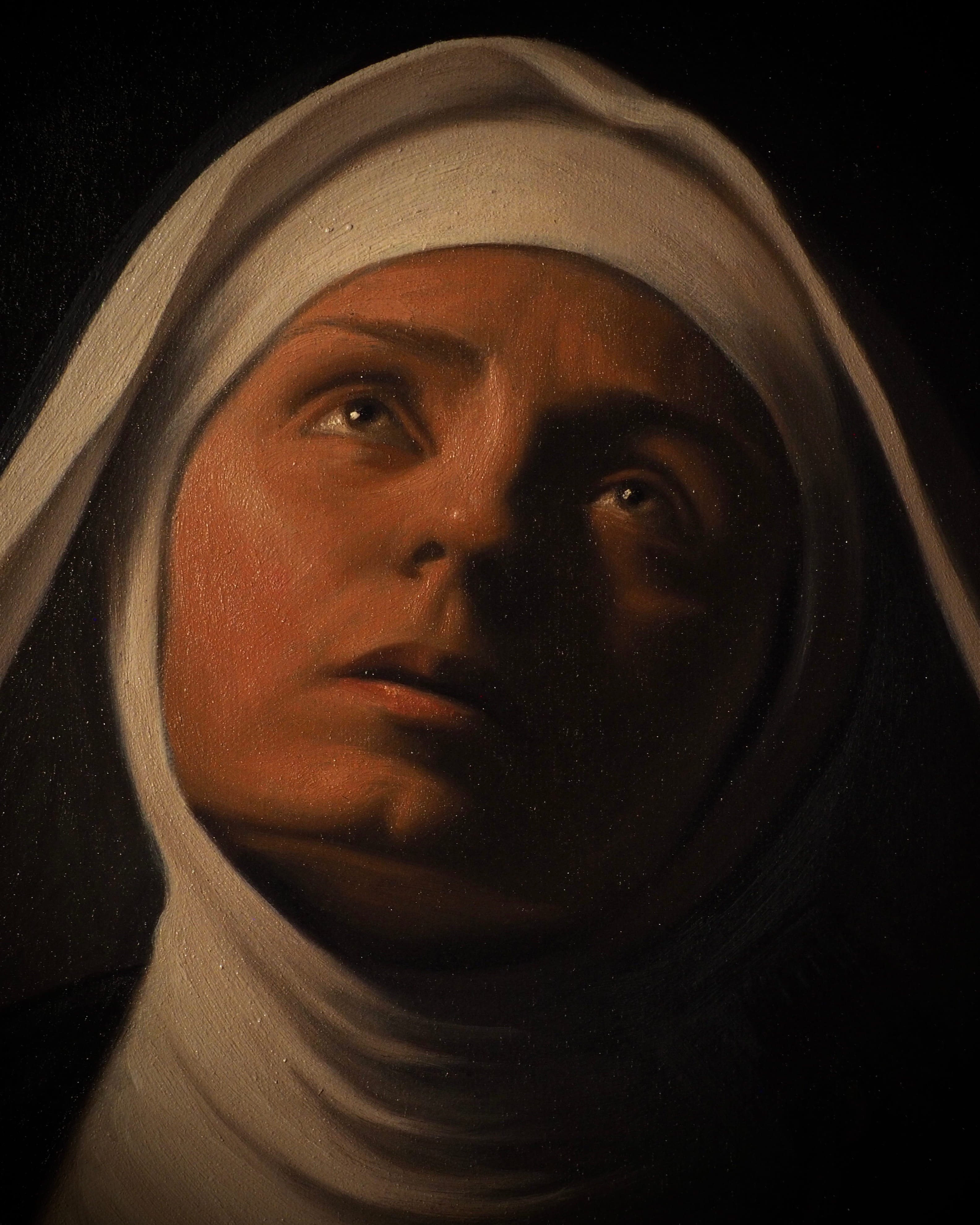
A major part of our trip was our visit to the studio of Carl-Nikolas von Tiedemann, a talented young artist from whom we commissioned a life-sized portrait of St. Catherine. So far, the progress he’s made has been pretty astounding — you can catch a glimpse of it in the sequence below:
In today’s article, we want to take you with us on our trip to the heart of Renaissance Italy. We’ll give you an inside look at Carl-Nikolas’s studio, show you the glorious medieval city of Siena, and provide an actionable response to the question “how do you find great art nowadays?”
The answer, as always, might surprise you…
Don’t forget to join our book club!
We are currently reading East of Eden by John Steinbeck.
The next discussion is on September 9, at noon ET. Watch back the previous discussions here if you missed them.
We are 100% independent, funded only by our incredible community. Become a paid member and get:
New, full-length articles and essays 2x per week
The entire archive (200+ articles, essays, and podcasts)
In-Person Amazement
Our trip to Florence began with a visit to the studio of Carl-Nikolas, who was hard at work on our commissioned portrait. His studio, just a five-minute walk from Florence’s imposing cathedral, is a playground for any artist (or like us, mere enthusiasts) to revel in. It was also a powerful reminder of how much more impactful paintings are when experienced in person.
This point is worth dwelling on for a moment, because it often risks being forgotten in our increasingly digitized world. No matter how incredible a photo might be, there is always something intangible it can’t fully capture. Carl-Nikolas’s painting of Christ Carrying the Cross, for example, might look nice in a picture. But when viewed in person, the gaze of Christ pierces you. It brought literal tears to the eye of at least one member of our team.
While this example pulls from the specific world of visual art, its lesson is no less universal: we are embodied creatures, and our experience of the world is most powerful when it, too, is embodied. This goes for everything from art to live music, meals, community, and more.
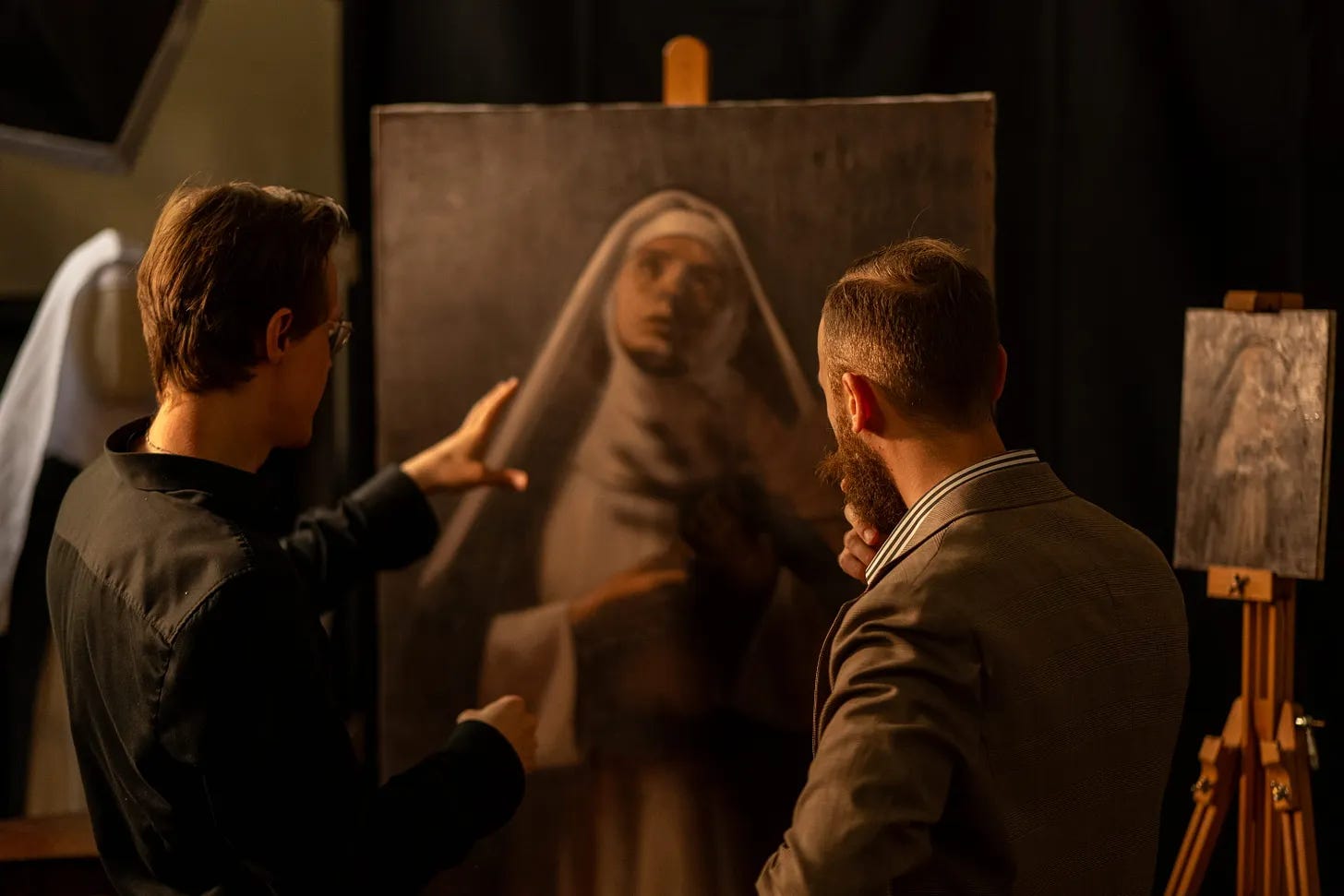
The in-person aspect of our visit paid dividends for our commission as well, as we were able to discuss with Carl-Nikolas details regarding the fall of drapery, the depth of shadows, and how to modify specific brush strokes to change the way light reflects in St. Catherine’s eyes. It was a fruitful visit, but it wouldn’t have been the same without…
A Trip to the Source
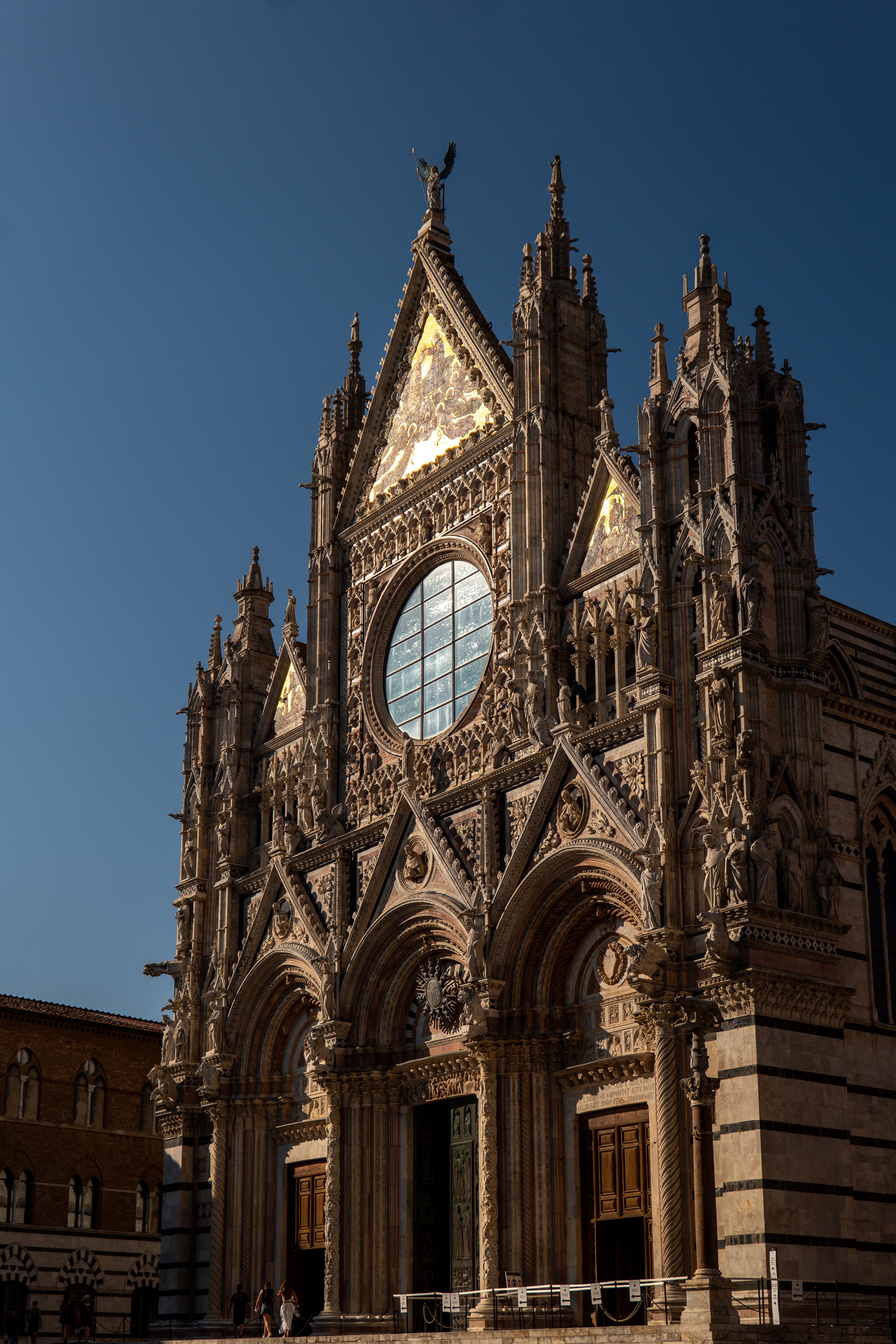
In St. Catherine’s day, Siena was a 2-3 days’ journey by foot from Florence. Today, it is a one-hour drive.
From the beginning of this project, we knew a trip to Siena would be a necessary step in making this painting all it can be. The reason why points to the first key to finding great art in the modern world: look for inspiration at the source.
In the context of this project, that source was literal: we toured St. Catherine’s home and saw the room she slept in, the well she drew water from, and the streets she played in as a child. For Carl-Nikolas especially, this allowed him to better understand the environment that shaped Catherine’s soul, thus equipping him to better convey her spirit through his painting.
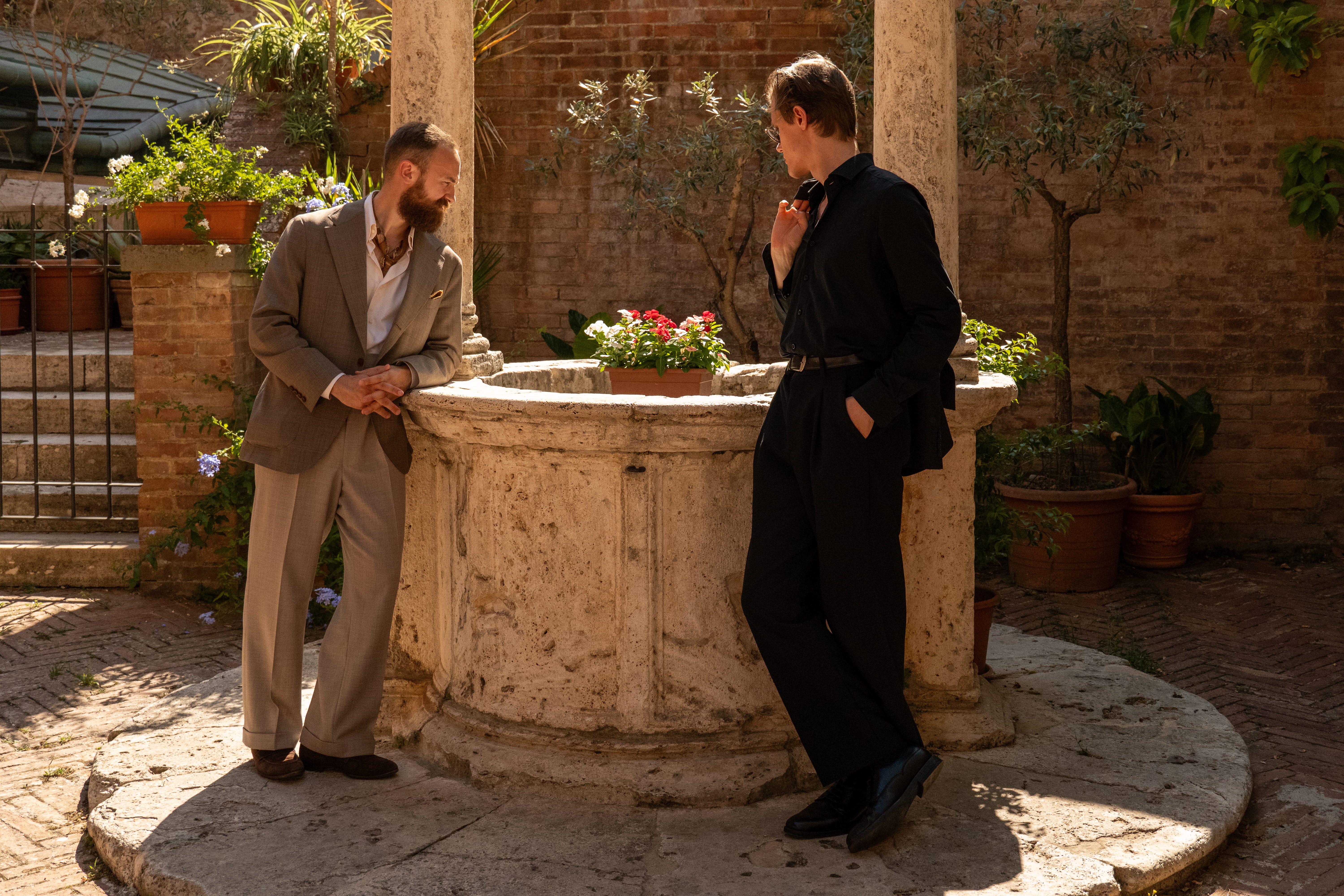
But the idea of going to the source doesn’t have to be applied this literally. When conceived of in more general terms, it becomes a useful litmus test to help you determine who is making great art these days.
Regardless of their style of art, today’s greatest artists all have one thing in common: they find their inspiration in the transcendentals. Themes from heroism to love, beauty, and bravery all transcend time and inspire the best in us. Artists who pull from these for inspiration can create art that is both forward-thinking and timeless, as they are able to push into the future while being rooted in tradition. Those who completely break with the past and reject the transcendentals, however, might create something compelling in the moment, but it won’t stand the test of time.
So if you’re on the hunt for great art, start by looking to those who find inspiration in the timeless and eternal. From there, the next thing you ought to do is…
Look Where No One’s Looking
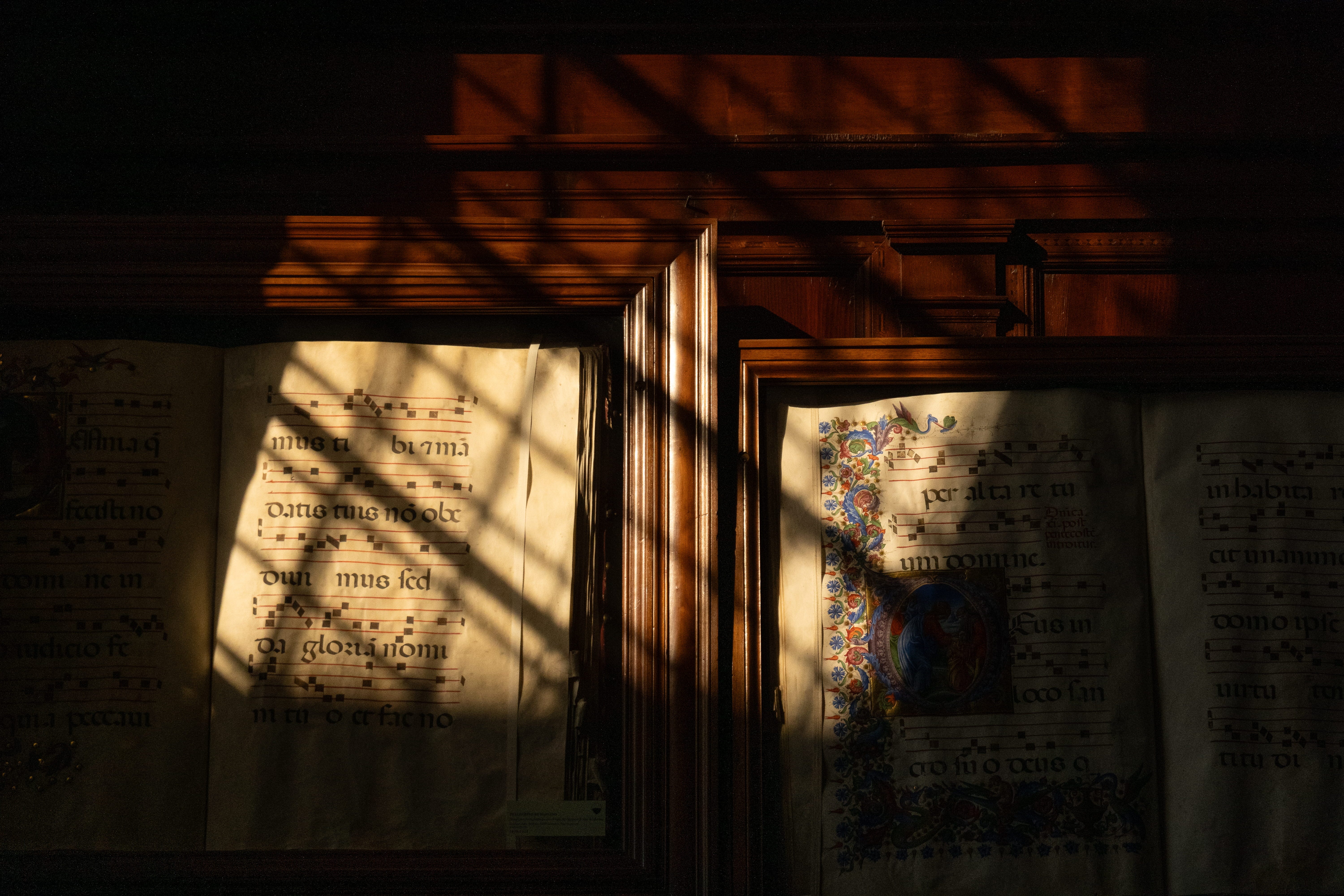
Just as you shouldn’t judge a book by its cover, you shouldn’t judge an artist by his follower count. The best artists are rarely those with the biggest online followings.
But while “look where no one’s looking” is easy advice to give in the abstract, it’s far more difficult to implement in practice. How are you supposed to find hidden talent if it’s hidden? The answer lies in something that is, rather fittingly, just as timeless as humanity itself: community networks.
The process goes something like this: take an artist you already know, and look into their network. This is easy if they’re online — simply look at who they follow, and who follows them. Scour these networks for other artists who are more or less in your sphere of interest and follow them, too. Then, rinse and repeat several times until you’re multiple layers deep.
Although this process might sound arduous, it presents a serious arbitrage opportunity for those who are willing to put in the work. You’ll be able to find hidden talents who can produce better art at a better price than the more established names. This is even more true when you’re able to leverage offline connections and personal relationships to find artists who aren’t online at all.
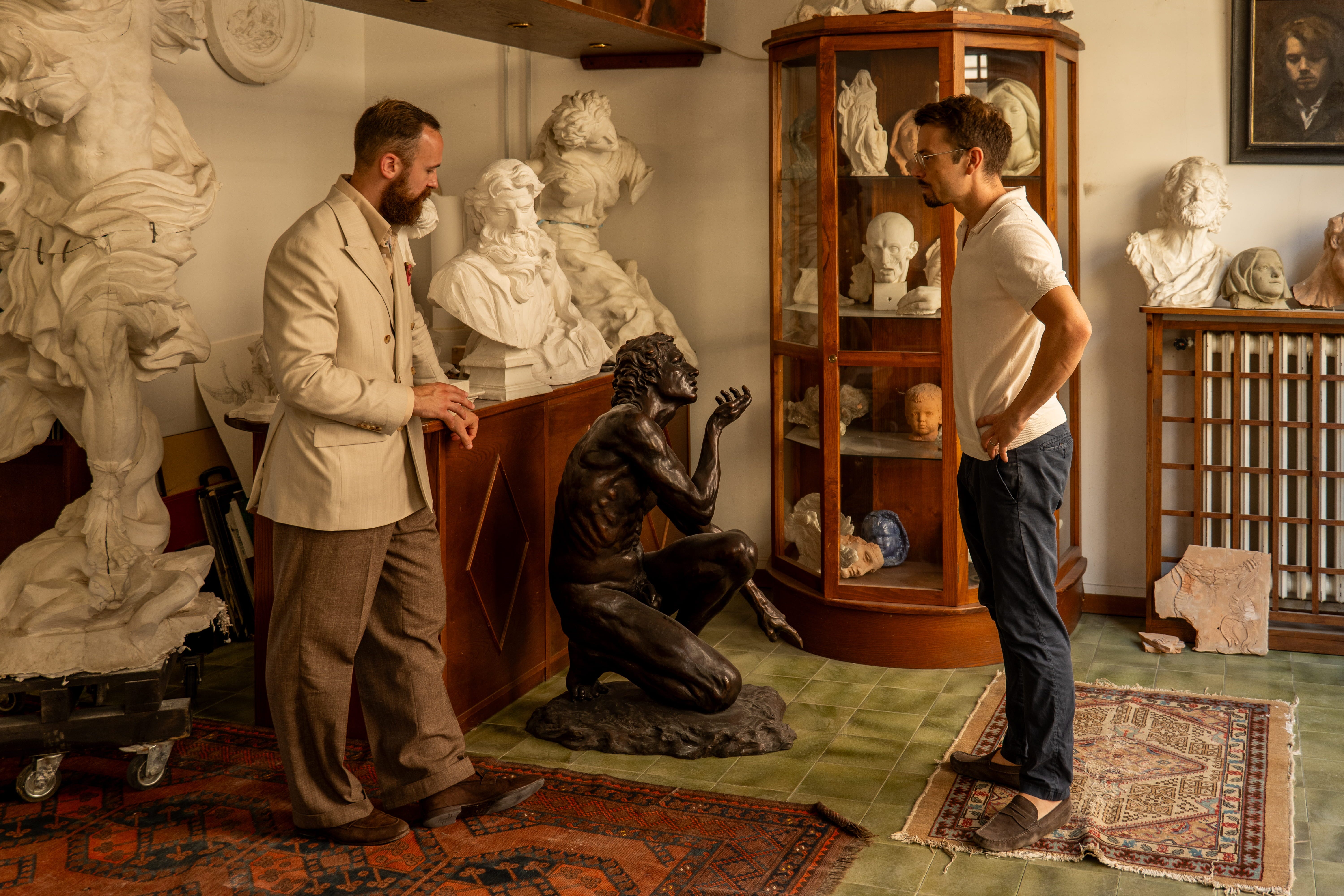
The latter is what our team has been doing over the past several years, slowly building up a portfolio of European-based artists ranging from Moscow to Madrid. But you can do it on your own local level, too. Start by inquiring at local churches or art schools. If you see a piece of art you like in a café, ask the owner who painted it. Every time you meet an artist, ask them for the names of three other people you should connect with. This is how we originally came across Carl-Nikolas, as well as other artists we’ll be revealing in future instalments.
If you’re interested to learn more about what we’re doing at The Culturist to support classical artists, or if you’d like to commission art yourself, feel free to reach out to us directly by replying to this email.
P.S. Keep an eye out for the next update on our commissioned portrait of St. Catherine — the biggest news is yet to come!
In the meantime, follow Carl-Nikolas’s new Substack publication The Painter’s Gaze. If you want a behind-the-scenes look at how to create something beautiful in a world hostile to the idea of beauty itself, his writing will provide welcome insight:

It was truly wonderful to welcome you to my Florentine studio and explore Siena together with you. Thank you all!
While I appreciate the idea of seeking hidden gems - artists unknown/less known - I wish the conversation for artists would shift from "...You’ll be able to find hidden talents who can produce better art AT A BETTER PRICE than the more established names." as the author has stated, and more to "you will be able to find hidden talents and be the one who discovers and appreciates their art without just safely following those with more established names. " All artists deserve to be compensated fairly. In fact, as one artists I know shared with his patrons when asked for a discount - "when you go to a fine dinner and enjoy the experience, what do you do? Tip of course - perhaps instead of asking for a discount, consider what the tip should be." Love this column, to be clear.