



You can teach yourself about anything you want these days. Want to read hieroglyphics? Open YouTube. Need a niche academic text about the role of the samurai in 13th-century Japan? Order it directly from the publisher. Want to watch all of Shakespeare’s plays performed on stage? Get a subscription to the Globe’s streaming service.
The real challenge to self-study, then, is not so much about how to procure information, but how to make it stick. In other words, the challenge is to actually learn. How do you make sure you retain the information you receive in a way that sticks with you and genuinely improves your life?
Over the past decade, I’ve tried to answer this question for myself in a variety of ways. My experimentation first led me to the science of learning, i.e., the scientifically proven ways of enhancing knowledge retention. Things like spaced repetition or studying after a workout fall into this category.
But at the end of the day, something about this approach didn’t feel right to me: it felt too industrial and unsustainable. Plus, it’s hard to imagine someone like Tolkien or Tolstoy ever “study-maxxing” their way to wisdom. No, there had to be another way.
What follows in today’s article is what I devised as a more “organic” approach to learning. It might not be scientifically optimized, but it’s an approach I know I can follow for the rest of my life. This is the guide I’ve followed to self-study everything from Shakespeare to opera to Roman history, epic poetry, the art of dress, and more.
These four principles have proven invaluable over the past decade of my life, helping me to learn and grow both personally and professionally. It is my hope that they will be of similar value to yourself, and help you on your quest to learn anything.
This is a teaser of our paid subscriber essays.
If you’d like to support our work, please consider a paid subscription. You’ll get:
New, full-length articles 2x per week
The entire archive (200+ articles, essays, and podcasts)
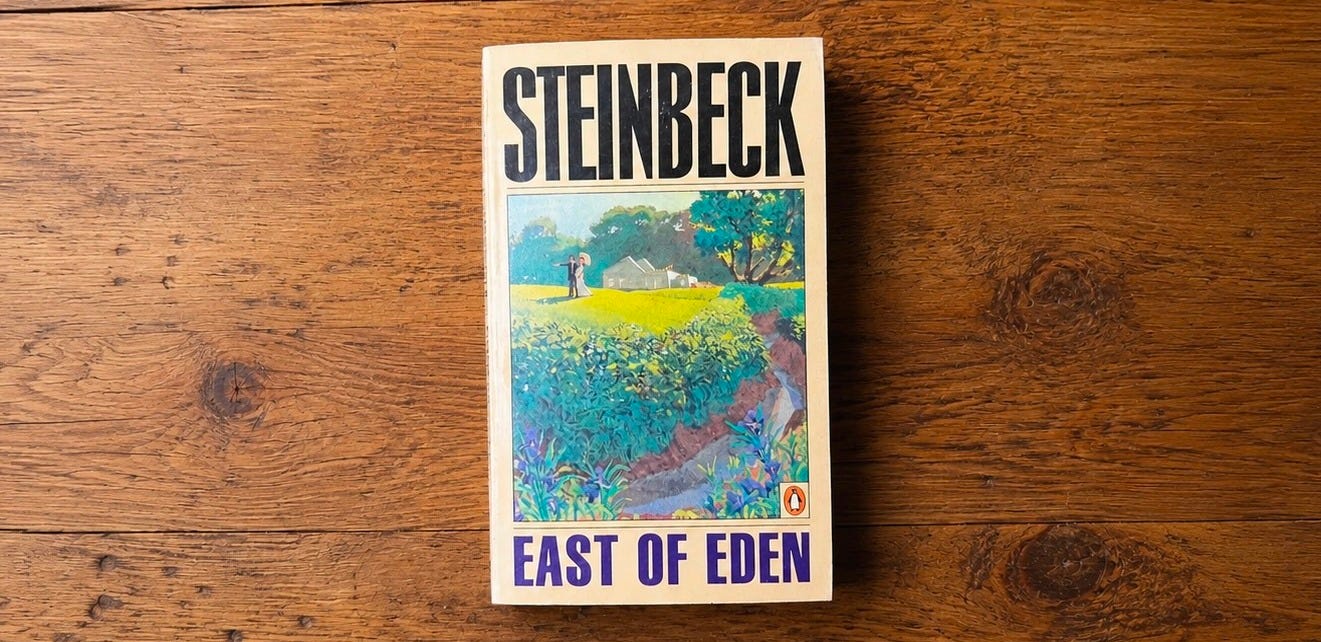
We’re about to start reading East of Eden by Steinbeck in the book club. The first discussion is on Wednesday, August 12, at noon ET — join us!
1) Lean Into Your Learning Style
In my sophomore year of university, I had a roommate who was really struggling in his courses. But it wasn’t because he wasn’t smart and talented: he was an entrepreneur, an instrumentalist, and overall a good student.
For whatever reason, he was having increasing difficulty retaining the information covered in his courses. Eventually, his parents paid for him to get an assessment done for his type of learning style. The result? Turns out he placed in the 97th percentile for auditory learning.
Following this revelation, my roommate stopped taking notes during lectures, and swapped his textbooks for audiobooks. Sure enough, he hadn’t just caught up with the material, but was now doing better than he ever had in school. In short, he simply leaned into his learning style.
Generally speaking, there are four main learning styles: visual, auditory, reading/writing, and kinesthetic. Most people don’t fall as exclusively into one of these categories like my roommate did, but have some sort of mix. That said, you likely have natural proclivities, and it’s worth being aware of them.
In my own experience, I’ve come to realize I lean towards reading/writing as my learning style. When studying foreign languages, for example, it doesn’t matter if I hear a word multiple times; it isn’t until I write it down that I actually retain it. There is even a visual component to this as well: if I spell out a new word in my mind (and thus visualize what it looks like), my chances of retaining it increase a hundredfold.
Even today, when I’m stuck trying to understand something, I grab a pen and paper to start writing down my thoughts. Sure enough, the knots begin to come undone, and the idea is finally made clear to me.
All this to say, you have a unique learning style, and if you take time to understand it, you’ll go much further, much faster in your self-study efforts. Don’t fight what makes you you — just lean into it, and see where it leads.
2) Go to the Primary Sources
All throughout lower and middle school, I listened to people talk about the Beatles. Some of my classmates praised them as being absolutely brilliant, the best there could be. But apart from a few songs I heard on the radio, I had never really listened to them. The Beatles seemed to me more like a mythical creature than a real-life British rock band.
Finally, in high school, I got fed up with only hearing about the Beatles. I decided it was time I listened to them myself, and so I went and purchased all of their albums. Over the course of a few weeks, I listened to each album one by one, and the fog of mystery hanging over the Beatles was finally blown away. At last, I finally saw them clearly for myself.
As silly as it might sound, this experience had a profound impact on me. It taught me the value of cutting through the commentators and going straight to the source. It is quite probable, in fact, that without this episode with the Beatles, I never would have fallen in love with Shakespeare years later. The impetus to go straight to the source is what caused me to climb up into my attic, pull out a copy of Much Ado About Nothing, and dive headfirst into the Bard’s world that fateful summer.
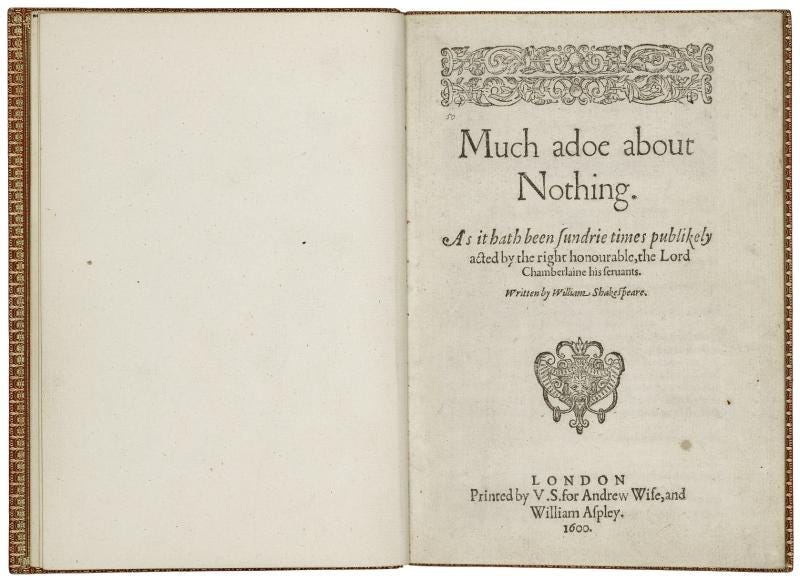
On the whole, I believe people read way too many secondary sources these days. To be clear, there’s a time and a place for secondary texts and commentary — but they’re almost always best when they help explain and build on what you’ve already read, not when they’re a substitute for the original.
That’s why my second pillar of learning is to go straight to the source: stop reading what other people think of it, experience it for yourself and make up your own mind! The (sad, but true) fact is that if you do this, you’re almost automatically in the top 10% of learners in any given subject.
So let’s say you do this well, and primary sources now make up the majority of what you read. Well, what now? How do you make sure the information you take in actually sticks? How do you know if it’ll actually shape you in the long term, and not simply be forgotten after a couple months?
It all comes down to my next pillar, which is by far the most important of the four. Because if you can’t do this, all of your other efforts are for naught…