


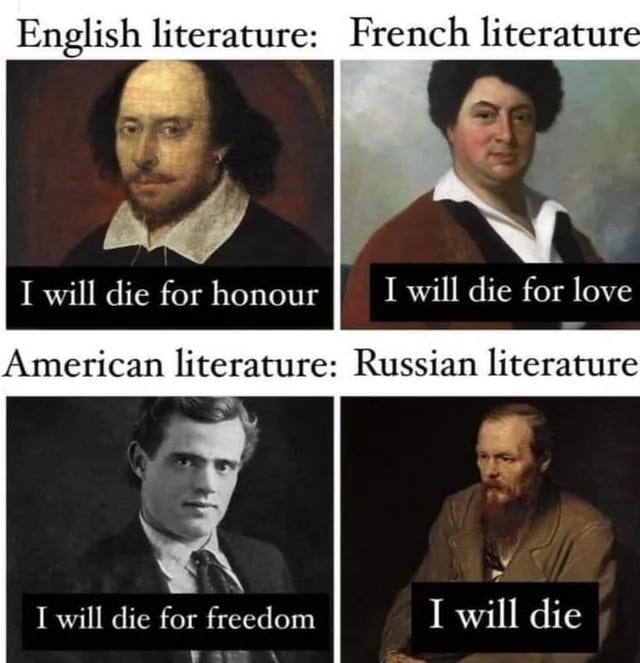
It is said that while most people know they will die, few know it better than the Russians.
While much of Western culture treats death as something far-off and inconvenient, traditional Slavic culture treats it as an unavoidable fact of life. You will die, you are told, and perhaps sooner (and more painfully) than you expect.
While this approach might seem rather depressing by Western standards, there is indeed great wisdom in it. For it is precisely in accepting the inevitability of death — and the suffering that accompanies it — that you are able to live better in the present. Modern culture, however, teaches you that suffering should be avoided at all costs, and sells you everything it can to help you avoid it.
The great Russian authors, however, knew only too well that suffering is a natural part of life. Today, we turn to their work — and to that of Dostoevsky in particular — to discover the secrets to living and thriving even in the midst of tragedy. Because while Dostoevsky won’t teach you how to avoid suffering, he will teach you something far greater: how to live in light of its inevitability…
Reminder: this is a teaser of our paid subscriber essays.
If these articles have meant something to you, please consider becoming a paid member to support this work. Every subscription truly makes a difference.
We are 100% independent, which is only possible because of you. There are no ads here, only independent writing devoted to the True, Good, and Beautiful…
As a member, you’ll get:
New, full-length essays and articles every week
Biweekly book club discussions and weekly reading guides
Access to our incredible community of readers
The entire archive (200+ articles, essays, and podcasts)
Suffering Is Not a Sickness
“Pain and suffering are always inevitable for a large intelligence and a deep heart.”
—Raskolnikov, Crime & Punishment
Every year, Americans spend millions of dollars on self-help. They read books, go to therapy, attend retreats, and travel the world to uncover the root causes of their unhappiness. If only you discover and heal your hidden wounds, so you’re told, then you can finally live happily.
While there is nothing wrong with seeking help to improve your life, there is a dangerous and unspoken assumption underlying the entirety of the self-help industry. The assumption is that happiness is man’s natural condition, and that sadness and suffering indicate something has gone wrong. These are impediments to a good and meaningful life, and should thus be addressed and overcome.
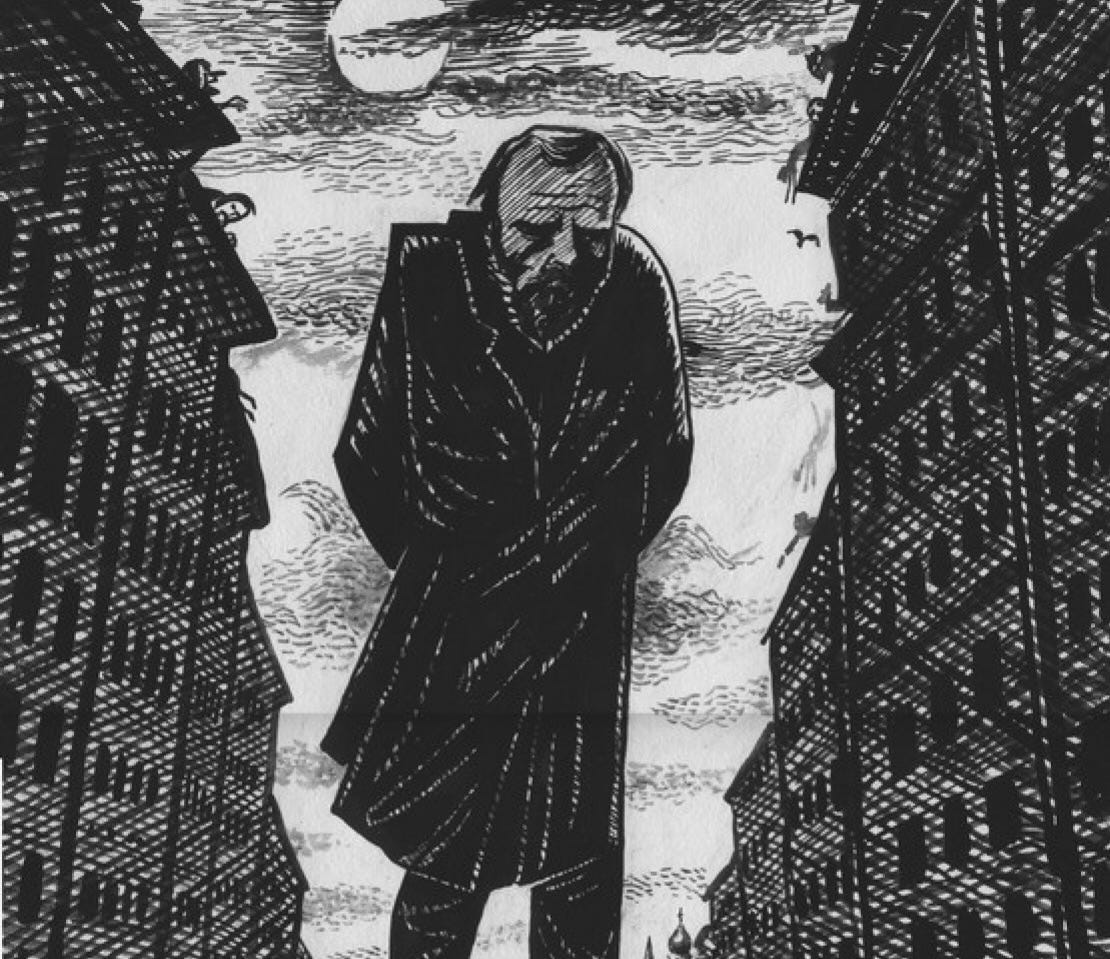
The great Russian authors, however, begin from the opposite premise. In the works of Tolstoy, Dostoevsky, Pushkin, Chekhov, and Solzhenitsyn (among many others), suffering is not a bug, but a feature. In other words, it is an intrinsic part of the human experience. If you are human, you will suffer, so there’s no use trying to avoid it.
The self-help industry, on the other hand, takes this fundamental aspect of human existence and calls it a sickness — a sickness for which it conveniently sells the cure. But for the Russian authors, unhappiness and suffering by themselves don’t necessarily indicate you’re unwell. Rather, they simply indicate you’re human.
But that said, not all suffering is the same…
Pick Your Poison
“Suffering is sent to people to hold them back from death.”
—Tolstoy, The Journal of Leo Tolstoi, Volume 1
So while Russian literature reminds you suffering is inevitable, it doesn’t end there. It also reminds you that, to a greater extent than you might realize, you have a choice over the kind of suffering you endure.
You can either suffer by building a business, or suffer by working for someone else. You can suffer by going to the gym, or by being overweight. By raising a family, or by wishing you had done so. By pouring yourself obsessively into a singular ambition, or by sitting on the couch, wondering why your life has no meaning. Whatever you choose, you’ll suffer.
The great lie of modern culture is that your choice is between suffering and not suffering. In reality, however, the choice you must make is between meaningful suffering, and suffering without meaning. In this way, the idea that “all roads lead to suffering” paradoxically offers a surprising glimmer of hope — if life is hard no matter what you do, then you might as well do something meaningful!
But how, exactly, do you know what’s worth suffering for? And what do you do when you have no choice in your suffering, like when you’re forced to endure the loss of a loved one?
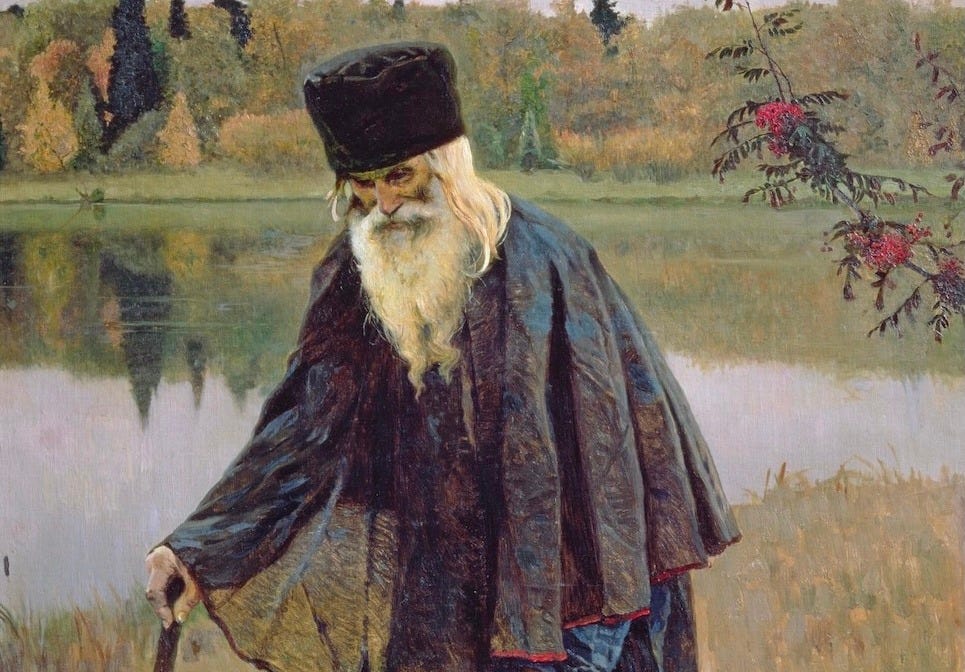
Luckily, the Russian authors have answers to both these questions. Dostoevsky in particular, through one of his characters in The Brothers Karamazov, reveals the key to making sure your suffering is made meaningful, even in the worst of circumstances.
Dostoevsky’s final and greatest novel reveals that it all comes down to understanding the true nature of one thing: love…