

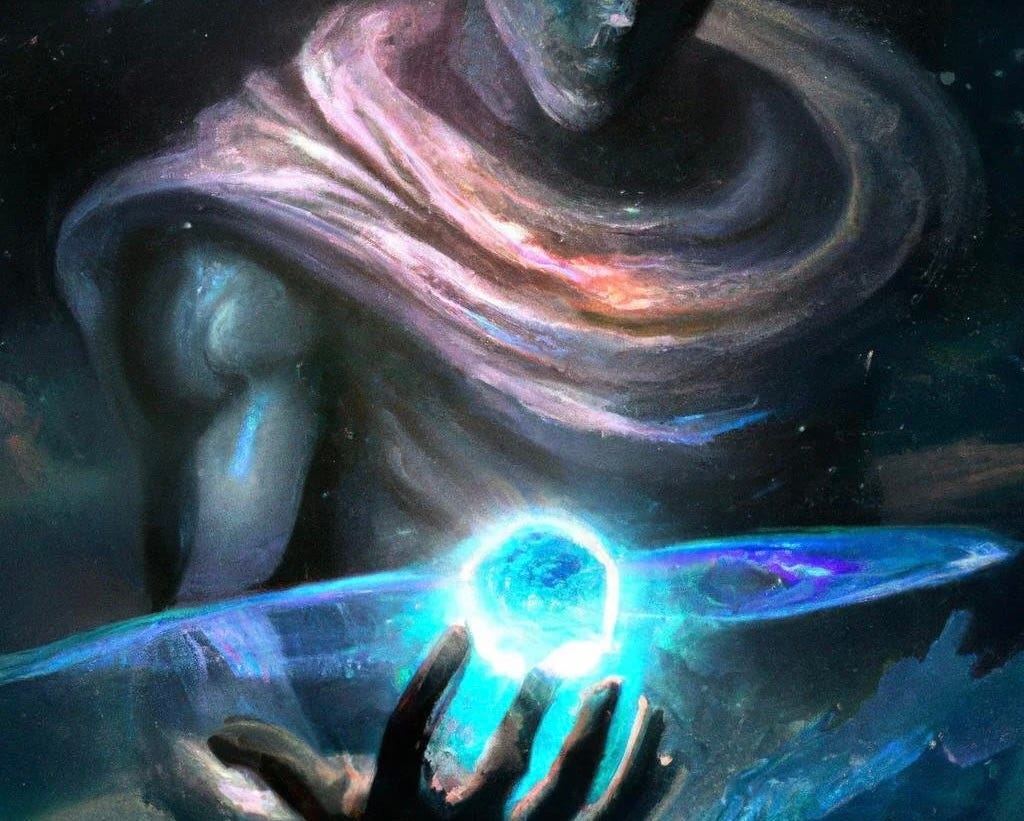
For many people, the idea that AI could ever take the place of God might sound ridiculous: how could a machine that is obviously built by humans ever be mistaken as divine?
But when even the engineers behind AI begin to claim that it is sentient, and AI-induced spiritual delusions end otherwise-healthy marriages, then perhaps it is time to take this question seriously. Because although there may never be cathedrals erected in honor of ChatGPT, there will certainly be an increasing number of people who treat it with the reverence due a god.
Today, we look at the arguments for and against why AI will be treated as a divinity and why, even if it’s never overtly worshipped, the threat that it poses to a healthy spiritual life is still deadly serious…
Thank you for reading! If you’d like to support our work, please consider taking out a paid subscription. You’ll get:
New, full-length articles 2x per week
The entire archive of content (180+ articles, essays, and podcasts)
We are reading Plato’s Republic in our book club for January. The first discussion is on Wednesday, January 14, at noon ET — don’t miss it!
Hunting for Hidden Knowledge
Before discussing the inner workings of AI, we must first look at the inner workings of human nature. Most people focus exclusively on what makes AI seem godlike, but few ever question what it is about humans that makes us so susceptible to worshipping false gods in the first place.
If you were to ask a random group of people what they think God is, most responses would include some variation of ideas like “goodness” or “truth”. From these, we can extrapolate out: to be good and true, for example, necessarily means to be just. To be just, in the classical legal tradition, means to render to people what is properly due to them. And to know what is properly due to someone is to know how to act in each situation; to know how to engage with the world and the people around you.
Throughout history, therefore, humans tend to sacralize any sort of person or system that provides relief from uncertainty and responsibility by telling us how we should act. In the midst of an uncertain world, certainty reads as omniscience: a lack of knowledge leads to uncertainty, while certainty stems from a full picture of the facts. Man naturally defers to anything or anyone that can have such an overview and thus speak with such authority.
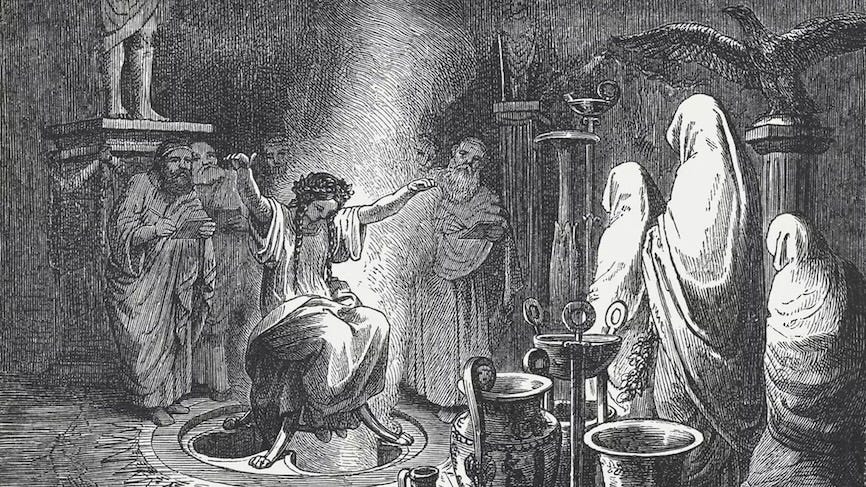
In the past, this looked like oracles and shamans. With the turn of modernity it transitioned to bureaucratic authority, and most recently it has taken the form of technocracy and expert worship. The reason why all of these have been revered is the same: we only know so much, and so we look to those to have access to knowledge beyond our grasp…
Primed to Receive God
In light of this aspect of human nature, it makes sense why AI has been received the way it has. Its opacity is one of the greatest contributing factors to this: since few can explain exactly how AI works, its output naturally produces a sort of “wow” factor, which is the first step to reverence.
Oracles, bureaucracies, and experts all function along similar lines: they have access to information (the accrual of which is beyond our comprehension) that allows them to predict an outcome, and we defer to their advice. AI doesn’t function any differently, but it does add speed and scale. Now, you no longer have to consult a different authority figure for each of your different concerns: you can simply ask ChatGPT for anything from dinner recipes to medical advice, and the information you seek is provided to you instantly.
What this creates is a frictionless path to psychological outsourcing. As we’ve already seen, it is man’s nature to seek to resolve uncertainty about what he should do — but never before have we been able to obtain answers so quickly. Any system that tells you what to do, what is optimal, or what will happen risks becoming a surrogate conscience you defer to. Deference, of course, is a step further on the path to worship.

One doesn’t need to believe AI is actually divine in order to act as though it is. Behavioral submission precedes theological justification, and many people already respond to the advice they receive from ChatGPT as though it were spoken by God. Even if they logically know that AI isn’t a god, their actions say otherwise.
Of course, there are many good reasons why people will never view AI as a deity. The most probable reality of how we’ll treat it is far more nuanced and subtle — but that’s precisely what makes it all the more sinister.
Because as we’ll see, even those who will never explicitly pray to AI are still very much in danger…