


Hello book club!
It’s amazing to be back after the summer break. It is finally time to begin our read-along of Steinbeck’s East of Eden, what many consider to be the Great American Novel — and for good reason.
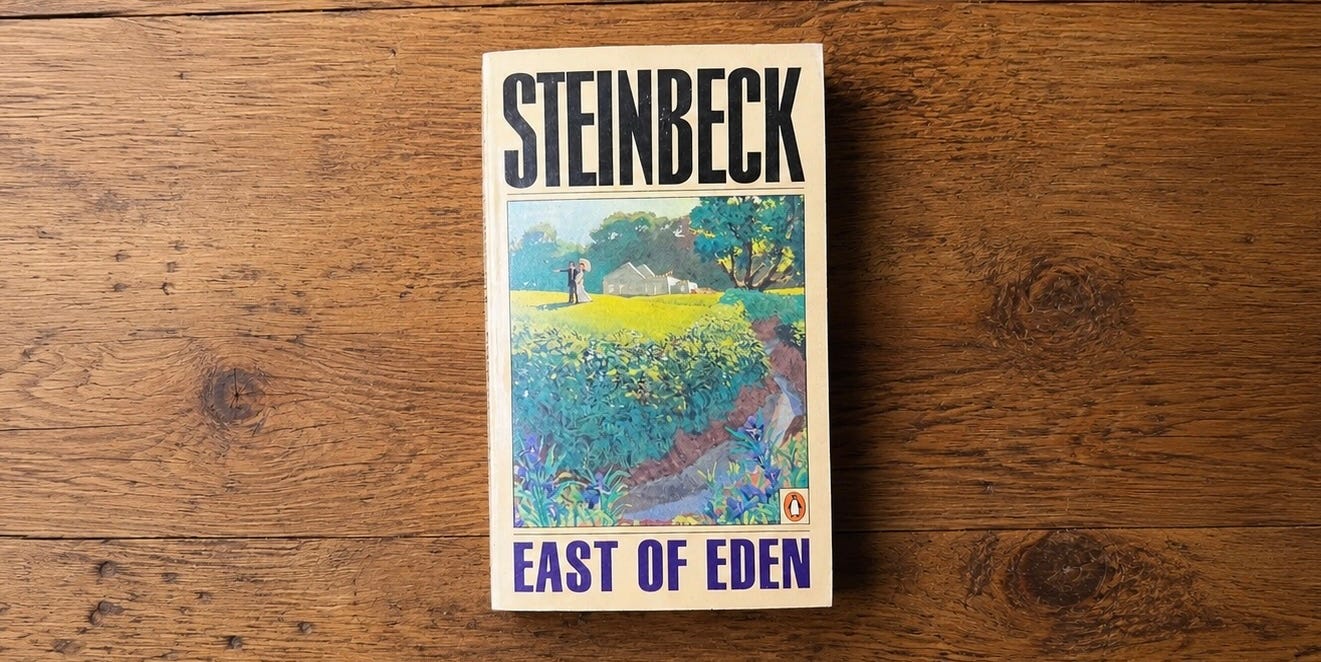
We will meet on Wednesday, August 12, at noon ET. We’ll be discussing Chapters 1-18. If you’ve already read this far, that’s great, but you don’t need to have done the reading yet. We’re reading this novel over the next 6 weeks, together. Note: we are personally using this copy of the book.
The first discussion will be live streamed via Substack at this link.
For those joining our discussion group directly (available to all paid members), the Zoom link is at the bottom of this email…
You can join our inner circle group by taking out a paid membership here:
If you’ve been on the fence about joining our inner circle, now is a really great time. You do not want to miss this one!
Below are some key ideas for us to consider ahead of the first session. Note: there are some plot spoilers relating to Chapters 1-3 below.
East of Eden is a novel that embraces the Biblical architecture of Genesis, particularly the narrative of Cain and Abel. It follows themes of generational guilt, inherited sin, and the “crimes of the father” that manifest in their children.
The story follows three generations of the Trask family, led by Cyrus the patriarch, his sons Adam and Charles, and finally Adam’s sons Cal and Aron.
In Chapter 3, a significant action takes place, laying the groundwork for all that is to follow: Charles attempts to murder his brother Adam, jealous that his father loved the latter. Adam barely escapes with his life, but the attempted homicide will haunt both brothers for the rest of their lives.
That said, East of Eden is not a fatalistic story, mourning that man is a victim of the evils and sins of the world. In fact, this novel is a testament to human freedom, as proclaimed by the story’s narrator:
“And this I believe: that the free, exploring mind of the individual human is the most valuable thing in the world. And this I would fight for: the freedom of the mind to take any direction it wishes, undirected. And this I must fight against: any idea, religion, or government which limits or destroys the individual. This is what I am and what I am about.”
And yet, Steinbeck introduces a great counterpoint against this very celebration of human freedom through the story’s villain, Cathy Ames. Steinbeck introduces her as a monster born without a soul, and her story raises questions about the extent to which humans have freedom, and what they can do with their lives.
Some questions to consider:
Again, Steinbeck introduces Cathy as someone “born with the tendency to evil.” While the rest of the novel (as we’ll see later) insists man is made free to choose between good and evil, Cathy’s introduction seems to undercut this very thesis. Is this a deliberate move by Steinbeck? How could he answer it? Or is Cathy a problematic character that genuinely undermines the novel?
Why do you think Steinbeck used the story of Cain and Abel as the narrative structure for East of Eden? What does that story teach of human freedom, and how does it show up in Charles and Adam?
Do you agree with Steinbeck’s thesis — that the free, exploring mind of the individual is the most valuable thing in the world, and that we ought to resist anyone who limits said freedom? Why is this the greatest book in Steinbeck’s eyes?
Share your thoughts below or in the subscriber chat, along with any questions you have.