


Hello book club!
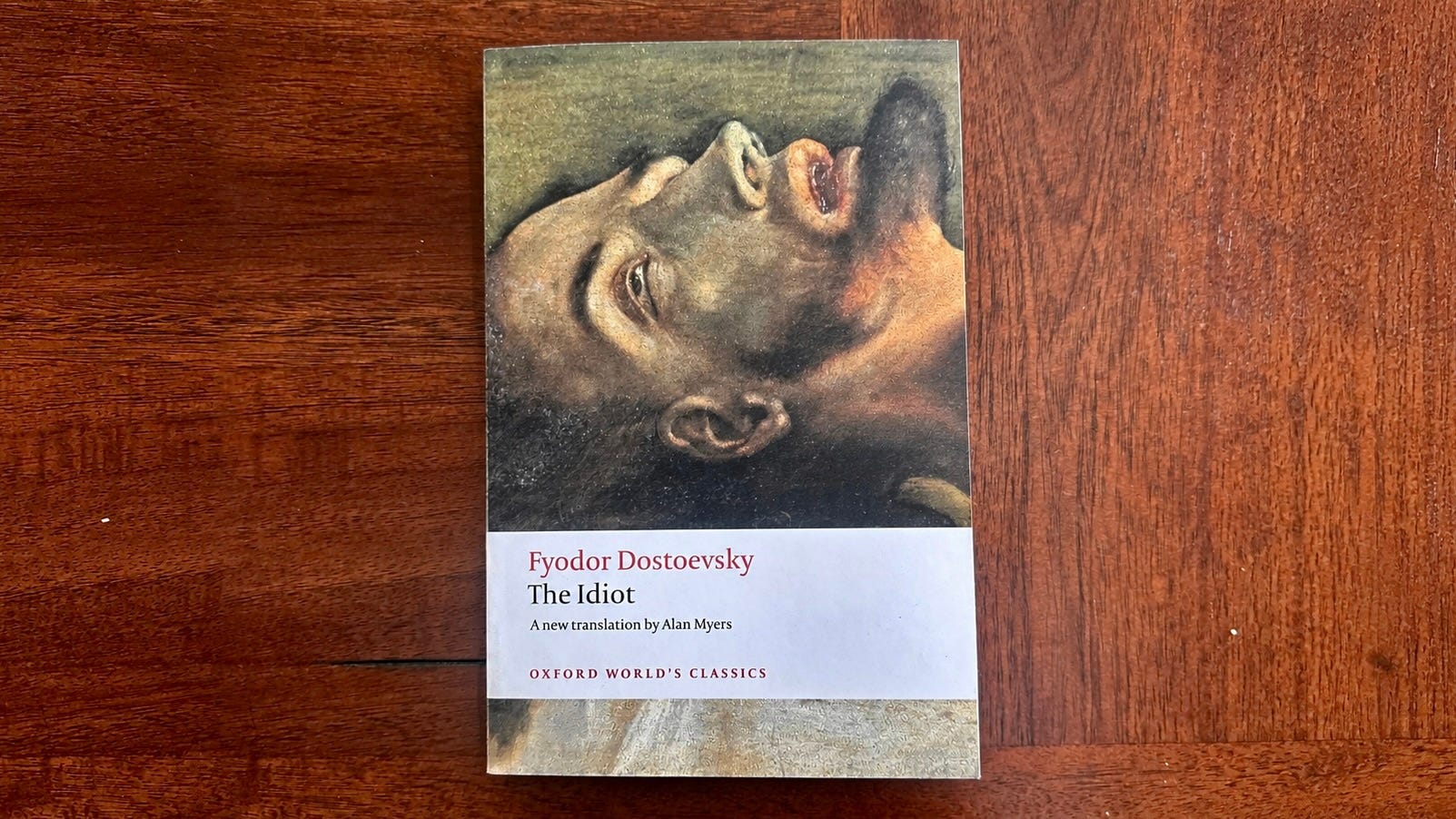
It’s the beginning of a fantastic week… time to start our read-along of The Idiot.
This is a tremendously powerful novel and one of Dostoevsky’s great works. An excellent one for us to tackle together.
We meet on Wednesday, September 23, at noon ET. The first discussion will cover the background context to the work, and what to look out for when reading Part 1. Of course, you don’t strictly need to have done any reading yet — we’re reading this over the next six weeks, together.
As a reminder, we’ll discuss the novel in three parts:
Session 1 (Sep 23) – Background context + Part 1
Session 2 (Oct 7) – Part 2 + Part 3, ch. 1-6
Session 3 (Oct 21) – Part 3, ch. 7-conclusion
The first discussion will be live streamed via Substack at this link.
For those joining our discussion group directly (available to all paid members), the Zoom link is at the bottom of this email…
You can join our reading group by taking out a paid membership here:
As a member, you’ll get:
Live book club discussions (biweekly) and recordings
Access to our incredible community of readers
The entire library of essays, articles, and podcasts
To begin, below are some key ideas for us to consider ahead of the first discussion.
Part 1 introduces protagonist Prince Myshkin returning to Russia, after years of treatment in a Swiss sanatorium for epilepsy, and a related condition which Dostoevsky calls “idiocy.”
Myshkin is not an idiot in the traditional sense of the term (in fact, he can be quite perceptive and intelligent), but he lacks the normative social instincts of adult life in late 19th century Russia.
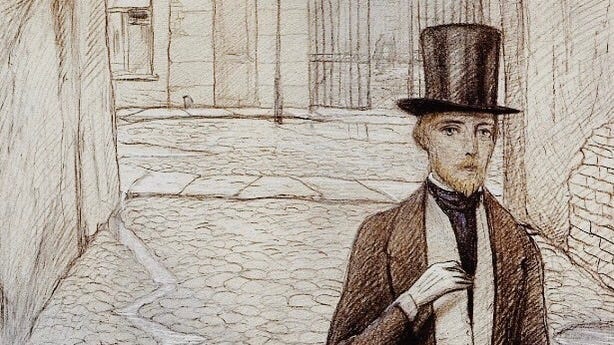
Thus, this is a story of the “positively good man,” as Dostoevsky called it. He created Myshkin as a Christ-like figure of sainthood who maneuvers the chaos, vice, and dangers of the hardened, modernized Russian world of the day. As such, Myshkin’s innocence introduces extreme reactions from his neighbors — at times his neighbors are induced to kindness, as if remembering their lost innocence of youth, yet at other times they lash out, scorn, and mock the kind Prince.
The primary action driving the plot early is a series of love triangles between Myshkin, Roghozin, Nastasya, and Aglaya. Roghozin is the opposite of Myshkin — a dark and brooding man who desires the heart of Nastasya. Nastasya, meanwhile, is beautiful but prideful. Having been abused in childhood, she now embraces a self-destructive power over the men around her, whom she manipulates for purposes of vanity. Finally, Aglaya is young, proud, and beautiful — a woman who loves Myshkin, yet mocks the strangeness of his kindly nature.
The underlying question is not merely whether any of these romances will lead to marriage, rather, it’s a meditation on the souls of these characters and their relation to love itself. Besides Myshkin, none of these characters are currently capable of a proper, virtuous love, though they desire it deep within their hearts. The drama is whether or not these characters can draw out the best parts of their nature, and recover a good-natured virtue like that of Myshkin.
At its heart, then, the novel poses the ultimate question:
Can a genuine, Christlike goodness survive a modern world built upon pride, power, money, and vanity? Can a love like Myshkin’s heal the world, or will the world simply devour his goodness?
Additionally, below are some questions to consider as we read along:
Among the first anecdotes we hear from the Prince, he shares his memory of watching a man prior to his execution at the guillotine in France, and his friendship with a consumptive woman shamed by her village, whom the prince alone treated with kindness. Why does Dostoevsky front-load these two stories before Myshkin even enters Petersburg society? What do they tell us about how Myshkin understands mercy and human dignity?
Roghozin is introduced at the same time as Myshkin. The two sit beside each other as opposites in the same train carriage in chapter 1. Is Dostoevsky’s framing of these two polar-opposite characters intentional? What is the significance drawn from the comparison of the kindly Myshkin and dark, brooding Roghozin?
Money plays a dominant role in Part 1. It’s the main topic of conversation amongst the intelligentsia, and the main driver of social status. It’s also prominent via Roghozin, who uses money as an attempt to “buy” the love of Nastasya. What does this materialism suggest of the state of the soul of Russia at the time? Also, what is the significance of Prince Myshkin being broke and destitute by contrast?
Share your thoughts below or in the subscriber chat, along with any questions you have — and we will incorporate them into Wednesday’s discussion!