

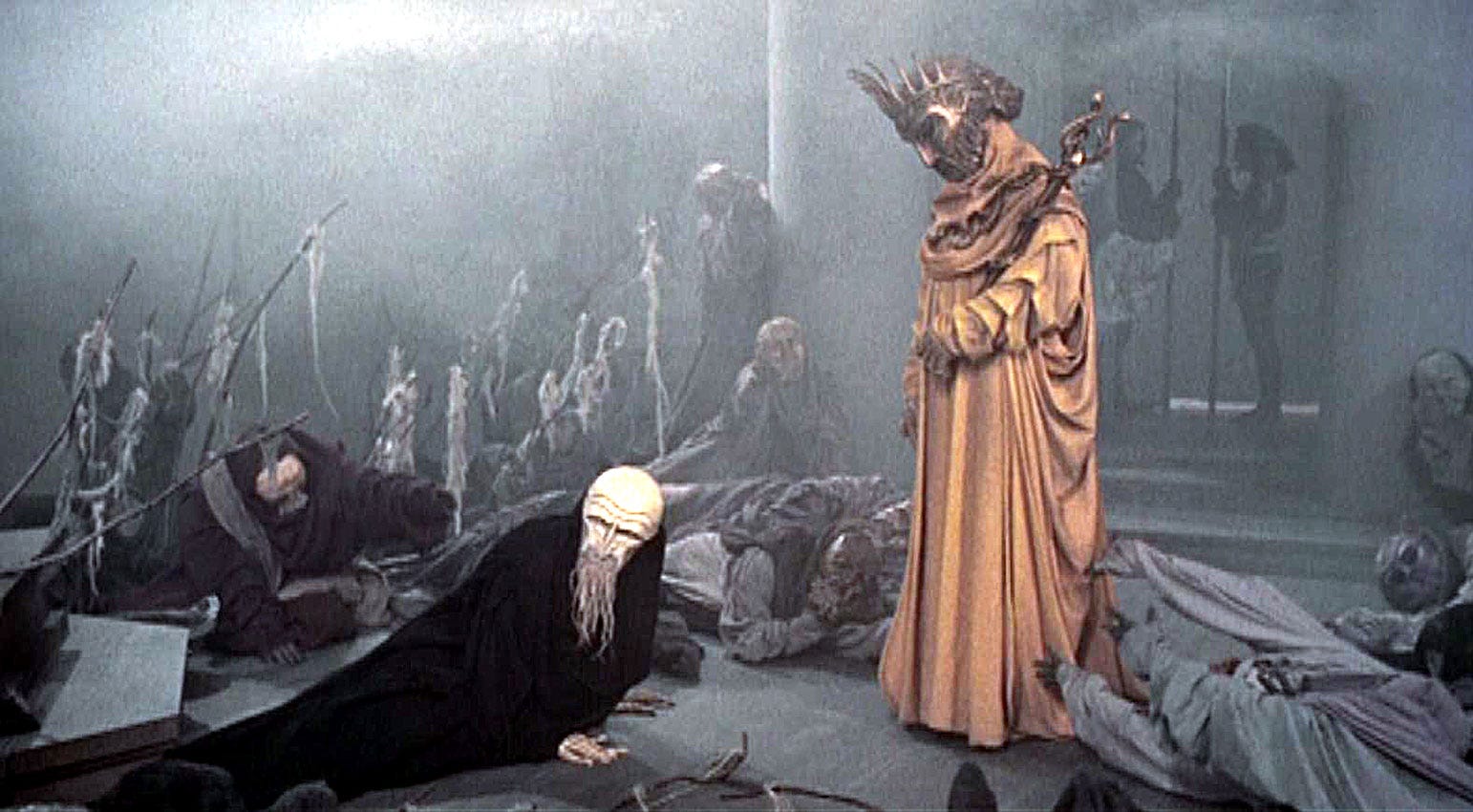
Oedipus Rex is one of the greatest plays of all time. Its titular character gives his name to Freud’s famous “Oedipus complex,” and most are familiar with the tragic story of the boy who killed his father and married his mother.
Or are they?
You see, the real lesson at the heart of Oedipus Rex is neither about incest nor the cruel whims of fate, but something else entirely. It’s about a piece of wisdom so timeless and universal that, even though Oedipus Rex was first performed nearly 2,500 years ago, its message for our culture today couldn’t be more urgent.
Today, we look at a play everyone thinks they know in order to reveal the deeper meaning hidden below its surface, and uncover its ancient warning for our modern world…
This is a teaser of our paid subscriber essays. If you’d like to support our work, please consider taking out a subscription — it helps us enormously. You’ll get:
New, full-length articles 2x per week
The entire archive of content (180+ articles, essays, and podcasts)
We are reading Plato’s Republic in our book club for January. The next discussion is on Wednesday, January 28, at noon ET — don’t miss it!
The Lead-Up to Disaster
Before we begin, we first need to look at the events that transpired before the start of the play. Oedipus was born in Thebes to Laius and Jocasta, king and queen of the city. But when an oracle tells Laius that he’s “doomed to perish by the hand of his own son”, Laius’ love for his infant son quickly dries up.
He orders his wife to kill Oedipus, but of course she can’t bring herself to do it. So instead she passes the task off to a servant, who takes Oedipus up to a mountaintop and leaves him to die of exposure. It is here that he’s rescued by a shepherd, who carries him to the city of Corinth.
As a young man in Corinth, Oedipus gets word of the prophecy that he is to kill his father and marry his mother. Terrified of this possibility, he leaves his “parents” behind in Corinth and sets off for Thebes. On the way there, Oedipus encounters a small procession at a fork in the road.
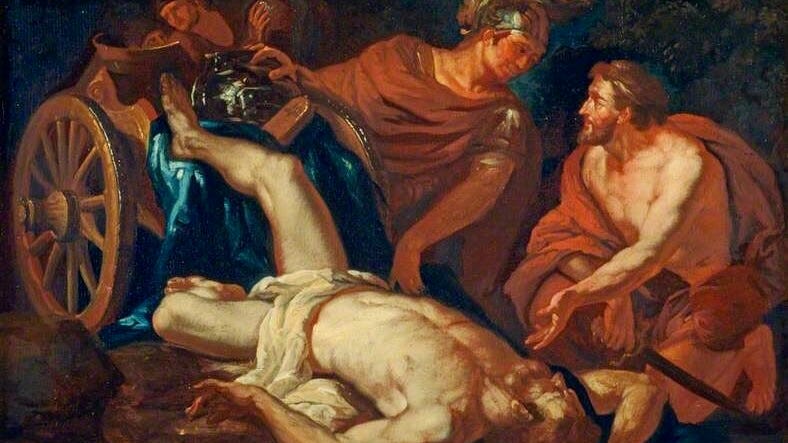
A dispute breaks out when the older man in the chariot insists on having the right of way and strikes Oedipus with his staff. Oedipus responds by throwing the man from his chariot, whereupon he hits the ground and dies.
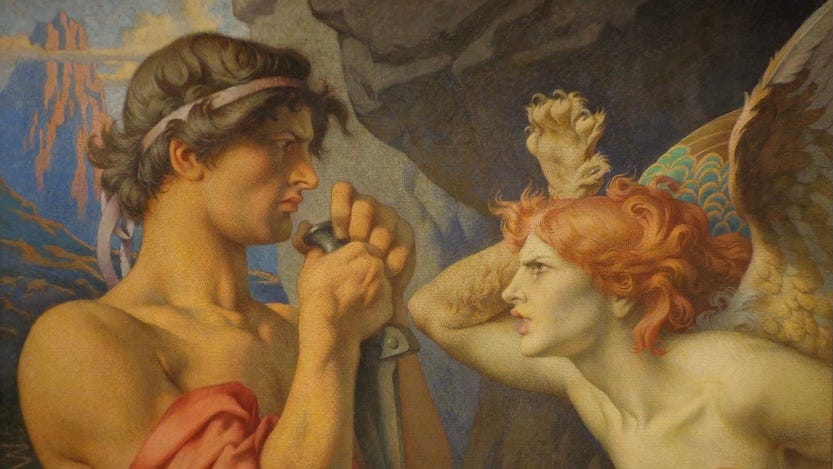
Oedipus continues on his route to Thebes, but arrives to find the city in chaos. The king is dead and the Sphinx is terrorizing the city, offering to yield only if someone can answer her riddle: what creature walks on four legs in the morning, two legs at noon, and three in the evening?
When Oedipus gives the correct answer — man — the Sphinx destroys herself and the city is freed. As a reward for saving their city, the Thebans offer him both the crown and the hand of the widowed queen.
By accepting both, Oedipus unknowingly fulfills the prophecy he believed he so cleverly escaped…
Debates with a Blind Man
It is at this point that the play opens and we get the first glimpse of Oedipus’ fatal flaw. The audience learns that since Oedipus became king, a famine has been ravaging the city. An oracle explains that it won’t be stopped until the murderer of the city’s king is found, so Oedipus resolves to hunt him down.
To help him in his search, he requests the presence of the blind prophet Tiresias. When Tiresias arrives at the palace, he tells Oedipus that he has the answers to everything — but that it’d be best for the king if he stopped asking questions.
Oedipus flies into a rage, infuriated by Tiresias’ audacity. How could he possibly be better off by not finding the killer? Does Tiresias not care about the famine? Is it not entirely logical that, as king, he attempts to save his city?
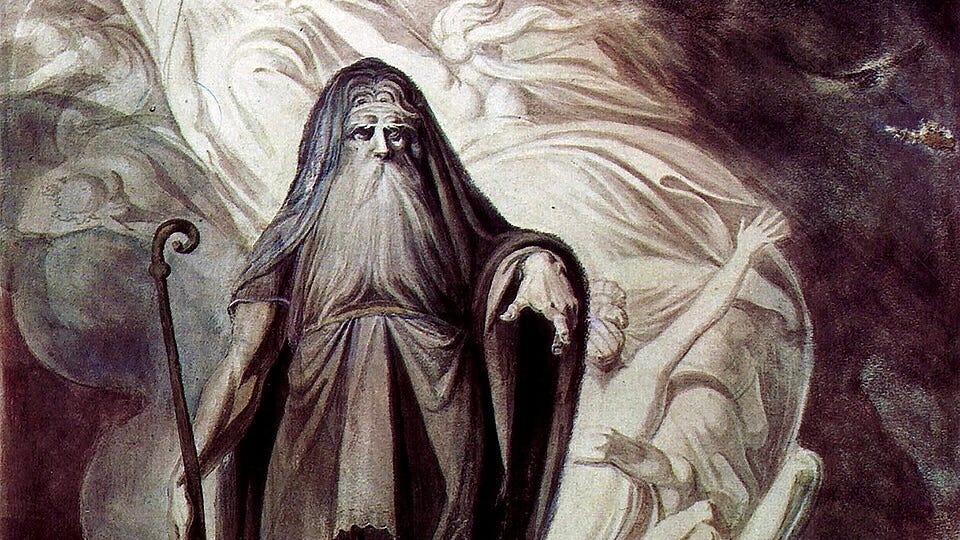
But this is precisely the problem with Oedipus: he only sees the logical. He never stops to consider that perhaps there’s something else going on, or that there’s an element to the story he’s never considered. He can’t fathom a reason why he shouldn’t continue in his course of action, and thus mocks Tiresias for his blindness to the facts.
It is here that Oedipus’ tragic flaw is revealed, but it’s what he does next that seals his fate. Because as we’ll see, Oedipus Rex contains a dire warning for the modern world: specifically, what happens when a society treats the collective wisdom of the past with disdain…