


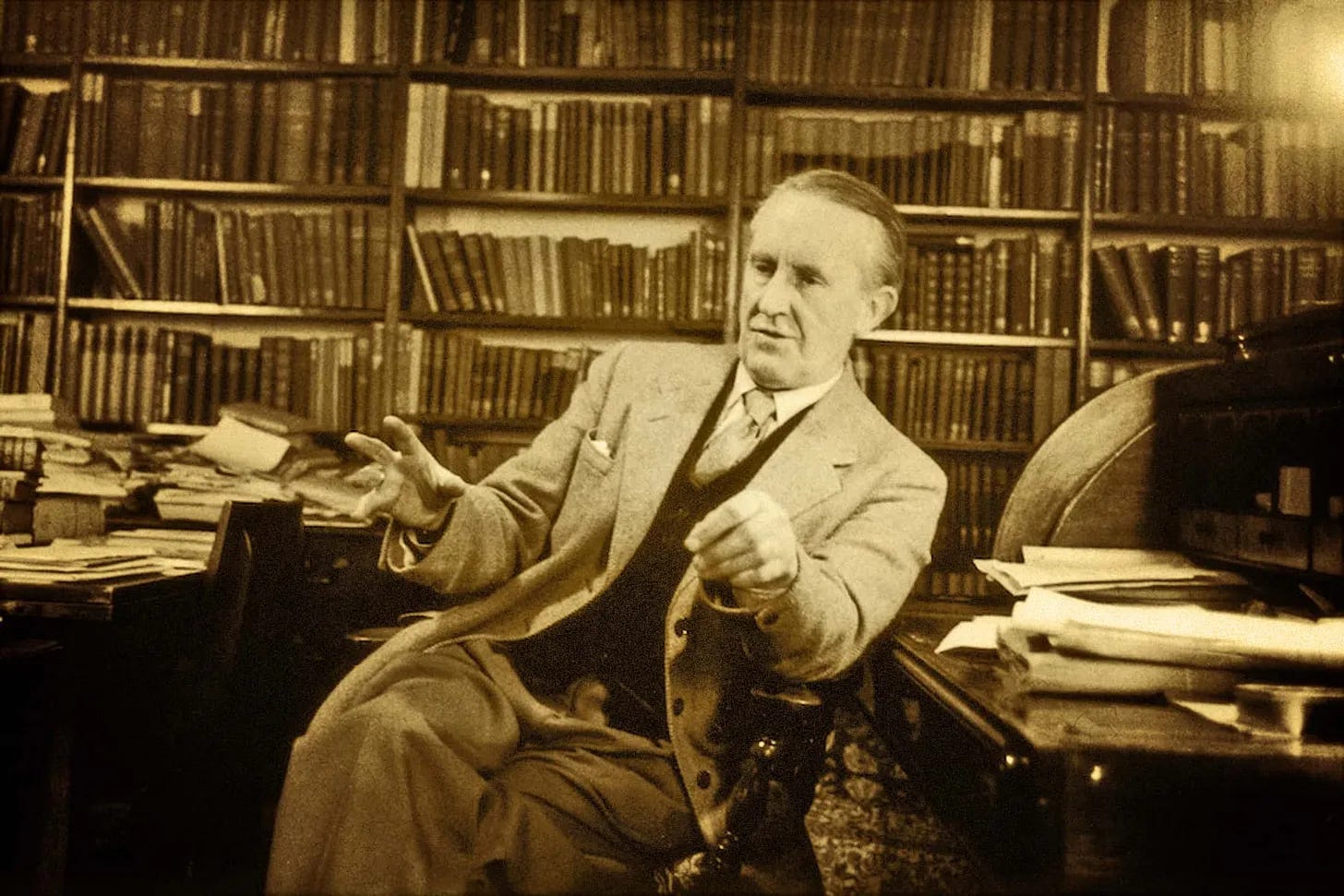
J.R.R. Tolkien’s The Lord of the Rings has inspired millions. Both the original work and the movie adaptations have influenced hearts, minds, and — as the innumerable quantity of derivative fantasy worlds reveals — many a modern writer as well.
But what are the stories that inspired Tolkien?
What are the legends and myths that gave birth to the world of Middle-earth and the epic journey to cast the One Ring into the fires of Mount Doom?
Today, we look at five of the tales that inspired Tolkien’s The Lord of the Rings. Whether you want to better understand the Oxford don’s magnum opus, discover other fantastical worlds to explore, or write an epic yourself, these are the five works you need to turn to…
We are 100% reader-supported. This newsletter is free, but if you’re able to support, please consider a paid membership — it helps us enormously. You’ll get:
Full-length articles 2x per week
The entire archive of content (200+ articles, essays, and podcasts)
We are currently reading Oscar Wilde’s The Picture of Dorian Gray in the book club. The next discussion is on Wednesday, May 20, at noon ET — join us!
1) Beowulf
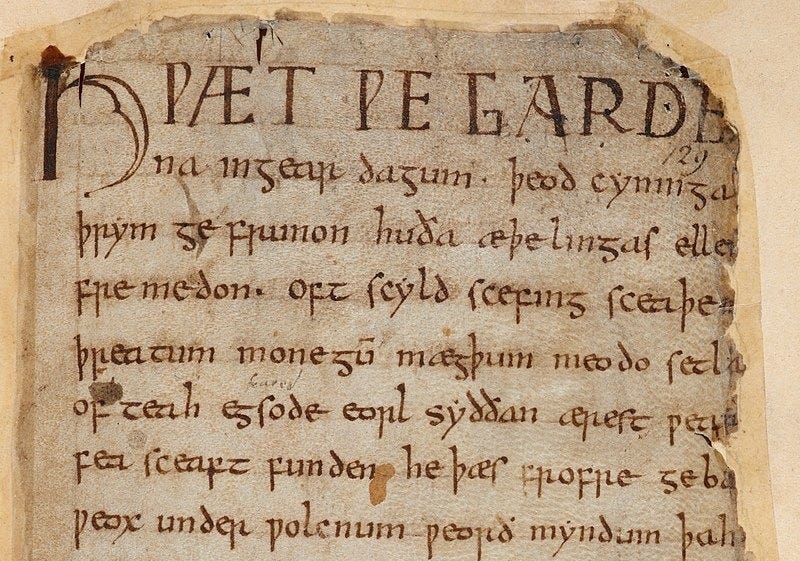
Beowulf was one of the works that most inspired J.R.R. Tolkien, and with good reason. It begins with a “shadow-walker” who haunts the mead-hall of Heorot, and ends with an ill-fated duel against a dragon. Three major battles serve to explore themes of heroism and sacrifice, and each is highly symbolic. Or, in Tolkien’s words:
The monsters are symbols of the inevitable hostility of the world itself to mortal men…they do not only bring physical ruin but spiritual despair.
-Tolkien, Beowulf: The Monsters and the Critics
Ultimately, the Beowulf epic is less about triumph and more about the virtues that compel you to fight the good fight no matter the odds. It’s a theme which is echoed many times over in The Lord of the Rings, and explained by Tolkien as such:
Beowulf is not a hero because he wins but because he fights, even when he knows the battle will bring his doom. His death is the crown of his life.
2) The Poetic Edda
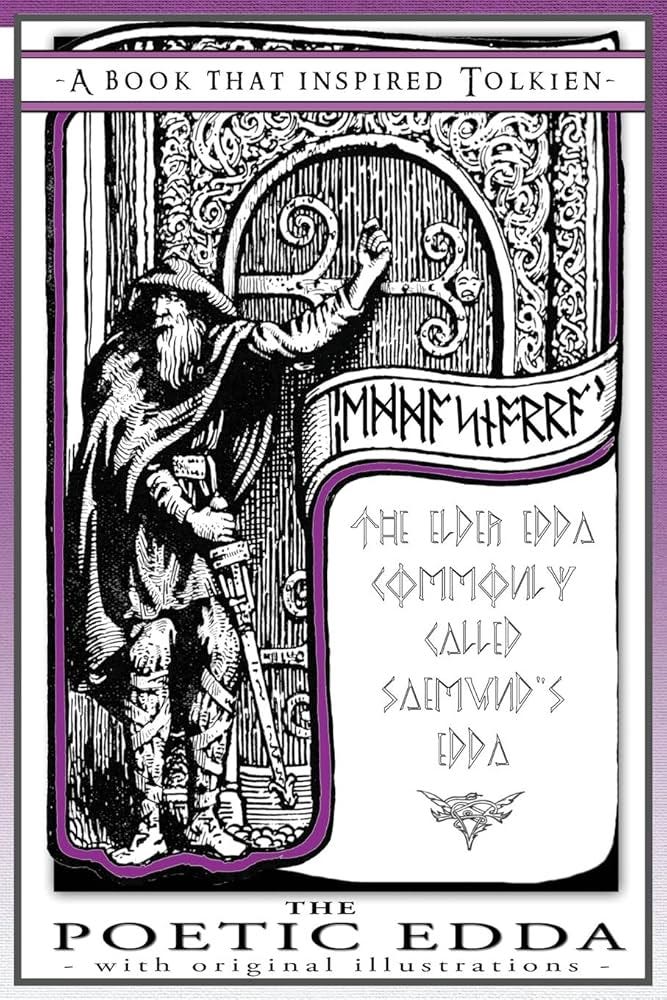
If Beowulf gave Tolkien his heroic spirit, the Poetic Edda gave him much of the mythic framework behind Middle-earth itself. Compiled in medieval Iceland from much older oral traditions, the Poetic Edda contains the most famous stories of the Norse gods and heroes. Tolkien drew heavily from these poems, and many of the names of his dwarves — such as Thorin, Dáin, Fili, and Kili — are taken directly from the text.
But the deeper influence of the Edda lies in how it impacted the atmosphere of The Lord of the Rings. In Norse mythology, the world is one in decline: even the gods themselves are destined to be destroyed in Ragnarök, the final battle/series of natural disasters that consume the world in fire and destroy it.
Yet in light of this, the characters depicted in the Poetic Edda continue to fight on anyway. In this way, the work helped Tolkien build on the foundational virtues depicted in Beowulf, while simultaneously influencing his mythological structure of Middle-earth.
3) Sir Gawain and the Green Knight
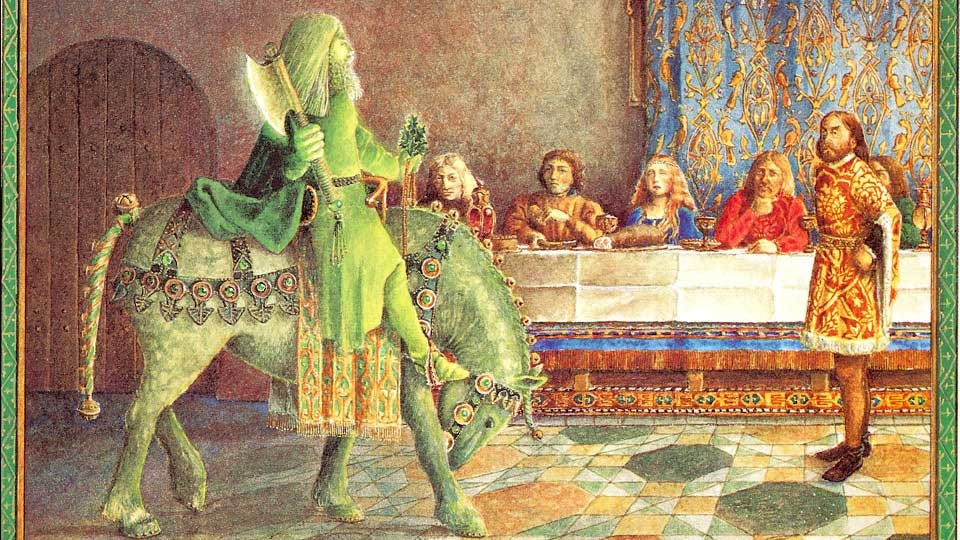
Long before creating Middle-earth, Tolkien was a philologist with a deep love for medieval literature, and his translation of Sir Gawain and the Green Knight reflects that childhood passion.
The poem itself, originally composed in the 14th century, is a marvel full of chivalric trials and mystical encounters. But Tolkien’s version restores the musical cadence of the original, using a formal yet lyrical English that carries the weight of the past.
The tale of Sir Gawain reveals to what extent medieval knights valued honor and virtue, and how temptation and pride threatened to destroy even the bravest among them. All of it is translated and recounted, of course, by a man who knew exactly how to make that kind of mythic wisdom translate to the modern era and speak to the soul.
4) The King of Elfland’s Daughter
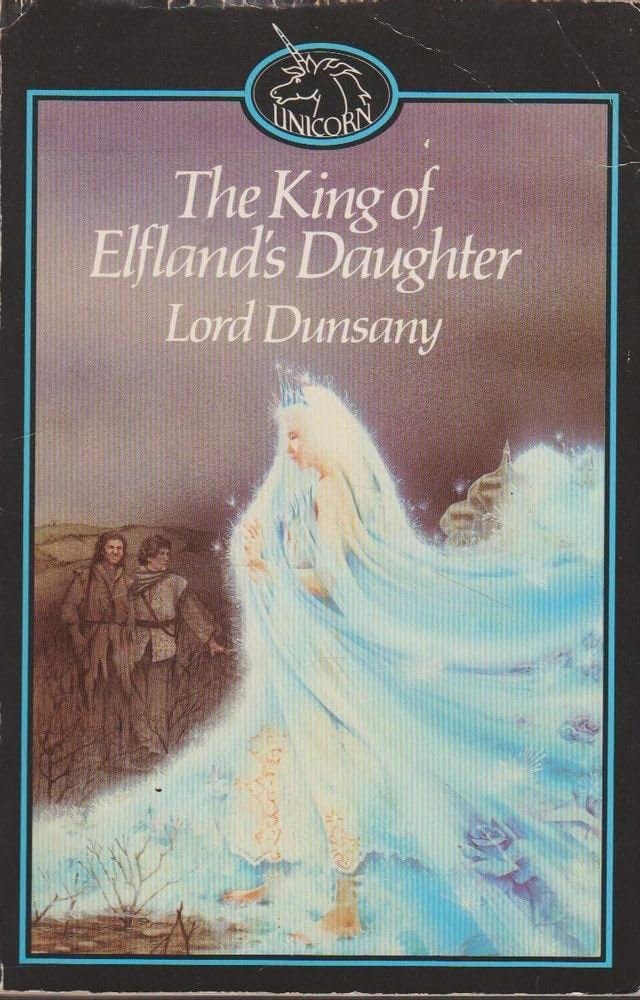
One of the few modern fantasy works Tolkien openly admired was Lord Dunsany’s The King of Elfland’s Daughter.
Published in 1924, Dunsany’s novel transformed the concept of a “faerie-story” from something whimsical and childish to ancient and ethereal. It encouraged Tolkien to continue down the path he was taking with his elven lore and develop a world far different from what most people pictured when they heard the word “elf”.
Similarly, Tolkien sought continuity with Dunsany’s depiction of magic. Unlike “hard magic” systems (think Harry Potter) where magic has rules and guidelines, the magic in Dunsany’s novel enchants nearly every aspect of creation. It is pervasive and mysterious, just like the magic of Tolkien’s Rivendell and Lothlórien. One aspect in which Tolkien diverged from Dunsany, however, was in his naming conventions.
Although Tolkien appreciated Dunsany’s “ear” for names, his background as a linguistics professor spurred him to pursue a far more internally-consistent approach when it came to naming people and places. The result was his incessant focus on building coherent narrative structures that took the best of Dunsany’s approach, and infused it with unmatched historical and linguistic rigor.
5) The Bible
This one might sound like a cop-out, but that doesn’t make it any less worthy of inclusion. As we’ve written before, Tolkien might have avoided direct religious allegory, but his faith greatly influenced his work — The Lord of the Rings includes his own interpretations of Christ figures, the Virgin Mary, and the Eucharist.
In a letter to his friend, the Jesuit priest Robert Murray, Tolkien wrote:
The Lord of the Rings is of course a fundamentally religious and Catholic work; unconsciously so at first, but consciously in the revision. That is why I have not put in, or have cut out, practically all references to anything like ‘religion’, to cults or practices, in the imaginary world. For the religious element is absorbed into the story and the symbolism.
So while Tolkien’s knowledge of literature, mythology, and linguistics gave The Lord of the Rings its intellectual and narrative heft, it was Christian faith that imbued it with deep symbolic meaning.
The result was a masterful integration of spiritual elements into the world of fantasy, and a classic tale that enchanted millions…
Thank you for reading!
And don’t forget to join our book club. We have already read the epic of Beowulf together in our community, and we’ll no doubt cover some of the others on this list very soon.
Right now, we’re reading Oscar Wilde’s The Picture of Dorian Gray — please join us!
Tolkien never claimed he invented a mythology, he said he inherited one.
What I love about this piece is how clearly it traces the thread, from Beowulf's doomed courage through the Norse twilight, to Gawain's quiet shame, and shows that Middle-earth was not built from nothing. It was built from everything that came before it, the way a cathedral is built from the quarry beneath it.
And the Dunsany section is particularly worth sitting with. That shift from whimsical fairy tale to something ancient and strange. Tolkien saw it, recognised it, and took it further than anyone thought possible.
I believe George MacDonald deserves a shout out! And Lewis of course…