

Long before there was such a thing as the motion picture, visual art lovers went to a different kind of cinema: the art gallery.
That’s because the vast, roaring scenes that we now associate with modern cinema came first from the painters — indeed, some paintings were so impressive that ticketed guests showed up in droves just to look at a single one in exhibition.
Today, we look at some of the greatest artists and artworks that set the stage for the world of film, and see how the techniques they used were more similar to those of a modern film director than you might expect.
These paintings are centuries old, but look like stills from a high-budget movie epic…
Reminder: you can support us and get tons of members-only content for just a few dollars per month. You’ll get:
Full-length articles 2x per week
The entire archive of content (150+ articles, essays, and podcasts)
Membership to our bi-weekly book club (and community of lifelong learners)
We are currently reading Tolkien’s “The Fellowship of the Ring” in our subscriber book club. The next meeting is TODAY, December 3, at noon ET — join us!
The Art of Motion
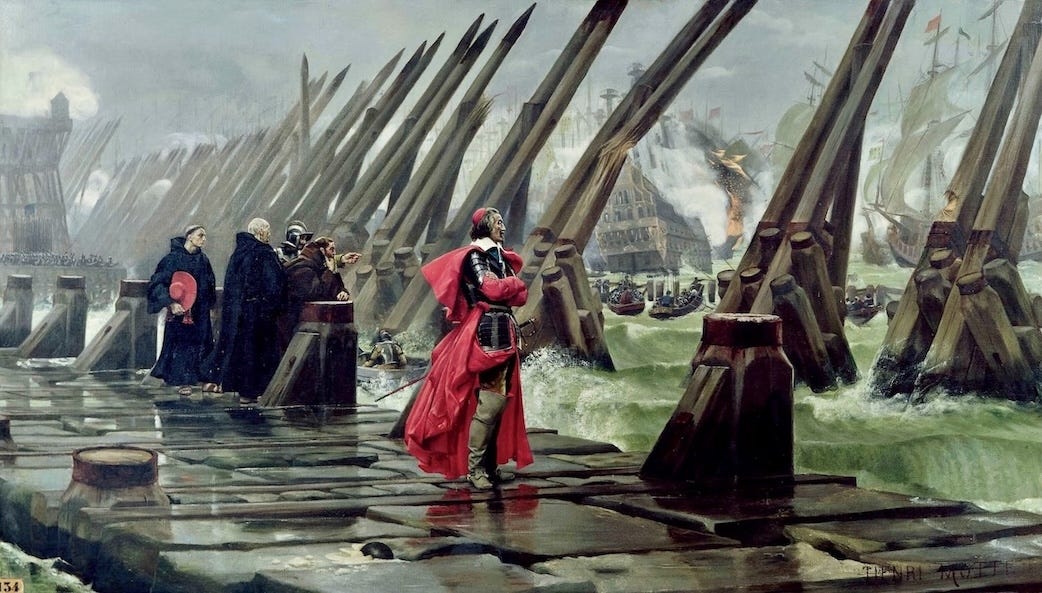
After seeing the 19th century works of Henri-Paul Motte, it’s fair to say that modern cinema has a “painting quality,” not the other way around.
Motte’s stand-out work is probably “The Siege of La Rochelle” (1881), above. La Rochelle, one of the final strongholds of French Huguenots after a century of war against royal Catholic forces, was captured by Cardinal Richelieu after a marathon siege in 1628. Here he stands upon a sea wall built to block the harbor and isolate the city. Motte’s version of events, painted almost 150 years ago, could easily be mistaken for a still from a modern film.
Motte learned directly from another French master whose work you’ll more likely recognize: Jean-Léon Gérôme. To our eyes, he had a “movie director-like” use of narrative, paired with the aesthetics and precision of newly-emerging photography. His masterpiece, “Pollice Verso” (1872), unsurprisingly influenced Ridley Scott’s “Gladiator.”
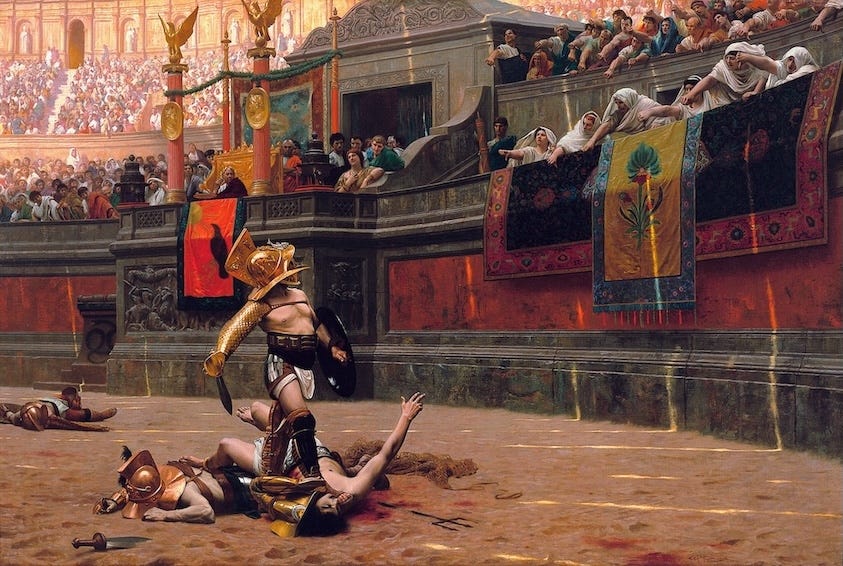
But if paintings like this predate movie-making, then “cinematic” is a misleading word to describe them with — better words would be composition, depth, and scale. That said, it is important to remember that “cinema” comes from the Greek word for “movement” (κίνημα, or kínēma), so we might well use it appropriately in this case.
Forerunners to Film
Even earlier than Gérôme, the Romantics like John Martin stunned their contemporaries with vast, apocalyptic sublimes. They produced a sense of awe in much the same way as modern movie makers do now: by placing small human subjects before the immensity of nature.
It was Martin’s panoramic biblical subjects that most evidently set the stage for modern cinema. They were done on enormous canvases, with details to keep you occupied for hours. “Belshazzar’s Feast” (1821) freezes the moment that God delivered his judgment on the wall of King Belshazzar’s palace, per the Book of Daniel. The tyrant king of Babylon reels as he learns the truth: that his empire will fall to the Persians before dawn…
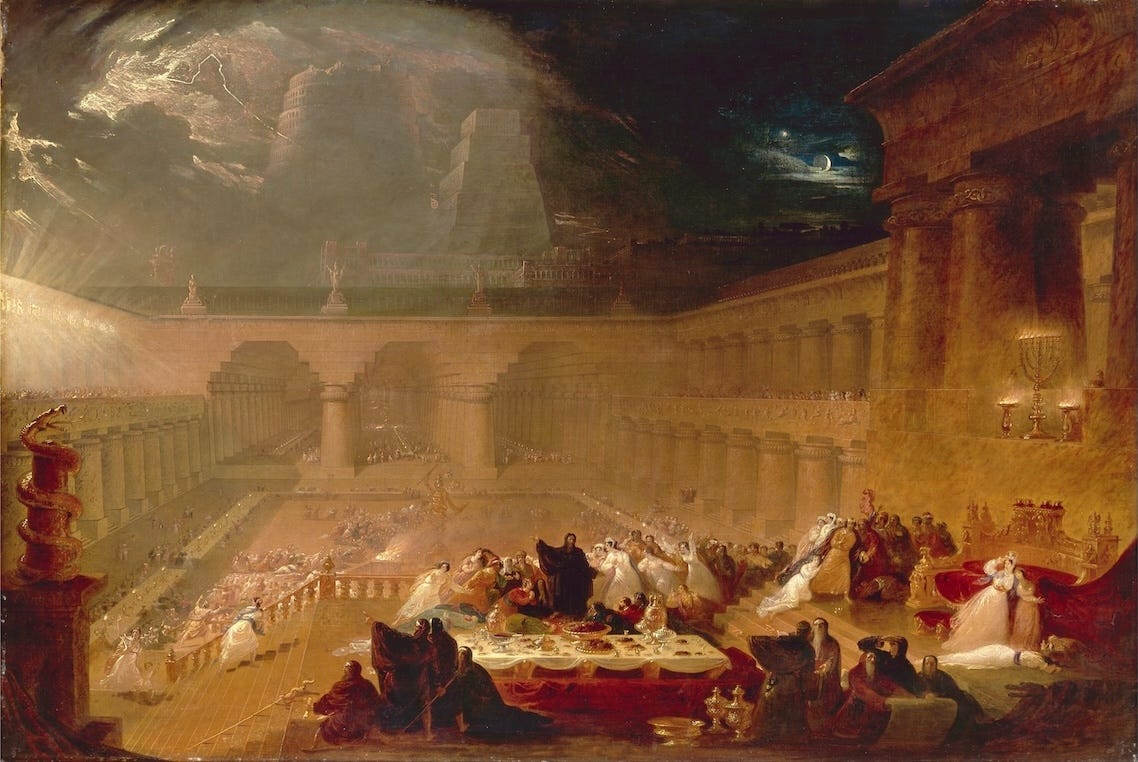
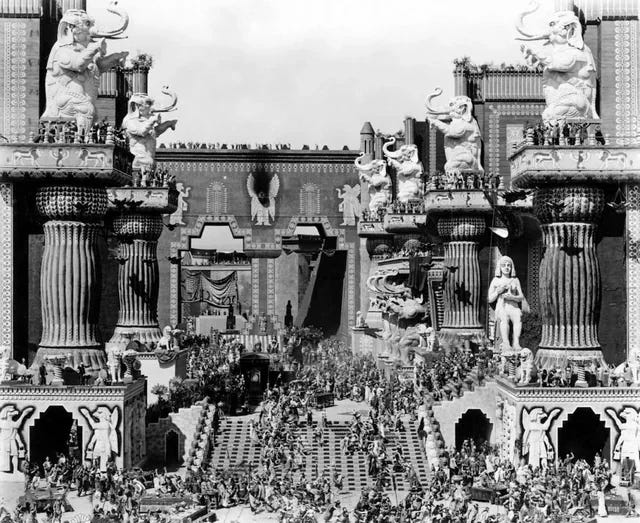
Martin conjured the architecture of the palace so convincingly that it was very obviously copied for an early silent film. D.W. Griffith’s Intolerance (1916) carried Martin’s ambition into a truly enormous film set, the likes of which had never been seen before.
But Martin was also a forerunner to modern cinema in a sense that goes beyond the scope and scale of the canvas: he had a sharply commercial mind. His works were displayed by dramatic gas lighting inside music halls and theaters, accompanied by dramatic readings of the subject matter.
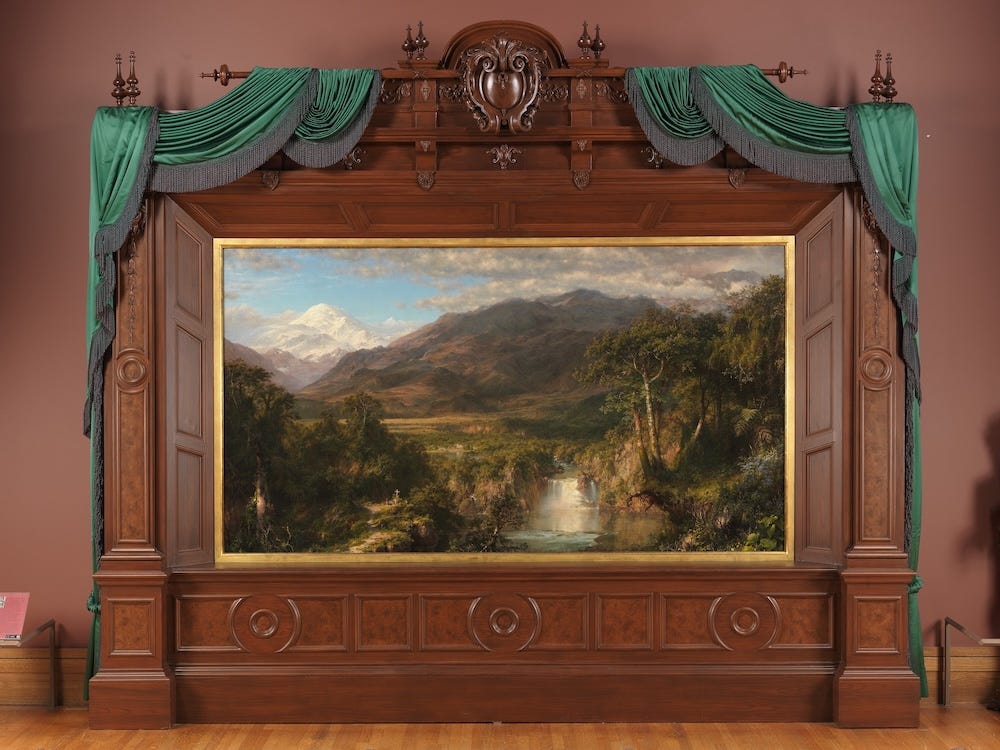
Same with another great 19th century painter: the American landscapist Frederic Edwin Church, also a deft businessman, displayed his canvases theatrically with curtains. “The Heart of the Andes” (1859) contained so much depth and detail that 12,000 people paid $7 a ticket (in today’s money) to sit in front of it — a single-painting exhibition.
Visitors were even provided opera glasses to navigate the painting’s endless minutiae, and Church sold them chromolithograph replicas on the way out…
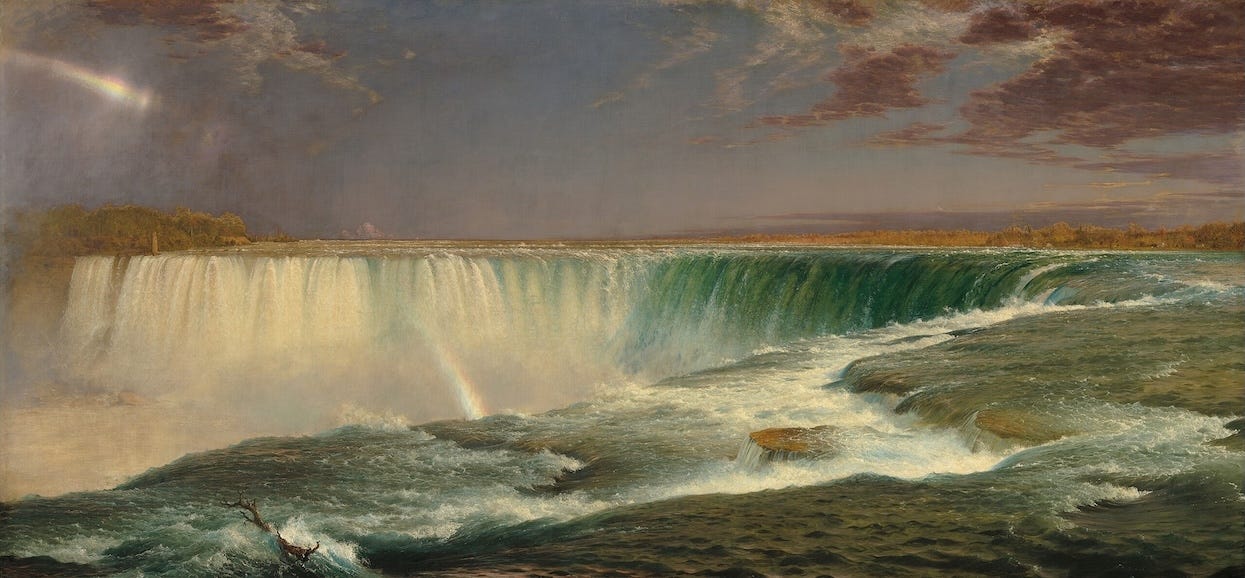
Church’s body of work also provides neat examples of how these artists thought about composition. In his “Niagara Falls”, the viewer was suspended right above the point at which the water begins to descend. The IMAX is the go-to way to experience immersive tension today, but we can see that artists have been thinking of all the same things for quite some time.
What about how the paintings themselves are made?
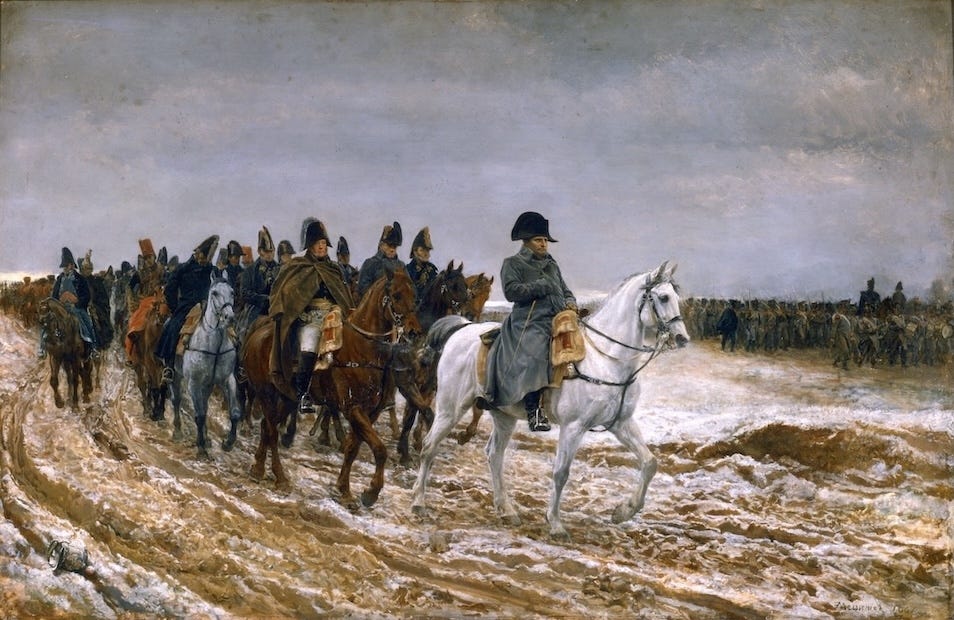
Academic painter Ernest Meissonier was known for creating carefully planned “sets” in the same way that a movie director might; hiring local “troops” to stand in fields covered in flour (imitating half-melted snow) to recreate Napoleon’s “French Campaign, 1814”.
Meissonier, a man of the Second Empire regularly commissioned to celebrate the glories of the First, was known for maintaining an impressive archive of mannequins, costumes, and other props at his home in Poissy.
Of course, the intentional choreographing of scenes was nothing unique to this period of art, per se. For carefully planned “cinema lighting,” you can go a lot further back indeed. Caravaggio, for instance, choreographed his models beneath the light that poured into his studio in Rome in much the same spirit as a precisely illuminated film set.
Great Art Recognizes Great Art
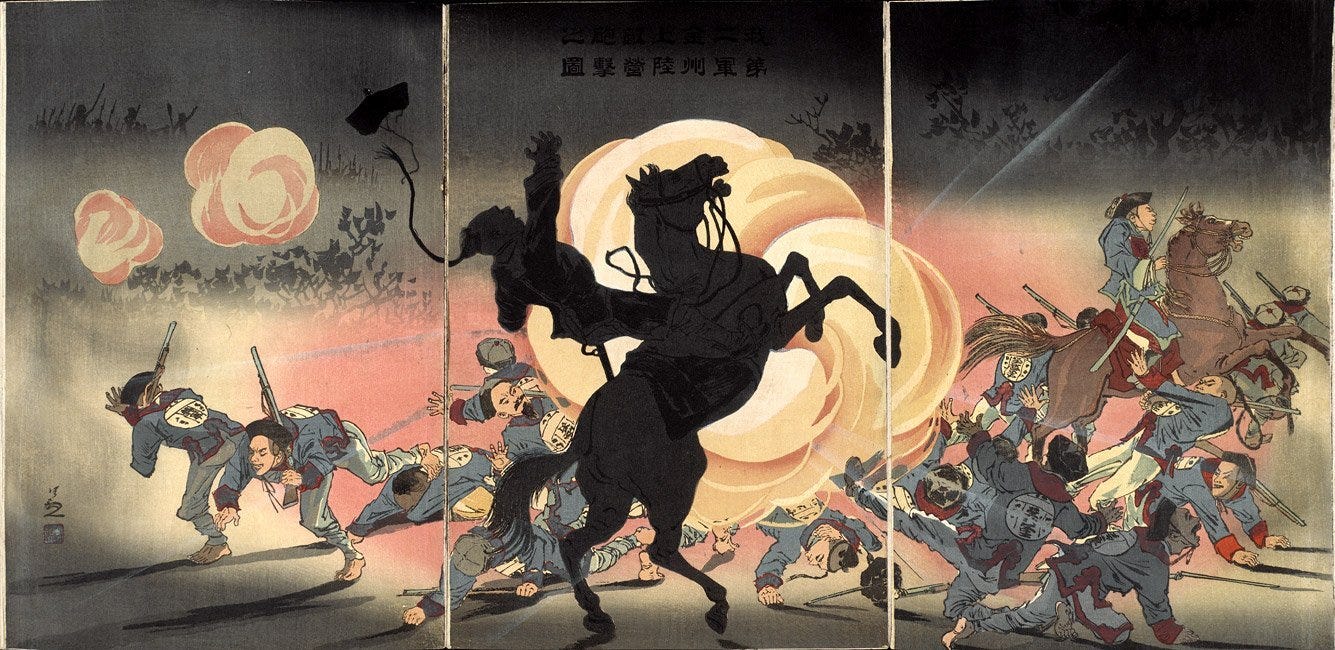
Beyond Western art, there are the 19th century woodblock prints of Kobayashi Kiyochika (below). These also comfortably predate the motion picture, yet they achieved all the scale and atmospheric tension of modern film.
The list goes on.
Of course, no modern movie maker would claim not to be inspired by the visionary artists that preceded them. Indeed, the very best directors of today actively emulate and honor the past in their works — once you start looking for the influence of epic art on modern filmmaking, you begin to see it everywhere.
But it’s worth appreciating quite how rich this tradition truly is, and the visual glory that was achieved when our top creative minds had little more than paint and canvas at their disposal…
It’s striking how often we forget that painters mastered the language of spectacle long before film existed. Modern cinema feels less like a revolution and more like a continuation of their way of seeing.
Is this you, The Culturalist, holding the paintings? Always nice to see the faces of the creators behind the scenes. Really enjoy your thoughts and writing.