

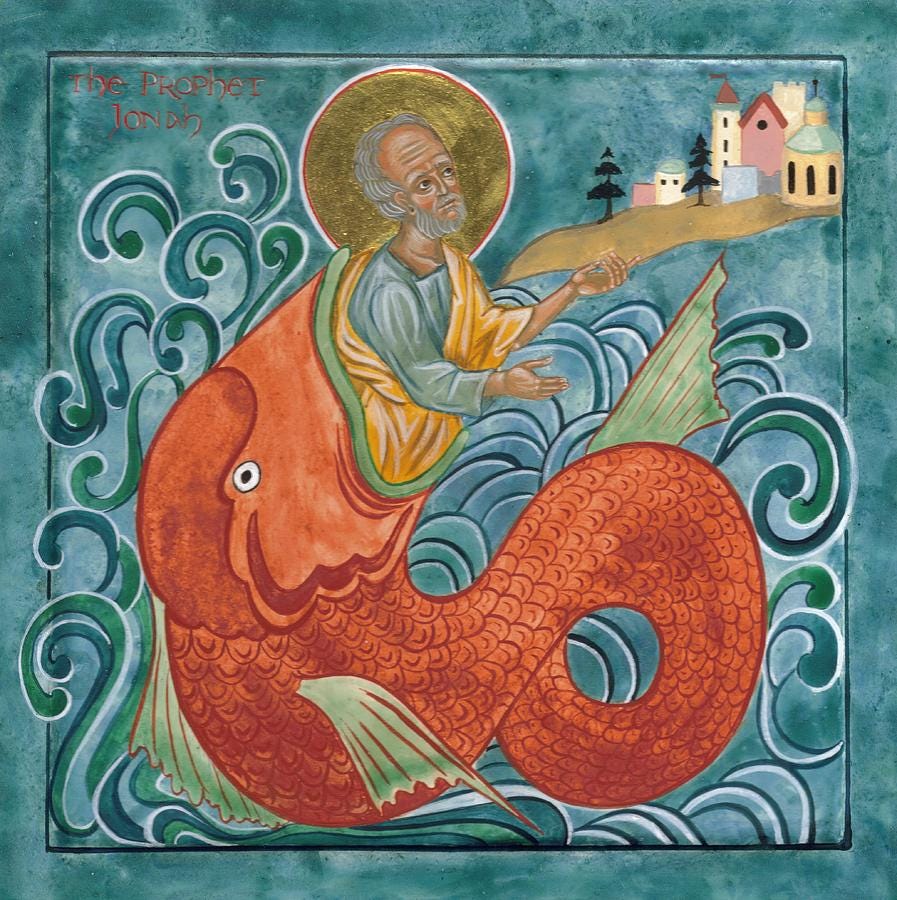
In 1966, J.R.R. Tolkien translated the Book of Jonah for the Jerusalem Bible. In doing so, he also provided what is arguably the most succinct summary of the book to date:
“[The whale] is quite unimportant. The real point is that God is much more merciful than ‘prophets’, is easily moved by penitence, and won’t be dictated to even by high ecclesiastics whom he himself has appointed.”
Now, if you grew up with the Sunday school version of this story, Tolkien’s summary of the Book of Jonah might sound quite odd — and even more so when you consider that, if people know anything about Jonah, it’s that he was swallowed by a whale!
But Tolkien’s analysis, as so often, is spot on. Today, we explore the Book of Jonah: what it’s really about, why it’s hilarious, and how it challenges you to turn your conception of God on its head…
Don’t forget to join our book club!
We just started East of Eden by John Steinbeck.
The next discussion is TODAY, August 26, noon ET. It isn’t too late to join: you can watch back the first discussion here if you missed it.

We are 100% independent, funded only by our incredible community. Support us with a paid membership and you’ll get:
Full-length articles 2x per week
The entire archive (200+ articles, essays, and podcasts)
Nineveh: The Hated Foe
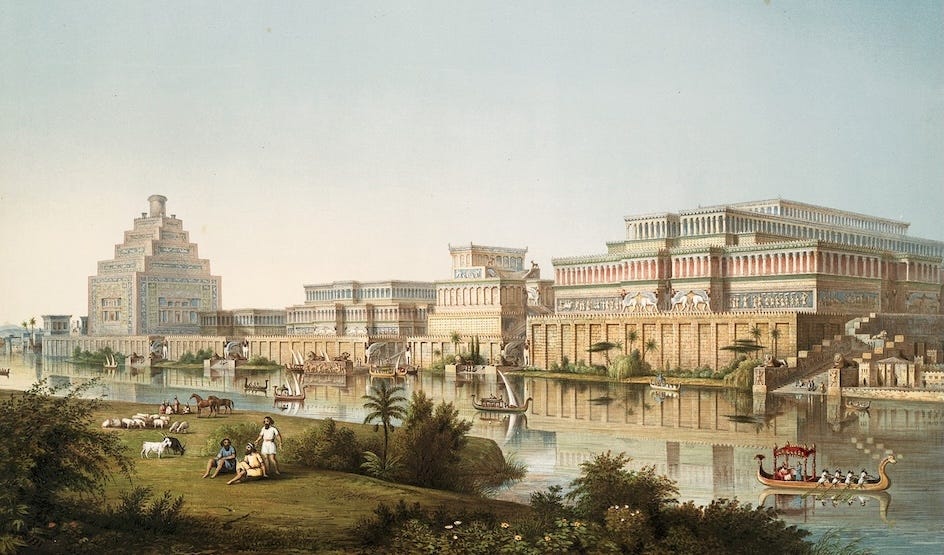
To understand Jonah’s story, you first need to understand Nineveh. In Jonah’s time, Nineveh was the capital of the Assyrian Empire, a superpower infamous for its violence and cruelty. Assyrian artwork itself brags of their brutal methods, which included impaling and skinning their enemies alive.
For the Israelites, the Assyrians weren’t just enemies — they were an existential threat. In 722 BC, Assyria sacked the northern kingdom of Israel, scattering its population and leaving destruction in its wake. Even after this conquest, the southern kingdom of Judah faced constant harassment until the Assyrians were finally overthrown by the Babylonians in 612 BC.
This background makes God’s command to Jonah all the more shocking:
“Go to the great city of Nineveh and preach against it, because its wickedness has come up before me” (Jonah 1:2)
For Jonah, Nineveh represented everything evil in the world: the ultimate enemy of God’s people. Why would God offer such a city the opportunity to repent? Surely, they deserved nothing but judgment and destruction. From Jonah’s perspective, God’s command wasn’t just distasteful, it was incomprehensible.
Jonah’s Reluctant Mission
Jonah immediately responded to God’s call, but with defiance, not obedience. Instead of heading to Nineveh, he boarded a ship bound for Tarshish, a city in the exact opposite direction. The reluctant prophet wasn’t just running away, but trying to escape God altogether.
But God, as the story shows, is not so easily avoided. When a violent storm threatens the ship, Jonah admits that it’s his fault. To save themselves, the sailors reluctantly toss Jonah overboard, where he’s swallowed by a giant fish (most children’s stories call it a whale, but in Hebrew it’s technically just a fish).
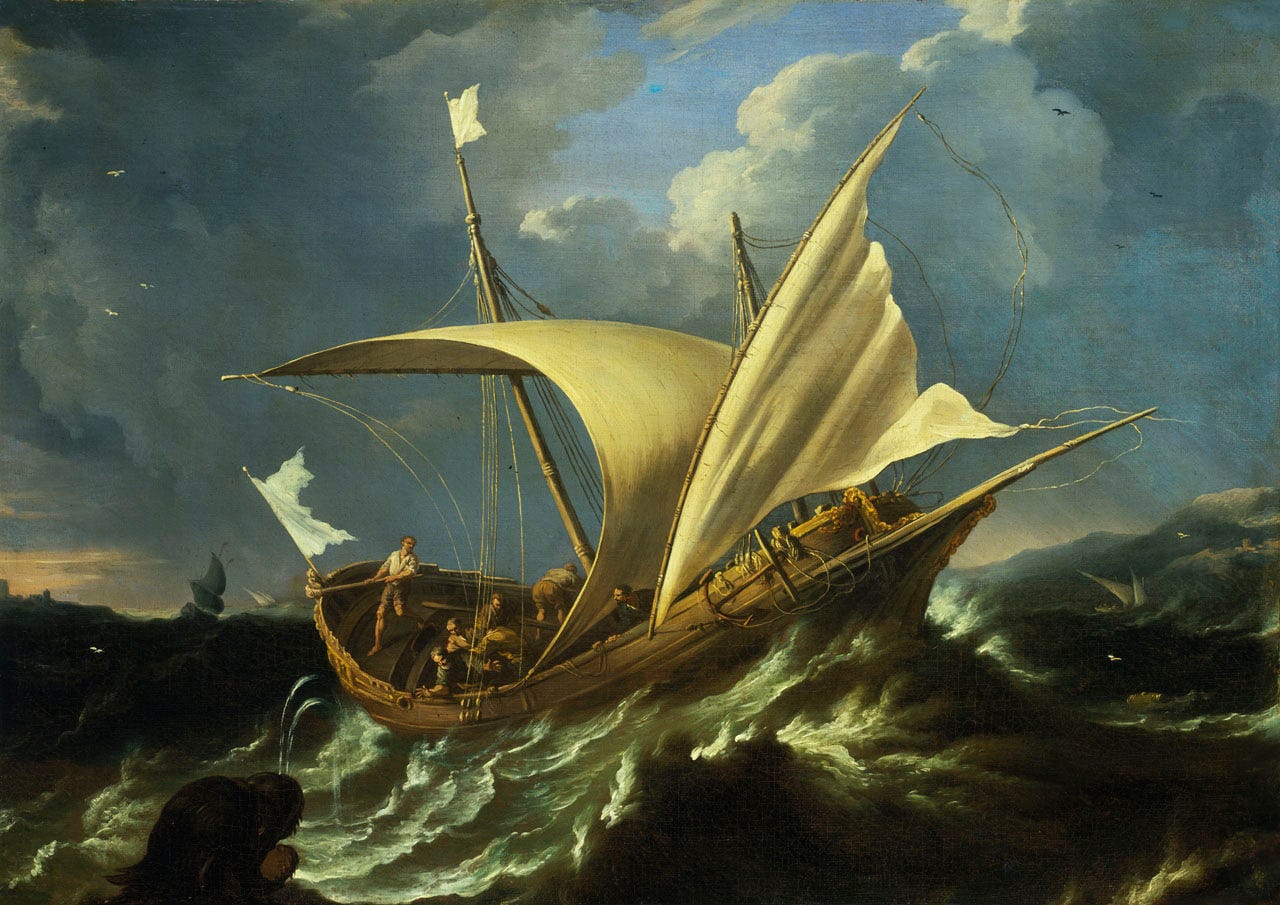
Now at this point, it might appear as though Jonah finally behaved virtuously by offering himself up as a sacrifice. But the author of Jonah makes it clear that the disobedient prophet isn’t just having a change of heart, rather, he’s attempting suicide!
This perspective is in line with Jonah’s character throughout the book. He hates the Assyrians so much, he’d rather kill himself than give them the chance to repent. But it’s also a perspective which is more harmonious with the character of God: the fish that swallows Jonah isn’t a source of punishment, but a source of salvation — not just for Jonah, but for the Assyrians whom God wishes to see reconciled to Him.
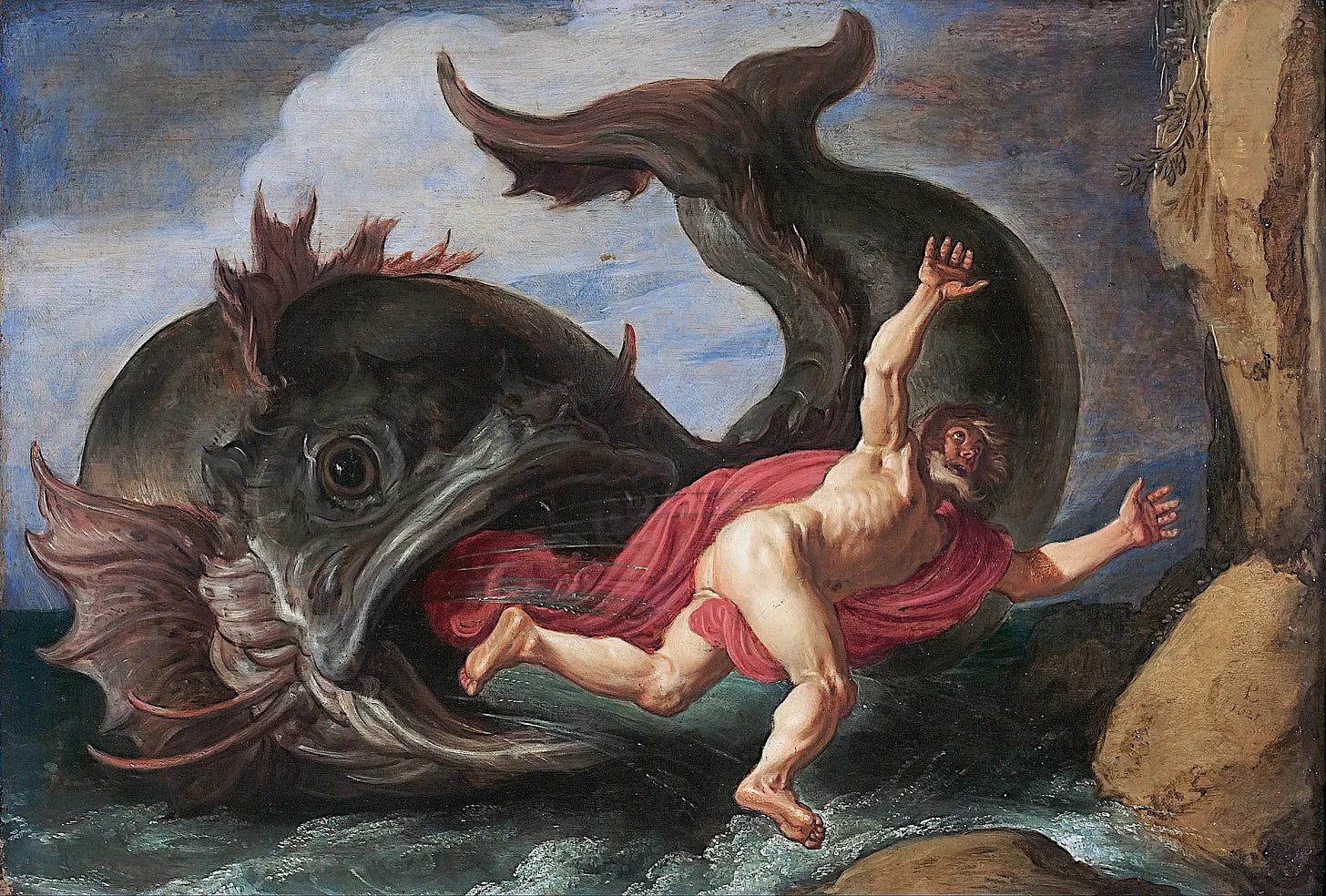
For three days, Jonah languishes in the fish’s belly, praying a prayer of repentance that’s equal parts thanksgiving and self-pity. While it might read as quite sincere, it’s actually just a pastiche of pre-existing Psalms — almost nothing about the prayer is original, which further compounds Jonah’s disingenuous character. Nevertheless, God has the fish carry Jonah to safety, and vomit him onto dry land.
Once ashore, Jonah begrudgingly goes to Nineveh, where his reluctance is on full display — and both the subtle humor and overt message of the story shine through.
For starters, the “sermon” Jonah preaches is just eight words in English: “Forty more days, and Nineveh shall be overthrown” (Jonah 3:4). It’s even less in the original Hebrew — five words are all that Jonah offers to the Assyrians.
But the real humor that’s lost in English is just how reluctantly these five words are pronounced. They’re not “called out” as most English translations render it. In fact, they’re barely muttered under Jonah’s breath. The image you get is one of Jonah reluctantly shuffling into the city, murmuring his words, then promptly making a beeline for the exit.
And yet, despite all of Jonah’s half-hearted efforts, something extraordinary then happens.
The Worst Possible Outcome
Unfortunately for Jonah, the people of Nineveh attend to his words. From the high king to the lowest servant, all the Assyrians don sackcloth and ashes, fasting and praying for forgiveness. Even the animals are included in their acts of penitence, as the king orders the animals to fast, too!
What’s even more remarkable is the attitude with which all of this is done — it’s not penitence as a vending machine, where you simply put on a sackcloth and get saved. All of it is done with incredible humility, and the King even says:
“Who knows? God may turn and relent and turn from his fierce anger, so that we may not perish.” (Jonah 3:9)
His “who knows?” showcases his humility — he understands it’s no guarantee that God relents from his anger. He knows their destruction is warranted.
But nevertheless, God forgives them. The destruction Jonah had hoped for doesn’t come. To his horror, Nineveh is spared.
The beginning of Chapter 4 illustrates the prophet’s frustration perfectly:
But it displeased Jonah exceedingly, and he was angry. And he prayed to the Lord and said, “O Lord, is not this what I said when I was yet in my country? That is why I made haste to flee to Tarshish; for I knew that you are a gracious God and merciful, slow to anger and abounding in steadfast love, and relenting from disaster. Therefore now, O Lord, please take my life from me, for it is better for me to die than to live.” (Jonah 4:1-3)
Jonah is furious. He cannot reconcile God’s mercy with his own sense of justice, and would prefer to die than see his enemy saved from destruction.
The God of Mercy
This tension between Jonah and God reaches its climax in a final, poignant lesson. Jonah sulks outside the city, hoping against hope that God will still destroy it. As he waits, God causes a leafy plant to grow and provide him shade.
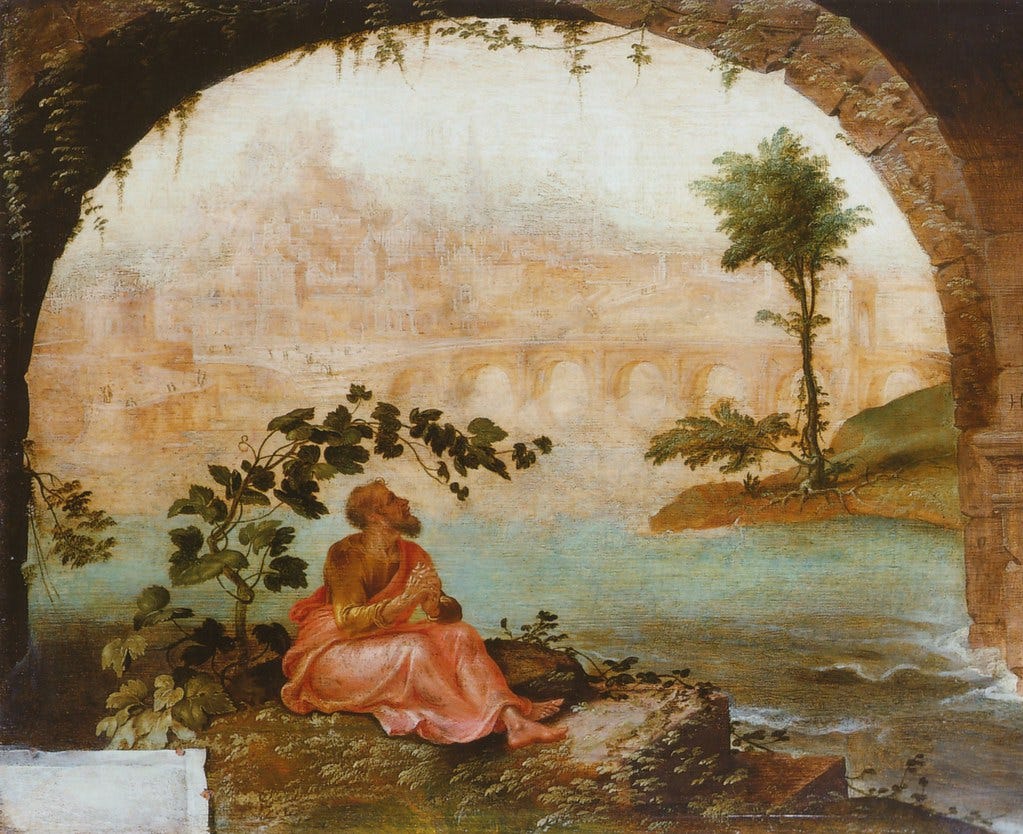
But the next day, God sends a worm to wither the plant, leaving Jonah exposed to the scorching sun. When Jonah laments the loss of his shade, God delivers the story’s moral:
“You have been concerned about this plant, though you did not tend it or make it grow. It sprang up overnight and died overnight. And should I not have concern for the great city of Nineveh, in which there are more than a hundred and twenty thousand people who cannot tell their right hand from their left—and also many animals?” (Jonah 4:10-11).
Here, Tolkien’s analysis rings true. God is easily moved by penitence, even from the most unlikely sources. The Assyrians, infamous for their cruelty, turn to God with sincerity, and He responds with mercy. But this mercy isn’t just for Nineveh — it’s also a challenge to Jonah and to all who, like him, would limit God’s grace to those they deem deserving.
God, as Tolkien notes, “won’t be dictated to even by high ecclesiastics whom he himself has appointed.” Jonah’s prophetic authority doesn’t give him the right to decide who is beyond redemption. God’s grace is His alone to give, and it often defies human expectations.
The Book of Jonah is, in the end, a comedy — not because it’s funny (though it often is), but because it ends in unexpected joy. It invites you to marvel at God’s mercy, laugh at Jonah’s stubbornness, and reflect on the ways in which you might be more like him than you’d care to admit.
As Tolkien’s one-sentence analysis reminds us, the real point of Jonah isn’t the whale. Rather, it’s the radical, unexpected, and boundless mercy of a God who refuses to be put in a box.
Thank you for reading!
If you enjoyed this piece, you should definitely check out our sister publication, The Ascent.
There, we are diving deeper into theology, mysticism, and ancient texts — please join us if that interests you! You’ll get one free article every Tuesday, and longer essays like this every Friday for paid readers…
Beautiful piece.
My favorite book of the Bible. Unexpectedly humorous at the end (v 4:9)