

Hello book club!
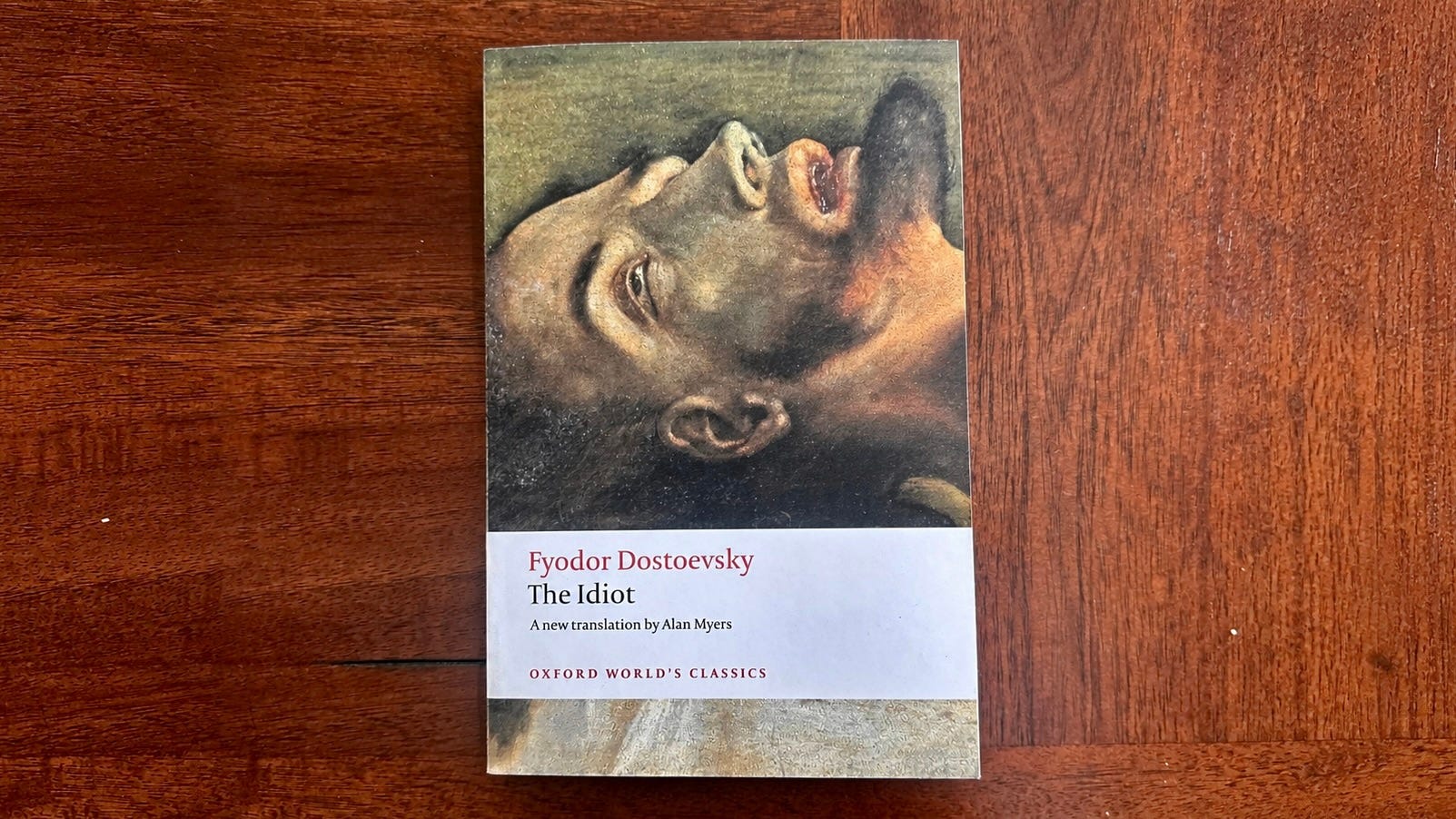
It’s almost time for our next discussion on The Idiot. We meet tomorrow, at noon Eastern Time — the discussion will be livestreamed via Substack here.
For those joining our discussion group directly (available to all paid members), the Zoom link is at the bottom of this email.
Below are some key ideas to consider as we read Part 2 of the novel…
You can join our reading group by taking out a paid membership here:
As a full book club member, you’ll get:
Live book discussions (biweekly) and all the recordings
Access to our incredible community of readers
The entire library of essays, articles, and podcasts
Part 1 ended with a disastrous end to Nastasya’s party. Recall that Myshkin offered her his hand in marriage, but she rejected him for the dark and brooding Rogozhin.
Part 2 begins after six months have passed. In this time, Nastasya, Rogozhin, and Myshkin had all left Petersburg — the former to enjoy their life together as an engaged couple, while Myshkin settled accounts of his newfound inheritance.
Yet we learn Nastasya and Rogozhin’s relationship is ill-fated. Nastasya despises Rogozhin and is unfaithful to him. Twice already she has fled him, once nearly at the altar, but Rogozhin pursues her nonetheless, once beating her severely for her infidelity. Nastasya herself, it’s revealed, has run into Myshkin’s arms, but subsequently flees him before they can become a proper couple.
Despite all this chaos, one of the most revealing scenes is Myshkin and Rogozhin’s conversation in chapters 3 and 4.
Here Myshkin visits Rogozhin and asserts that, though both men are “rivals” for Nastasya, he does not consider himself an enemy. In fact, he thinks Rogozhin’s prospective marriage to Nastasya would be bad for both her and Rogozhin himself.
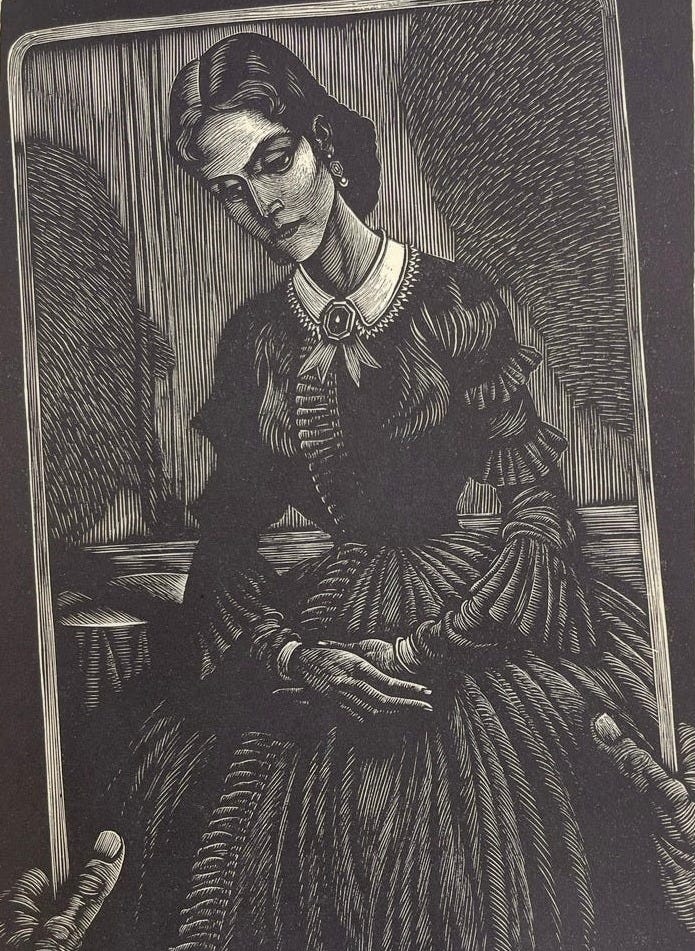
Even more surprisingly, Rogozhin reciprocates Myshkin’s goodwill. He reveals that he hates Myshkin when they are separated, but in each other’s presence, he cannot help but feel regard and warmth for the Prince.
It is also here that Rogozhin reveals a crucial truth about Nastasya: she loves Myshkin more than him, but embraces Rogozhin because she fears Myshkin more. Myshkin, likewise, reveals that he desires Nastasya, “not out of love, but pity.”
Thus we find this “love triangle” has only grown more complicated — the “loves” of these three characters for one another are not selfless and neat; rather, they’re a strange entanglement of goodwill, mixed with possessive desires, self-destructive impulses, and even hatred.
The key tension to track is whether or not this “entanglement” begins to unwind itself over time, or only increases in tension — making life miserable for all involved.
Below are some key questions for us to consider:
What does Myshkin mean when he says he loves Nastasya “not out of love, but pity”? Is pity a form of genuine love here? Why or why not?
Why does Nastasya repeatedly flee from both Rogozhin and Myshkin? What does each man represent to her?
Why can Rogozhin and Myshkin feel genuine affection for one another despite competing for the same woman? What does this reveal about each man’s character?
Is Myshkin’s pity for Nastasya actually selfless, or does it contain a desire to possess or save her?
What does Nastasya’s attraction to Rogozhin tell us about her understanding of herself and what she thinks she deserves?
Where, if anywhere, do we see genuine self-giving love in these chapters?
Share your thoughts in the subscriber chat, along with any questions you have — we will incorporate them into Wednesday’s discussion!