

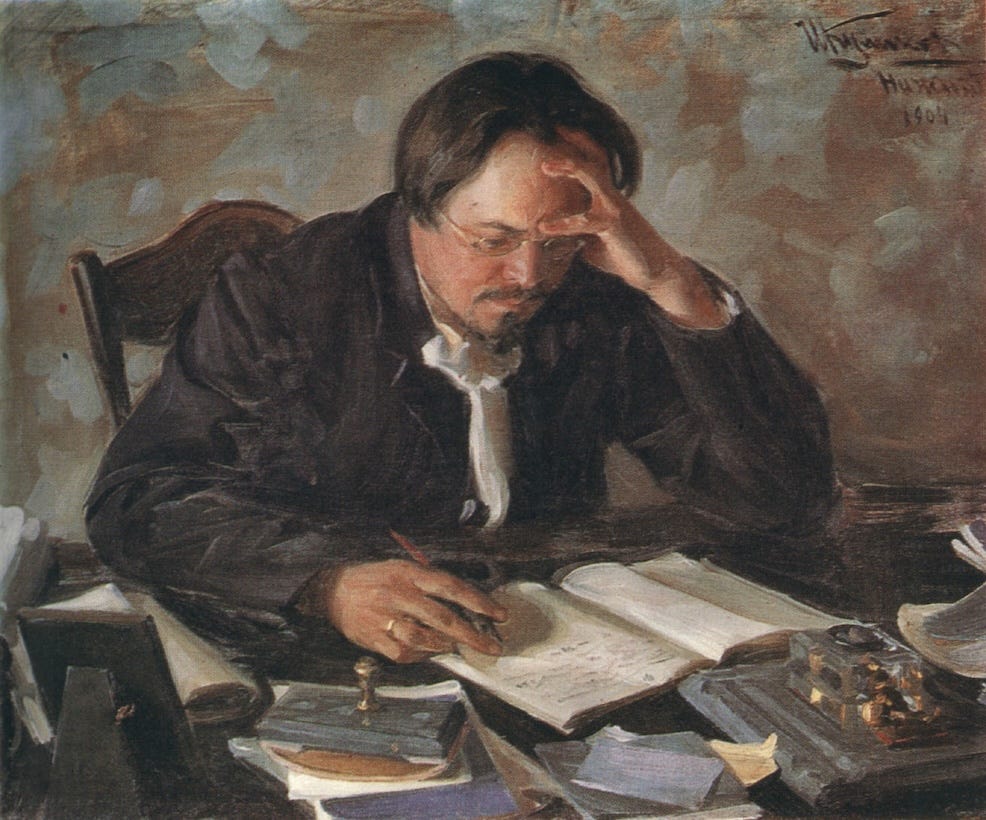
Most people view creativity as something otherworldly and magical. They treat it as a gift bestowed by the gods, an elusive and fleeting spark that inspires the greatest artists and geniuses. It’s a romantic notion, for sure — and a terribly wrong one, too.
The thing is, genuine creatives rarely define creativity in these terms. Take a songwriter, for example. The most prolific ones often approach their craft with a brutally rigid approach, demanding certain chords or musical phrases at highly specific intervals. Max Martin, today’s most famous songwriter and the man behind 29 Billboard No. 1 singles (second only to Paul McCartney’s 32), is particularly renowned for his exacting approach to songwriting.
Creativity, far from what most people think, is way more accessible than you’re often led to believe. Of course, that’s not to say that it can be entirely broken down into a rote and mechanical process. There will always be some aspect of creativity that feels like it comes from “beyond you”. But the truth is, that part might only constitute about 10% of the creative process.
So what does the remaining 90% consist of? And what can you do to enhance your own creative process, thereby increasing the odds of stumbling upon that magical 10%?
The answer, as we shall see, is surprisingly simple…
Reminder: this is a teaser of our paid subscriber essays.
If you’d like to support our work, please consider a subscription. You’ll get:
New, full-length articles 2x per week
The entire archive of content (200+ articles, essays, and podcasts)
What Creativity Is & Isn’t
There is nothing new under the sun. Is there anything of which one can say, “Look! This is something new”?
-Ecclesiastes 1:9-10
But first, we need to define what creativity is in the first place. Cambridge Dictionary defines creativity as “the ability to produce or use original and unusual ideas”. This definition isn’t wrong, but it’s not particularly helpful, either. To actually define creativity, we have to look at what lies in common among different creative pursuits.
Novelty is one of those common elements, yet even this is deceptive. For is anything truly novel? Is any idea generated in a vacuum, completely free of external influences? The answer, as revealed by both ancient wisdom and modern neuroscience, is abundantly clear: everything that we deem “novel” derives from or builds on what came before; there is truly nothing new under the sun.
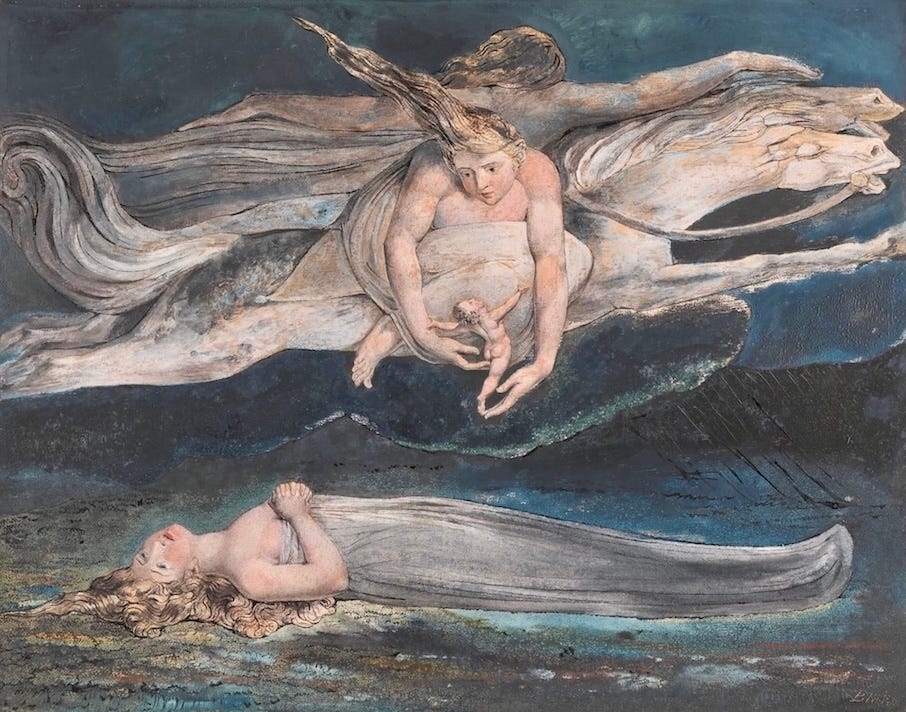
And yet, it doesn’t always feel that way. Some things genuinely feel new. What, then, makes them feel as such?
In most cases, it all comes down to one thing: connection between seemingly unrelated concepts. This is best seen in comedy, where the best jokes are often the ones that make connections where you least expect. A pun like “I used to be a banker, but I lost interest”, although far from side-splittingly hilarious, relies entirely on this mechanism. Move beyond the realm of comedy, however, and it’s still easy to spot this principle everywhere: The Lord of the Rings, for example, pulls from influences as diverse as Beowulf, Catholicism, and Norse mythology to create something that feels remarkably “new”.
Key to making these connections is having a wide enough range of knowledge to pull from, as well as the time and space to let the connections form naturally. Boredom is actually one of the biggest drivers of the latter, as your brain, deprived of external stimuli, starts grasping for whatever it can to entertain you. This is why constant stimulation (specifically via social media) directly correlates with a decrease in creativity.
But if “connection between seemingly unrelated concepts” helps you generate ideas, it doesn’t help you act on them. That’s where the next step becomes so essential…
Ideas, or Action?
As we know from the world of business, ideas by themselves mean nothing. Execution is everything. An idea unacted upon is worthless.
You should not be surprised to see, then, that this same idea applies to the world of creativity. In fact, it’s baked into the very word itself: creativity entails the act of creation, not simply idea generation. A sculpture is not created when it’s dreamt of in the mind, but when it’s physically wrought from a block of marble.
This aspect of creativity is perhaps the most overlooked, because everyone loves to focus on the originality of ideas themselves. But men like Michelangelo and Tolkien are not considered creatives for the ideas they had. Rather, they are considered creatives for how they brought those ideas to life. In fact, there is far more virtue in the execution of an idea than the mere generation of it.
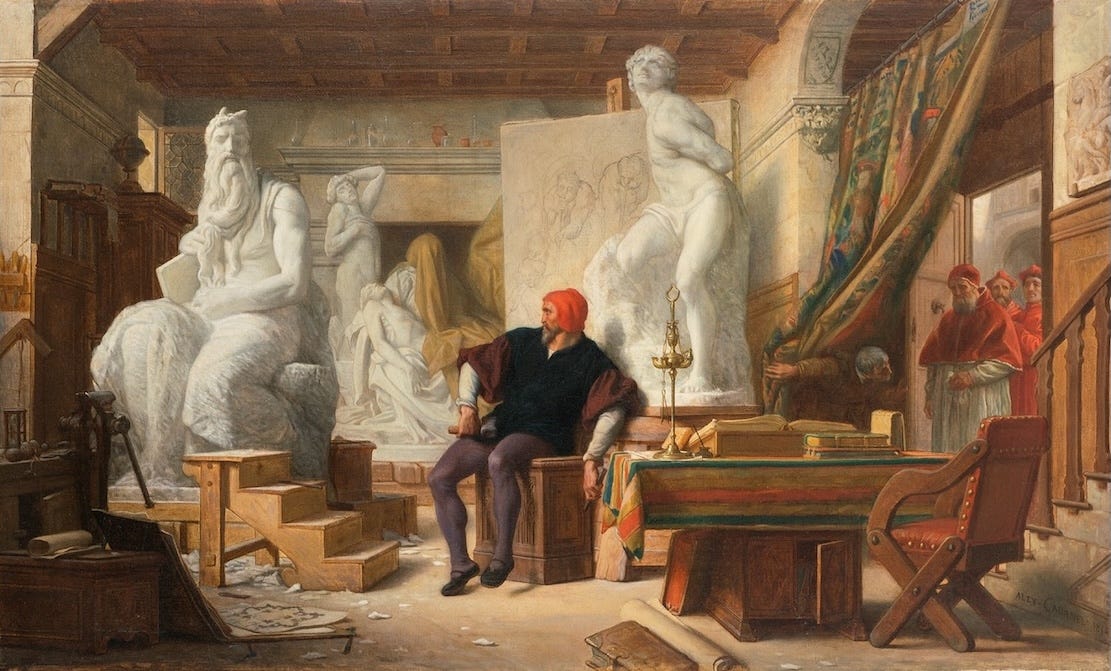
Why? Because execution forces you to overcome unforeseen hurdles. It demands a kind of resourcefulness, what one might even call “creative problem-solving”. Michelangelo’s real accomplishment in creating his statue of David is not so much that he had a revolutionary idea for what it could look like, but that he was actually able to overcome the challenges of physically realizing it.
True creativity, then, entails both A) making the connection between seemingly unrelated concepts, and B) having the skill and wherewithal to express ideas tangibly in the physical world. Whether you’re composing a song, carving a statue, or writing a novel, Part B is just as important as Part A, if not even more so.
What can you do, then, to cultivate the necessary virtue required to bring your ideas to life? What’s the key to expressing your creativity to the fullest, and making the most of your potential?
The answer lies in one simple process, outlined by none other than J.R.R. Tolkien himself…