

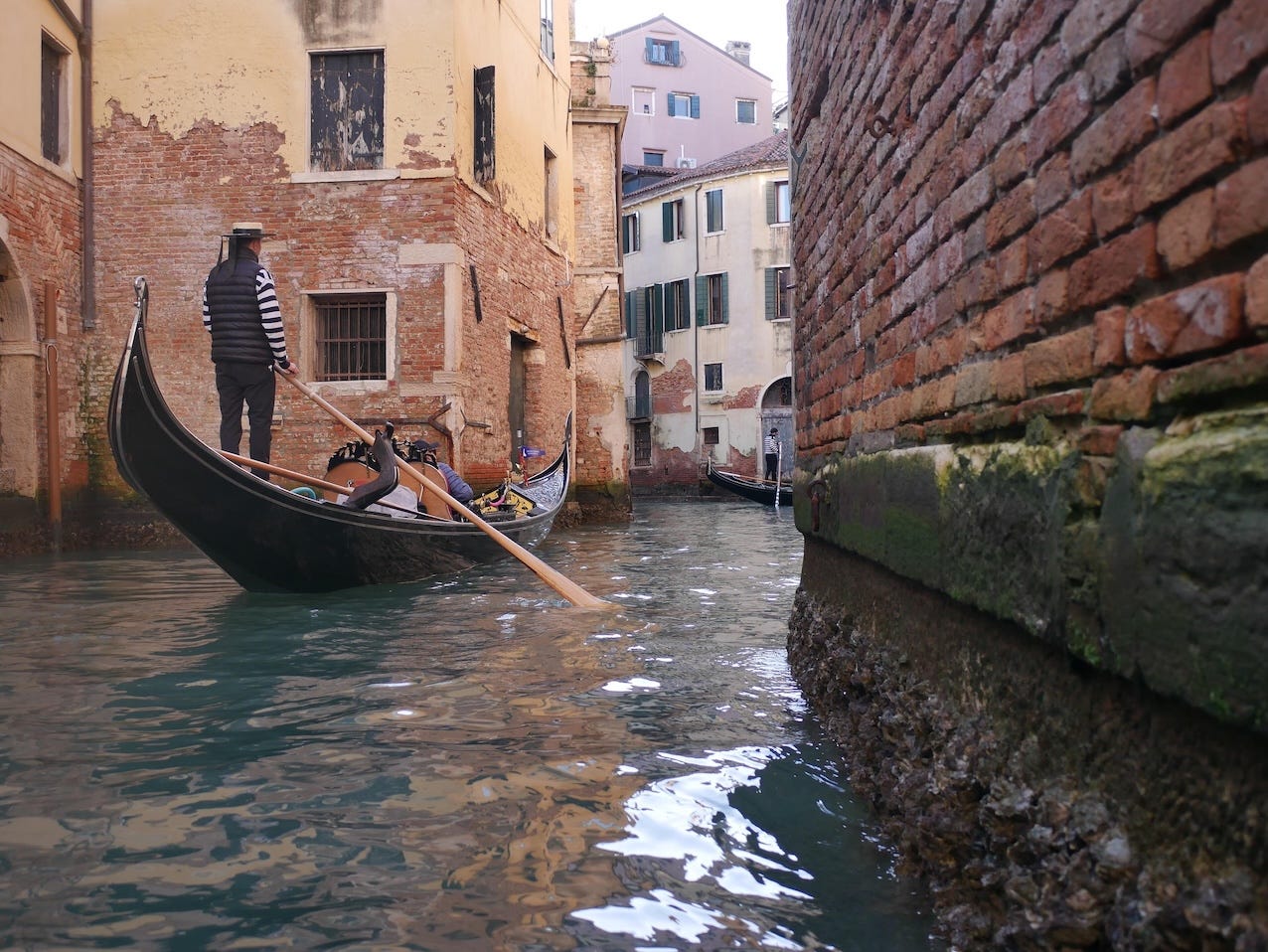
Venice is rightfully considered one of the most beautiful cities in the world. Nearly 30 million people visit it every year, and the vast majority of them leave enchanted by the experience.
But of course, it wasn’t always this way. Unlike many Italian cities, Venice was never the benefactor of Roman heritage. Instead, it was founded by a group of refugees who fled into the malaria-ridden swamps of northern Italy, and who over the centuries succeeded in doing the impossible: building a heaven out of the hell that was the Venetian lagoon.
Today, famous landmarks like St. Mark’s Basilica and the Doge’s Palace get the lion’s share of tourist attention, but many of Venice’s most enthralling sights are hidden well off the beaten path.
In this article, we explore five of them, and discover what they reveal about the incredible city that never should have been…
This newsletter is free, but if you’d like to support us, please consider a paid subscription — we are a reader-supported publication. You’ll get:
Full-length articles 2x per week
The entire archive of content (180+ articles, essays, and podcasts)
Our book club is currently reading Plato’s Republic. The next meeting is on Wednesday, January 28, at noon ET. Join us!
1) Basilica of Torcello
When most people think of Venice, “rural” is a word that almost never comes to mind. But at the northern end of the Venetian lagoon, one island shines light on the humble beginnings of the great city.
Settled in 452 AD, the island of Torcello is thought to be the first island inhabited by the Venetians. From there, the populace pushed south into the lagoon, slowly building and settling what would become the main islands of the Venice everyone visits today.
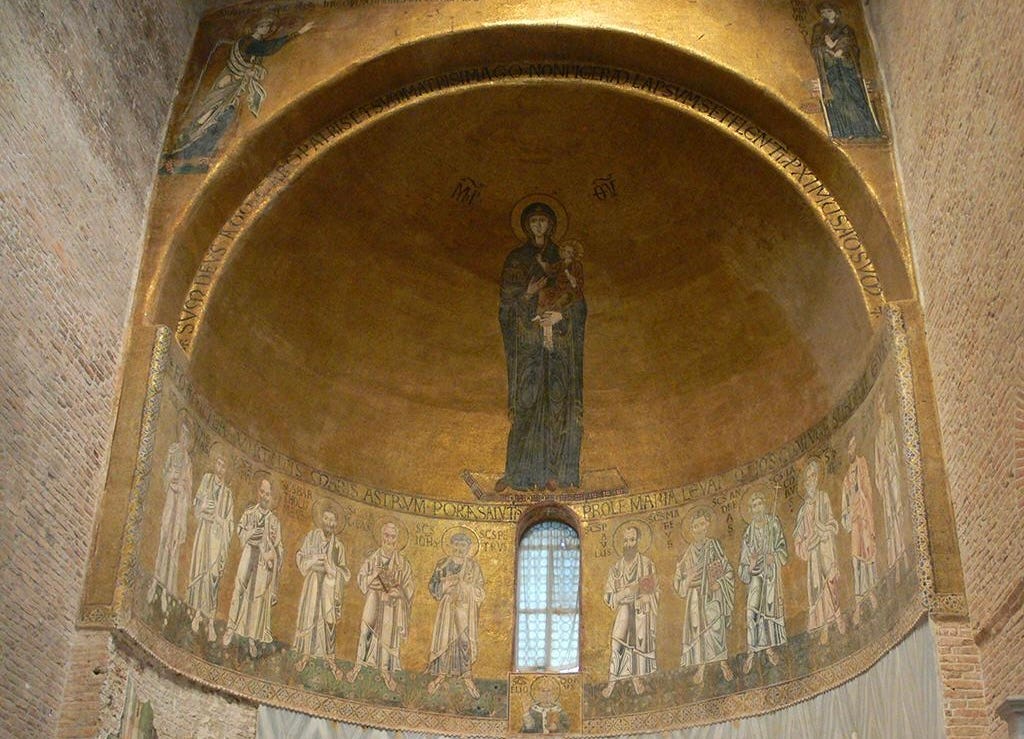
For all the attention (rightfully) given to St. Mark’s Basilica, few realize that Torcello was the first major center of faith in Venice, and remained an independent diocese for over 1,000 years. Its main cathedral boasts an enormous gold 11th century Byzantine mosaic that continues to wow the intentional few who travel to see it.
If you truly wish to understand the founding spirit of the great Venetian Republic, the humble island of Torcello is a must-visit.
2) Ca’ d’Oro
Video games like Assassin’s Creed did much to popularize the gothic aesthetic of Venice, but nowhere is true Venetian gothic on display like at the Ca’ d’Oro.
This jewel of the Grand Canal was constructed in the 13th century for the Contarini family, one of the twelve founding families of the Venetian Republic. The Contarini remained a powerful force in politics for over 1,000 years, commanding six ships at the Battle of Lepanto and having no less than eight of their members elected as Doge, the highest position of power in Venice.
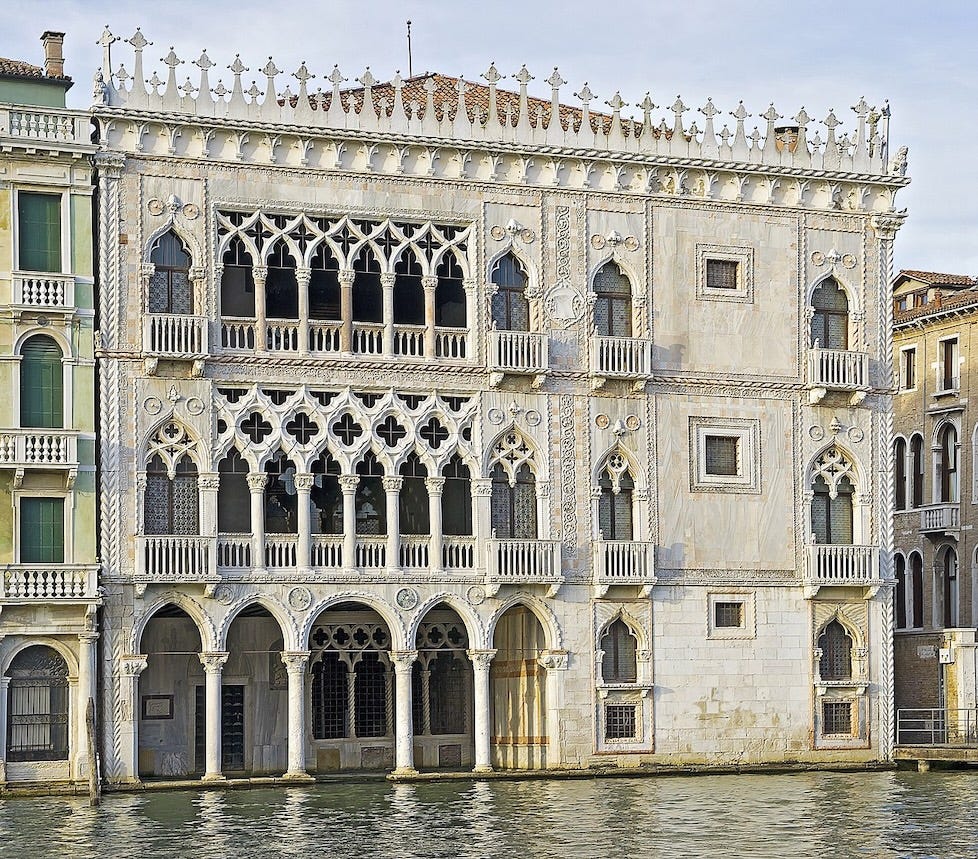
To step into the Ca’ d’Oro today is to step back into a world largely forgotten by time. Influenced by the Contarini’s position at the crossroads of global geopolitics, the palace features elements of Gothic, Byzantine, Islamic, and Venetian design, reflecting a time when all of these forces competed for influence on the world stage.
Originally covered in 23,000 sheets of gold, the palace was undoubtedly resplendent when it debuted. But although the sheen of its exterior has since faded, parts of the palace’s interior remain just as captivating now as they were in its heyday.
3) Scuola Grande di San Giovanni
Hidden behind a quiet façade in the heart of Venice lies the Scuola Grande di San Giovanni Evangelista, one of the most unique institutions of the Venetian Republic.
One of the five main Scuole Grandi that formed the civic backbone of the city, San Giovanni was not an actual school, but a confraternity. Part layperson religious brotherhood, part civic institution, these “schools” funded hospitals, organized charity, commissioned art, and provided a social framework that bound the Venetian Republic together.
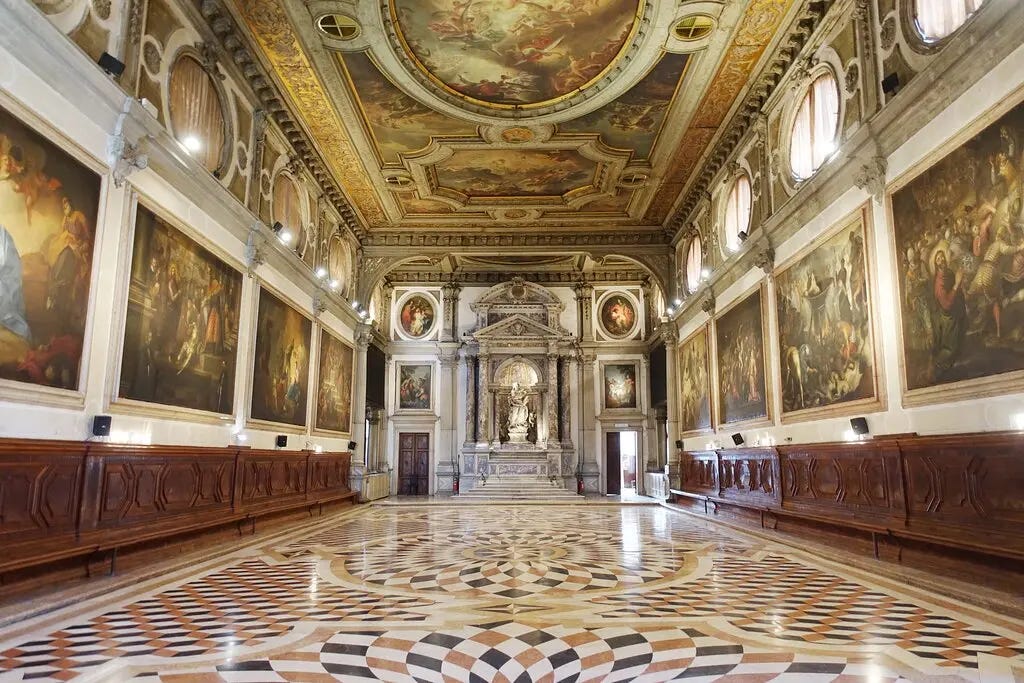
Founded in the 13th century, San Giovanni Evangelista was among the most prestigious of the schools, and even housed a relic of the True Cross. Operating in a world before private insurance or state-sponsored healthcare, the Scuola Grande di San Giovanni was governed by a remarkable group of people: otherwise ordinary citizens who believed that the health of their republic depended on personal piety, public charity, and the exercise of their civic duty.
4) Ca’ Rezzonico
Unlike the medieval Venice of Torcello or the civic institutions of the Scuole Grandi, Ca’ Rezzonico belongs to a later chapter in the city’s story. Begun in the 17th century and completed by the Rezzonico family after they purchased their way into the Venetian patriciate, the palace reflects a society increasingly defined by display and social performance.
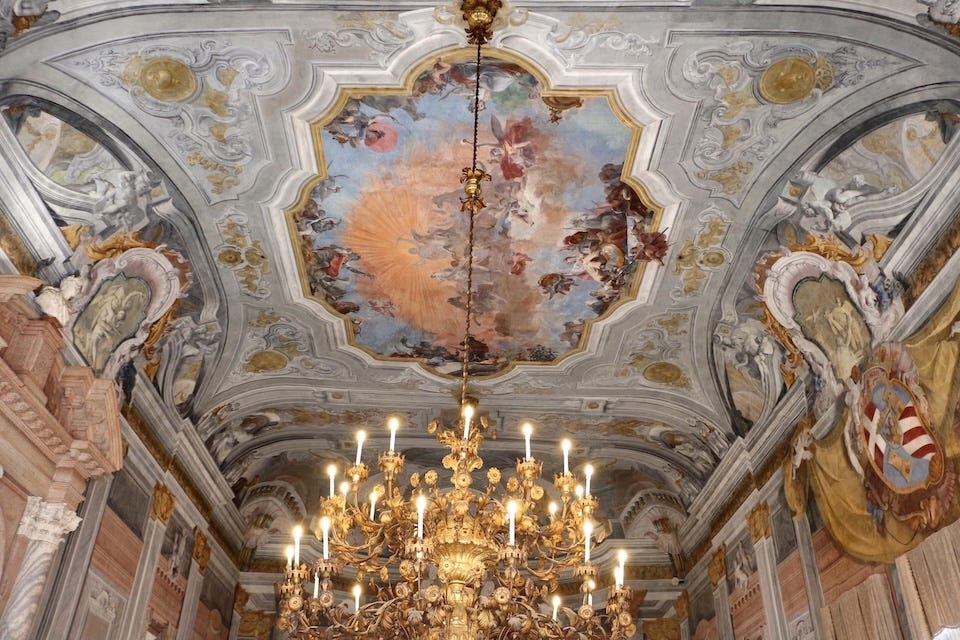
This is the Venice of masked balls and decadence. The grand staircases and frescoed ballrooms of Ca’ Rezzonico testify to the family’s wealth and power, but also to the refined culture and effortless elegance of the Venetian elite. It marks the final flowering of a civilization that had mastered both commerce and culture, even as the long arc of its political decline had already begun…
5) Isola di San Michele
The island of Saint Michael is a dark yet beautiful reminder of the fate that finally met the once-glorious Republic of Venice. By the time French troops advanced towards the Venetian lagoon in 1797, the city had long been in terminal decline. With its military obsolete and its economy eclipsed by Atlantic powers, Venice had no choice but to surrender to Napoleon.
Stripped of her sovereignty, and as part of a French sanitary decree, Venice was forced to construct a cemetery outside her city walls. The beautiful Isola di San Michele was the result, a serene square island in the lagoon that came to represent not just Venice’s dead, but Venice’s death.
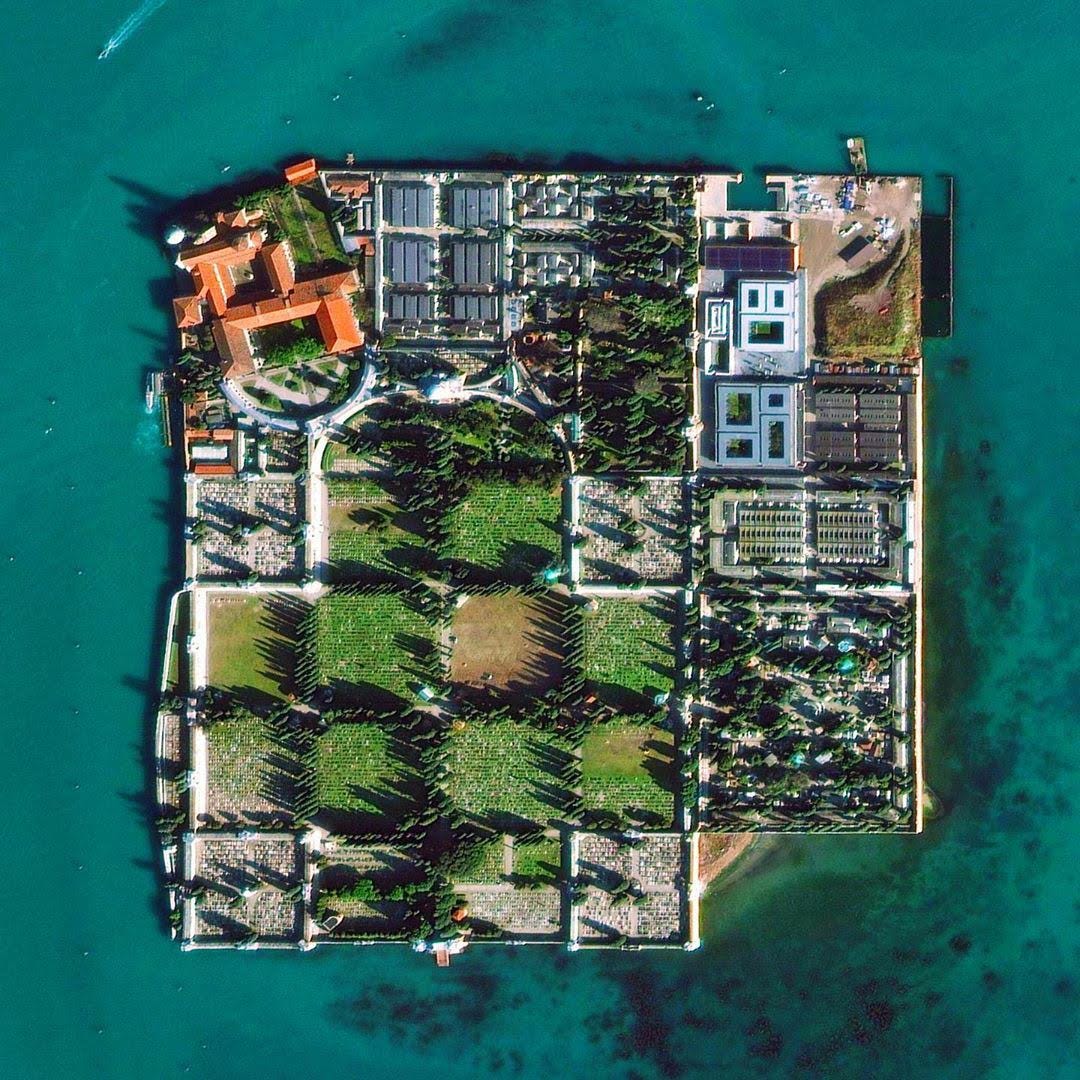
San Michele is in many regards the swan song of Venetian grandeur: one final, measured reflection on the republic’s improbable rise from malaria-ridden swamp to the jewel of the Adriatic, followed by its long and quiet descent into political obscurity.
Yet even here, more than two centuries after the republic’s collapse, the magic of Venice endures. Beauty still reigns over the lagoon, and San Michele stands as a silent witness to all that Venice built, as well as all that she ultimately lost.
I went to Venice a few years ago, and saw none of what you suggest. Time to go back. 👍🏽
i was there for a week about 10 years ago; i could never orient myself around that city… maddening at the time, but almost enchanting in retrospect. in fact, it’s one of the first thing i tell people who are about to visit… embrace the spontaneity that comes with losing your way in venice