

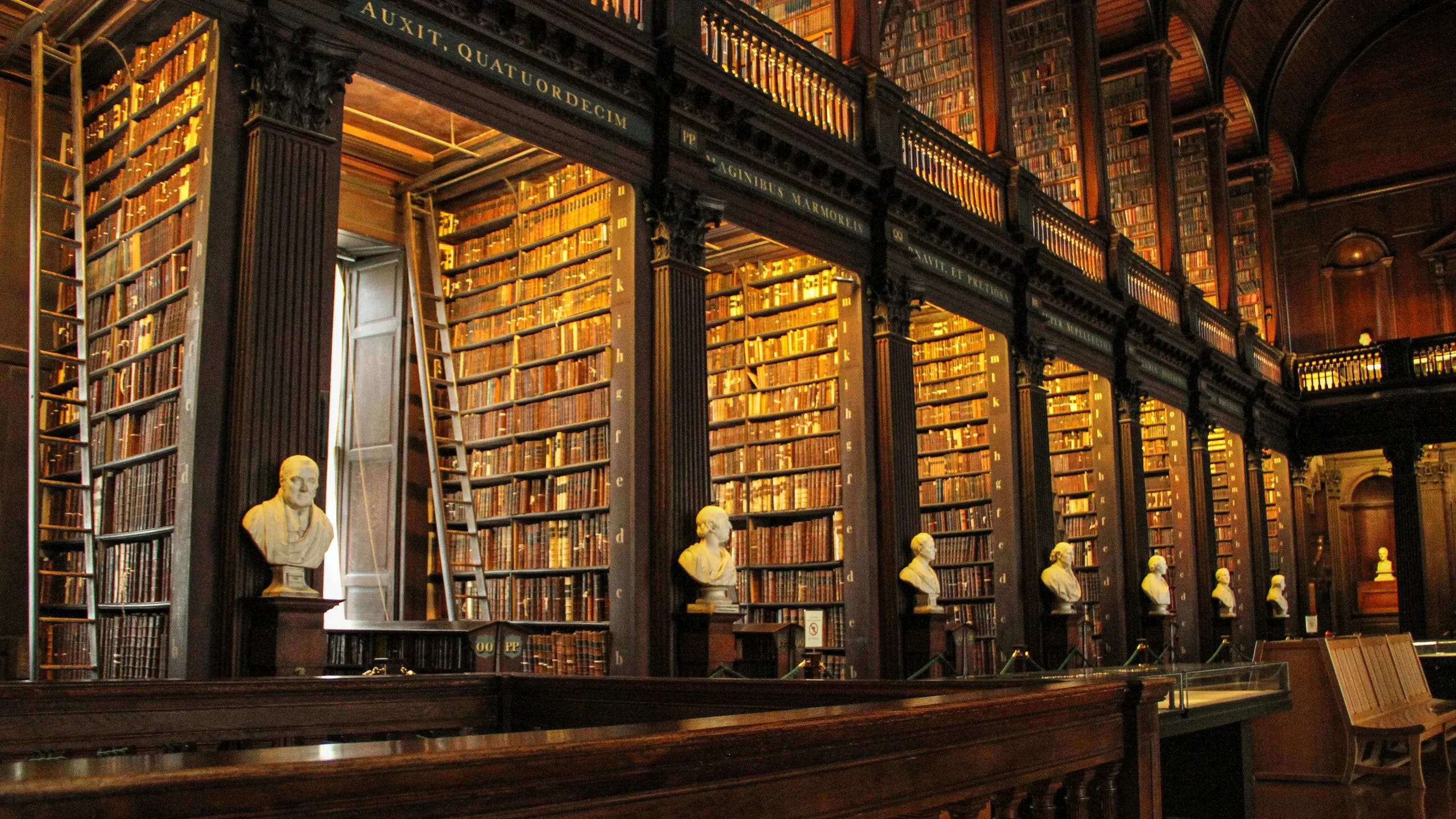
In many universities today, education has become little more than economic training. Real thought and debate are often censored, and the concept of forming minds and souls holistically has been almost entirely abandoned. More often, the goal is simply to produce productive cogs in the machine.
In the midst of such chaos, one idea in particular has been hailed as the key to saving education: the study of the great books. But what if this proposed remedy is actually the reason we find ourselves in today’s predicament?
After all, today’s reign of relativism and the destruction of the liberal arts were both brought about by ideas contained in the great books. Many students of the great books don’t become model citizens, but merely well-read relativists.
To simply read these texts, then, is not enough.
This is because at the heart of the great books is a massive paradox: you turn to them to teach you truth, yet you are to judge them by whether or not what they teach is true. How are you ever supposed to square such a circle?
Fortunately, there’s a time-proven path you can follow to make sure that you read the great books in the light of truth, and not the other way around. Follow these five points to free your mind and approach any work with confidence…
We are 100% reader-supported. This newsletter is free, but if you’re able to support, please consider a paid membership — it helps us enormously. You’ll get:
Full-length articles 2x per week
The entire archive (200+ articles, essays, and podcasts)
We are currently reading C.S. Lewis’s The Great Divorce in our book club. The next discussion is on Wednesday, July 15, at noon ET — join us!
1) Reclaim your Education
First, it helps to begin with an understanding of how the “great books” canon evolved in the first place.
In 1952, Robert M. Hutchins wrote: “We are concerned as anybody else at the headlong plunge into the abyss that Western civilization seems to be taking.” In order to “recall the West to sanity,” Hutchins and his associate editor Mortimer Adler compiled the fifty-four volume Great Books of the Western World series, which comprised primary texts from the greatest intellects in Western history.
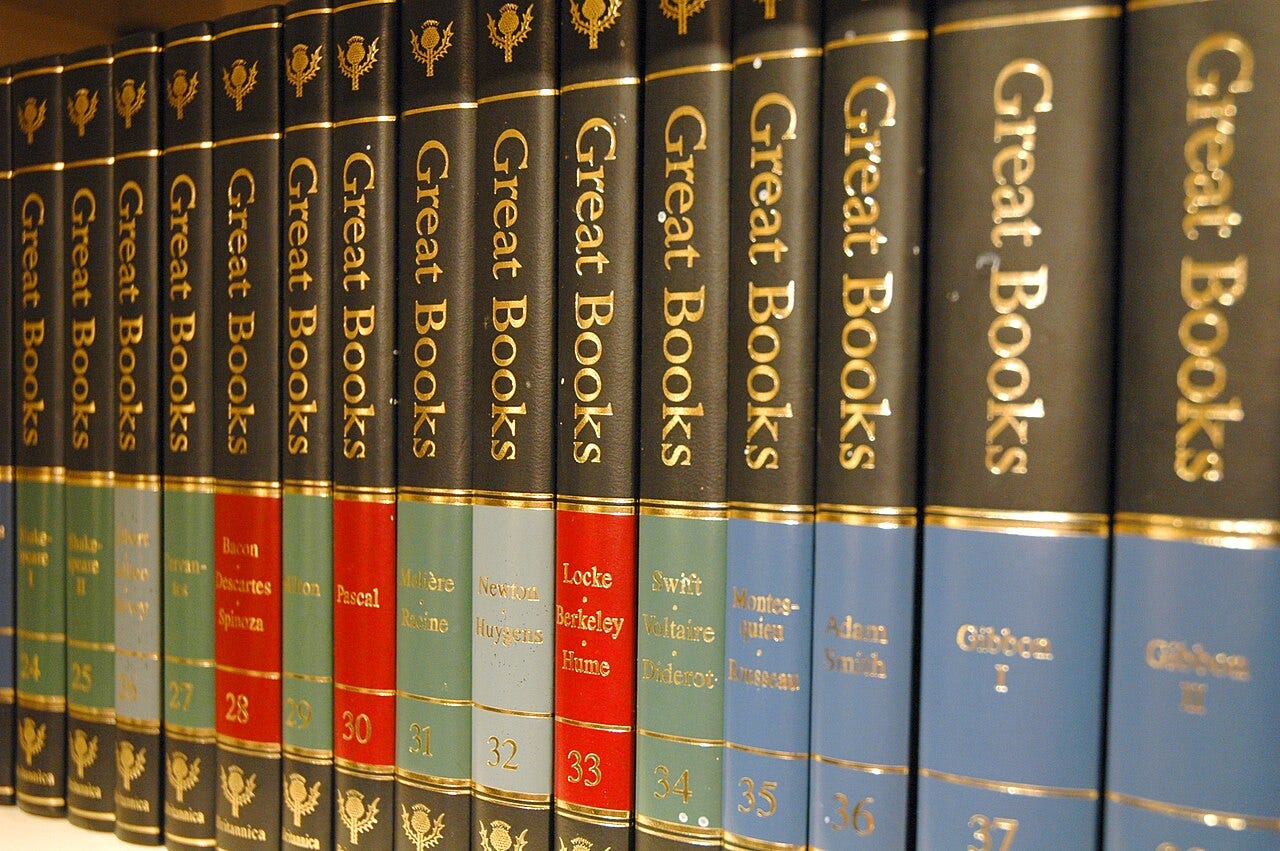
Hutchins and Adler saw all these authors — from Homer to Freud — in a “Great Conversation” that gave the West its distinctive character. These authors, especially the ancient and medieval ones, had contributed to the rise of the liberal arts and to the belief that the liberally educated man was one who had disciplined his passions in pursuit of the good. As Hutchins observed, “the aim of liberal education is human excellence.”
Yet as Hutchins wrote, he perceived that the West was undergoing a practical book burning. The great books were being removed from Western education, and with them, any semblance of a true liberal education. College graduates were no longer expected to be “acquainted with the masterpieces of their tradition” nor the perennial questions into truth, beauty, or goodness. They were made deaf to the “Great Conversation” and cut off from the great treasury of their intellectual inheritance.
In light of this, the great books provide an opportunity to reclaim your education. They are a remedy to the privations of modern education and a salvageable substitute for our lack of a robust liberal arts formation. As Hutchins advocated, in reading the authors of the great books “we are still in the ordinary world, but it is an ordinary world transfigured and seen through the eyes of wisdom and genius.”
But of course, that’s not the whole story. Because there is a latent danger in the great books…
2) Avoid the Errors of your Age
Proponents of the great books claim that by reading them, you will better see your age for what it is. In other words, the great books can inoculate you from relativism and its ills by exposing you to truth. To a large extent, this is accurate: great thinkers like Aristotle or St. Boethius, for example, can readily challenge your modern presumptions and stretch your imagination to encompass new perspectives on reality.
But at the same time, there’s an issue: how can the great books lead you to truth when the authors of the great books disagree on what truth is? In fact, many of the great books became “great” by rebelling against Western tradition. Hobbes, Locke, and Rousseau all present new and conflicting anthropological myths. Machiavelli rebels against Western ethics, and Marx rewrites the totality of how history should be considered.
This is where it helps to remember that many of the “great books” were chosen for their impact, and not principally for their truth. It is a vital distinction. Forget this, and you can easily become a well-read relativist: you study the greatest minds of the West, discover these minds disagree, and then walk away believing there’s no reasonable expectation of truth.
Many academics now believe that this problem of relativism — rooted in the great books — is what originally sparked the crisis of modern-day academia. As Dr. Patrick Deneen observes in his essay, “Against Great Books,”
I have come to suspect that the very source of the decline of the study of the great books comes not in spite of the lessons of the great books, but is to be found in the very arguments within a number of the great books.
…the broader assault on the liberal arts derives much of its intellectual fuel from a number of the great books themselves.
So how can the great books save you if the great books are part of the problem? We can certainly see that in many regards, the great books can be a remedy. But when applied incorrectly, the remedy for our failing liberal education becomes part of the disease.
The great books can help you avoid the errors of your age, but only if you don’t approach them through those same errors. Approaching the great books as a cosmopolitan relativist bears a contrary purpose than that of the traditional liberal arts. If the great books are our answer to the collapse of the liberal arts, then the great books must echo the true purpose of the liberal arts — of true education.
But what is the purpose of true education?
3) Conform Your Mind to Reality
In his 1946 classic, The Intellectual Life, the French Dominican A.G. Sertillanges lays out the simple purpose of study: “The order of the mind must correspond to the order of things.”
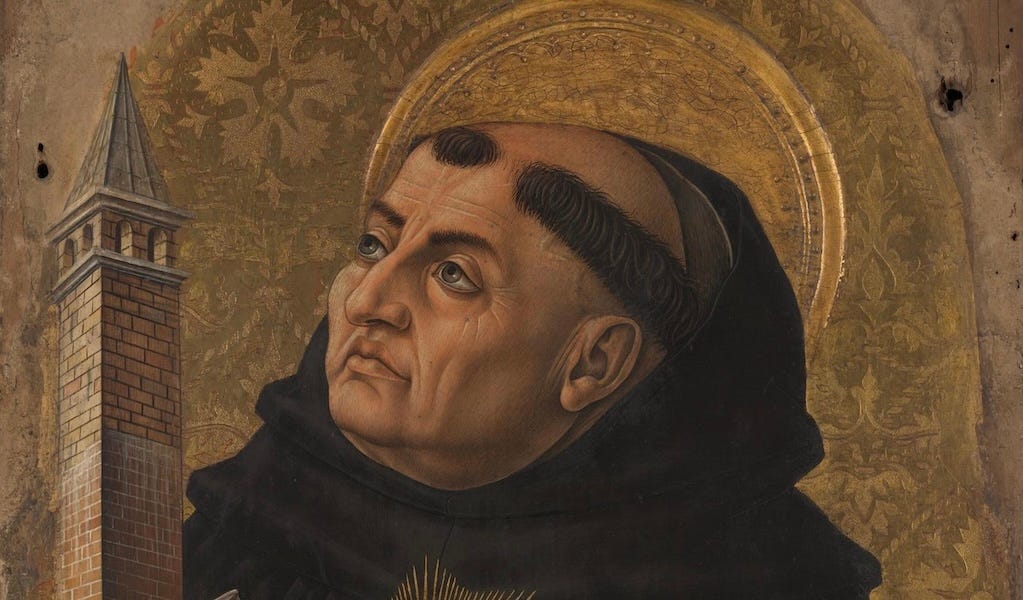
He is drawing from St. Thomas Aquinas, who teaches that “truth is the conformity of the mind to reality.” This is the purpose of the liberal arts, of the great books, and of all study: the understanding of what is true.
Your task, then, is to work to conform your mind to the contours of what is real; so that the order of reality and that of your mind harmonize.
Why is it important that you understand the purpose of study? Well, all things are judged good or bad according to their purpose (or telos, as the classical Greeks called it). You know a good knife must be sharp and a bad knife must be dull, because you know the purpose of the knife is to cut. Knowing the telos of something allows you to understand its quality, to judge it according to its end. Moreover, because you know what a good or bad knife is according to its purpose, you also know what is good or bad for the knife. A whetstone, for example, would be good, because sharpness helps to fulfill its purpose; whereas dulling it on concrete would be bad.
The same is true for education.
The telos of education is truth, the holistic formation of the whole soul to what is real. For education to be good, it must achieve this purpose. Many would argue that there is no better education for conforming the mind to reality than the liberal arts (i.e., classical education). And to the degree the great books are supposed to remedy our culture’s failing liberal arts, the great books too must be judged according to how they share truth.
Like a whetstone to the knife, a true great book will sharpen the mind’s understanding of reality. It is in obedience to this telos that you, like Sertillanges, judge your study and the study of the great books in particular. Not all great books meet this standard, as some labor to know what is real, while others labor for what unreal. As Sertillanges teaches, “books are signposts” on the movement of the mind toward truth. Approach such authors as a student approaches a teacher — ready for a tutelage in what is real.
If you are to help reclaim what was lost when the liberal arts fell, then the purpose of studying the great books must be the pursuit of truth. It was not relativistic dialogue that led Alcuin of York and Emperor Charlemagne to rebuild the West. Nor was it relativism that nurtured St. Thomas Aquinas or Dante. You are an inheritor of a robust pursuit of truth.
But how does one judge what is true?
How do you turn to the great books to teach you truth, yet also judge the great books by whether what they teach is true? Are you the arbiter of what is real? What was the principle of truth for the liberal arts?
The Christian answer to this riddle is, of course, rooted in a careful reading of the New Testament…
4) Become a Student of the Logos
In his architectonic 2006 lecture at the University of Regensburg, Pope Benedict XVI proclaimed, “not to act in accordance with reason is contrary to God’s nature.”
His address submits that there is a profound harmony between Greek reason and Hebrew faith. The zenith of this harmony, as explained in Do Christians owe a debt to Homer?, is St. John’s use of the term Logos to describe the Word. The Logos is the ordering principle of all creation, the account of all things. To understand the logos of something, like justice for example, is to understand its essential qualities; but to understand the Logos (Christ), is to understand the account of all things.
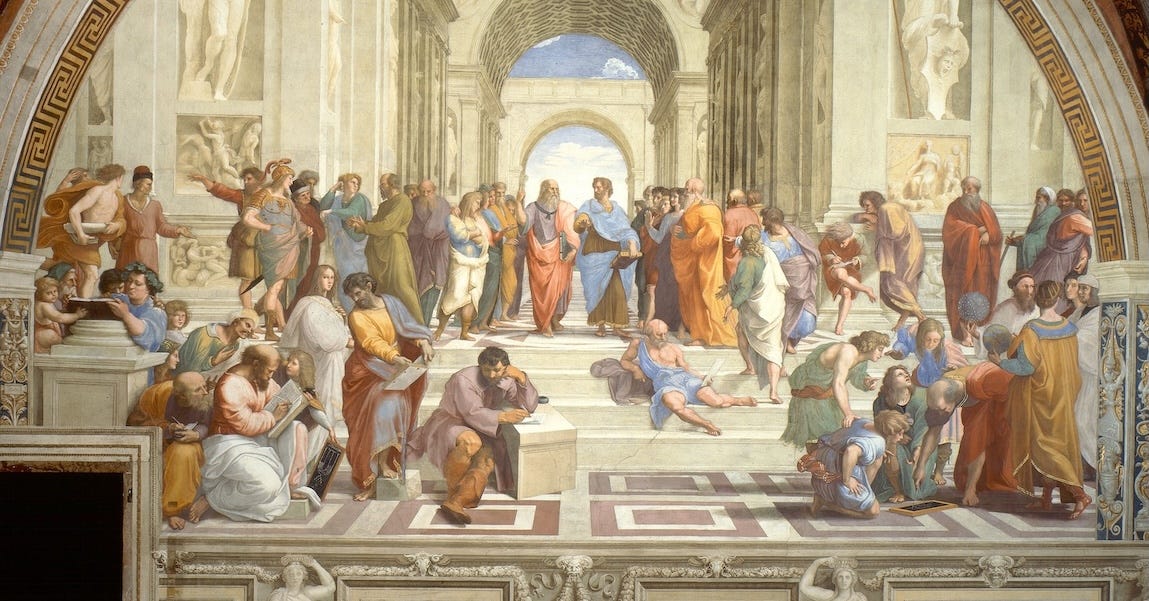
The claim that Christ is the Logos helps explain why Christians believe Christ is not just a form of truth, but the Truth itself. To understand the logos of a thing is to know the truth of that thing, but if you can come to know the Logos of all things (Jesus), one encounters the Truth itself. If Jesus is the divine ordering principle of creation, and every created thing has its own logos, this means that reality has a discoverable, rational order.
This, then, is what underpins the fundamental idea that truth is able to be found, whether in philosophy or the empirical sciences. This is the great inheritance of the West: the belief that reality is ordered and truth is attainable. To abandon this belief is to forsake one of the richest treasures of our tradition.
The Logos is at the heart of the liberal arts tradition. Whether it is the logos of rhetoric or the logos of music, all logos is an imprint, an aspect of the Logos — the order of all reality.
So, the liberal arts must be understood as a pursuit of the Logos: a disciplined order of knowledge that moves the intellect into conformity with reality. The medievals understood this well, as the trivium (grammar, logic, and rhetoric), the quadrivium (arithmetic, geometry, music, and astronomy), and even the higher sciences of medicine and law were subservient to and perfected by the queen of the sciences, theology. The liberal arts, with its formation of the whole person, was both rooted in and oriented toward God.
And it was the Logos that gives reality its order that makes such study possible in the first place.
5) The Purpose of the Great Books
The liberal arts, made possible by the Logos and God’s ordered reality, thus led the soul to a holistic formation in the truth. Today, however, the liberal arts have largely collapsed, and education is now an economic training.
It is amongst the debris of what was such a time-tested tutelage in truth that many have turned to the great books. But what if not all great books teach what is true? How should they be approached?
Many Christians structure the great books in the “ancients versus the moderns.” Though not monolithic, the authors from Homer to Dante build upon one another toward a beautiful, ordered cosmos. One may think of Aquinas’ Summa Theologica or Dante’s Divine Comedy that attempted to weave together diverse traditions into an ordered whole, into wisdom.
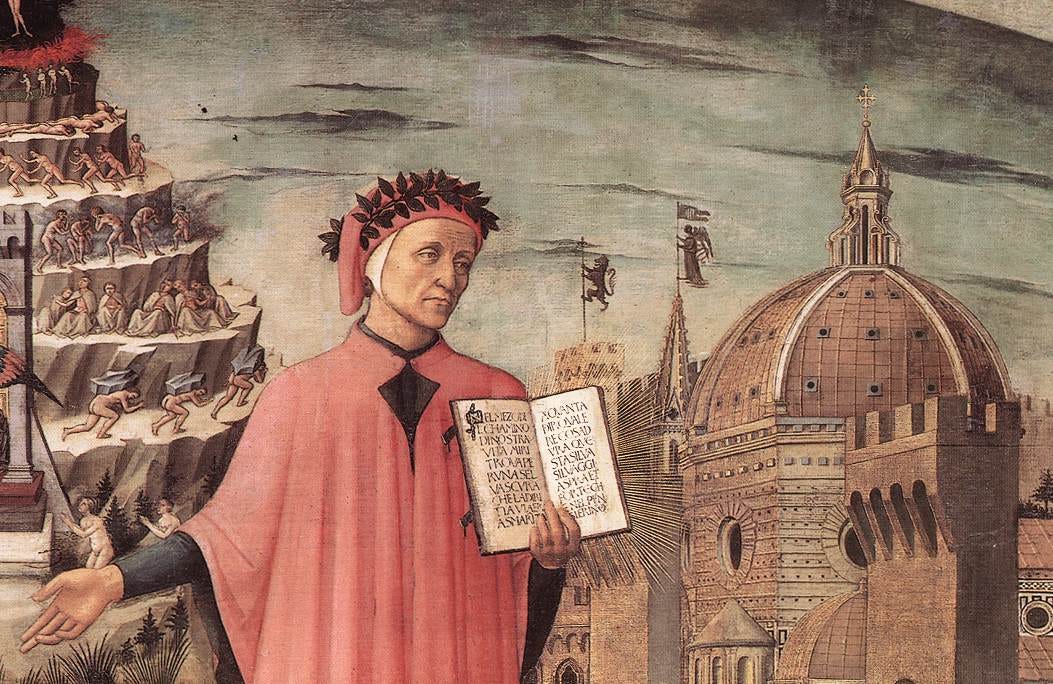
We, however, live in the age of the anti-Logos. If the ancients built up a great study of reality, then the moderns tore it down. The second half of the great books, “the moderns,” from Machiavelli to present, largely represents a deconstruction of belief in an ordered whole of creation. While Christians would certainly point to a number of modern thinkers who buck this trend, such as Cardinal Newman or Pope Leo XIII, the main trait of the modern age is rejection of that idea.
Man no longer turns to God, revelation, nature, or history for guidance, but rather these become malleable to man’s creative will. Each man becomes his own god, his own “Logos,” who believes reality should conform to the “truth” of his own imagination. Man now makes his own reality and demands others adhere to it — the dictatorship of relativism.
The great books, rooted in the Logos, serve to tutor you in what is real and what is unreal by inviting you into the great dialogue of human history. The goal is not to become a well-read relativist but to conform your mind to reality — with Christ, the Logos, as the standard of truth.
Thank you for reading!
This is a piece that we recently published on our sister publication, The Ascent.
There, we are diving deeper into theology, mysticism, and ancient texts — please join us if that interests you! You’ll get one free article every Tuesday, and longer essays like this every Friday for paid readers…
Thank you for sharing our article!
John Senior figured out the root of the problem when he stated that unless you grew up reading the thousand good books, and spent hours of unstructured time playing outdoors, the great books would be of absolutely no use to you, because you would read them wrongly and to your own detriment.