

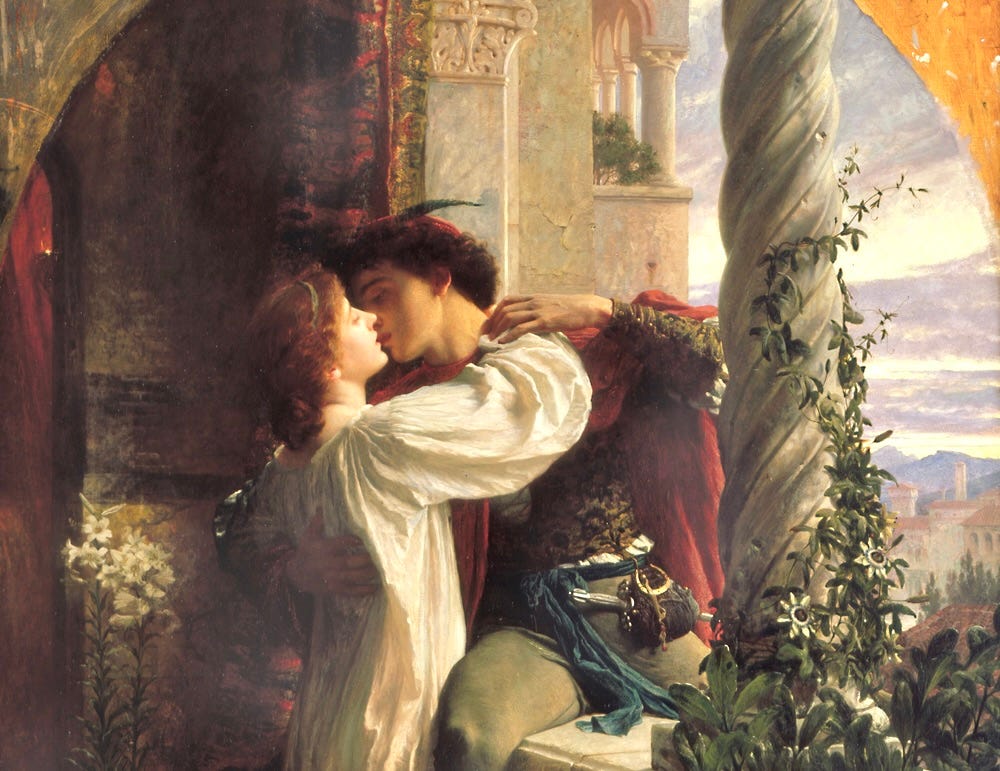
Few plays are as iconic as Romeo & Juliet. The tale of these “star-cross’d lovers” is known the world over, and is easily one of Shakespeare’s most famous works.
But what if everything you thought you knew about it is wrong?
Shockingly, what most people take away from Romeo & Juliet isn’t just mistaken, but in fact the polar opposite of what Shakespeare intended to convey. That’s because at its core, Romeo & Juliet is far less a play about young romance than it is a cautionary tale for both children and parents alike. In the 200 years since the Romantic revolution, however, popular interpretations of the play have shifted so much as to completely obscure the play’s original meaning.
Both Shakespeare and his audience would be scandalized by our contemporary reading of the play, as well as our “understanding” of its moral lessons. Because far from celebrating the ardent passions of youth, Romeo & Juliet does quite the opposite. It offers an urgent warning that we have long ignored, and which we must desperately be reminded of:
That love can be just as irrational and destructive as hate…
Don’t forget to join our book club…
We just started reading Dostoevsky’s The Idiot.
The next discussion is on October 7. Watch back the first session here.
We are 100% independent, funded only by our incredible community. Become a paid member and get:
New, full-length essays like this one every week
Access to our biweekly book club and reading guides
Access to our incredible community of readers
The entire archive (200+ articles, essays, and podcasts)
A Cautionary Tale
To back up this claim, we must begin by turning to the inception of Romeo & Juliet itself. Shakespeare’s source for the tale comes from Arthur Brooke’s The Tragical History of Romeus and Juliet, itself a retelling of a novella by the Dominican friar Matteo Bandello.
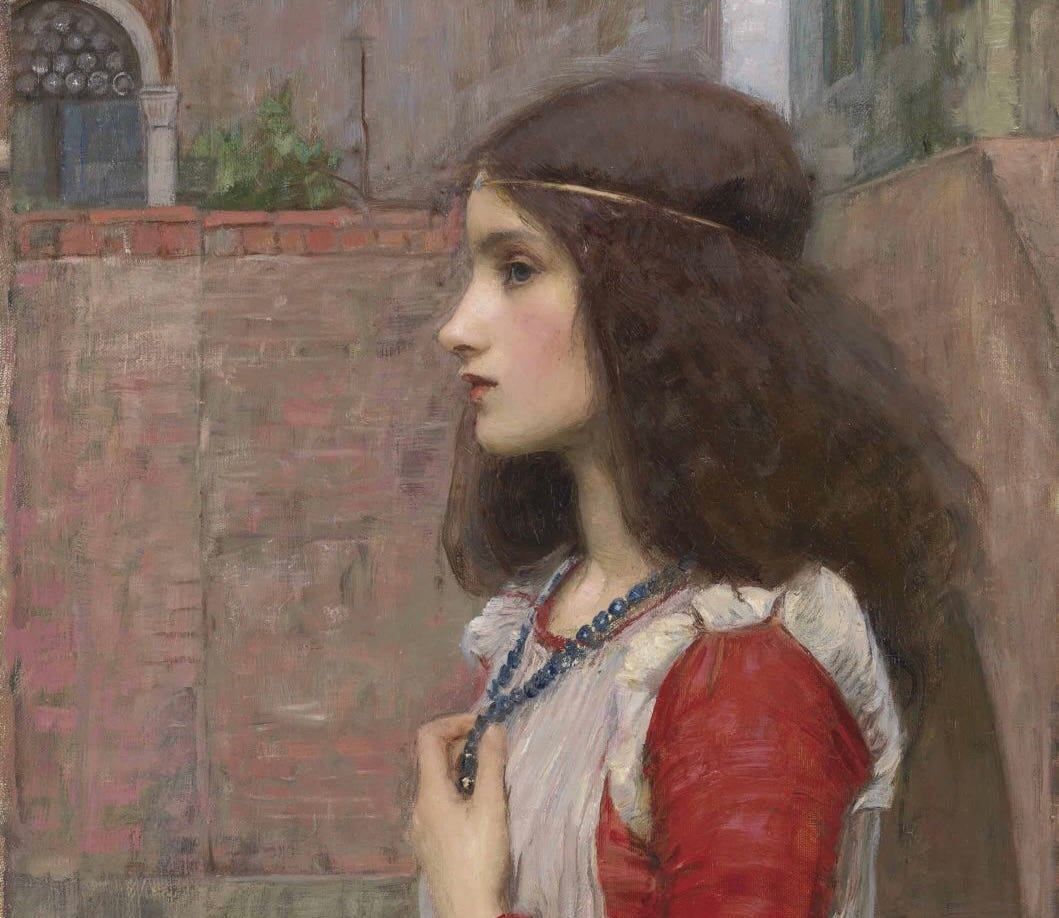
What’s important to note is what Shakespeare changes from the source material. While most modern productions of Romeo & Juliet completely overlook the fact that Juliet is a child in the play, this was in fact a very intentional detail on Shakespeare’s part. He made Juliet younger, and Romeo older, than the characters in Brooke’s poem, thus accentuating their age difference. Juliet we know is 13, and Romeo is at least five years her senior.
The significance of this cannot be easily dismissed, because such a union would have been scandalous by Elizabethan standards. Contrary to popular belief, the average age for a woman to marry in Shakespeare’s time was 24; for a man, 28. Considering also that girls typically reached puberty later than they do now (14 or 15 was the norm) and suddenly Juliet’s age of 13 is far more significant — she is a prepubescent child being pursued by an adult man.
Add to this the fact that Shakespeare’s own daughter Susanna was 13 years old while he wrote the play, and suddenly the premise of Romeo & Juliet takes on a whole new shape. The father of a young girl is writing a cautionary tale not just about the dangers of predatory men, but about what happens when children are led astray by their emotions, and when adults fail to protect them.
It is with good reason, then, that Romeo & Juliet is labeled a tragedy and not a romance. But incredibly, the age difference between the two protagonists is far from the most scandalous aspect of the play. Indeed, the tragedy only compounds from here…
The Problem With Romeo
Romeo & Juliet is best known as a love story, but closer inspection reveals the “romantic” motivations of its titular male character to be dubious at best. In the opening act, Romeo is repeatedly jibed for his (unrequited) love of Rosaline. This “love”, of course, is quickly forgotten the moment he finds someone new to pursue.
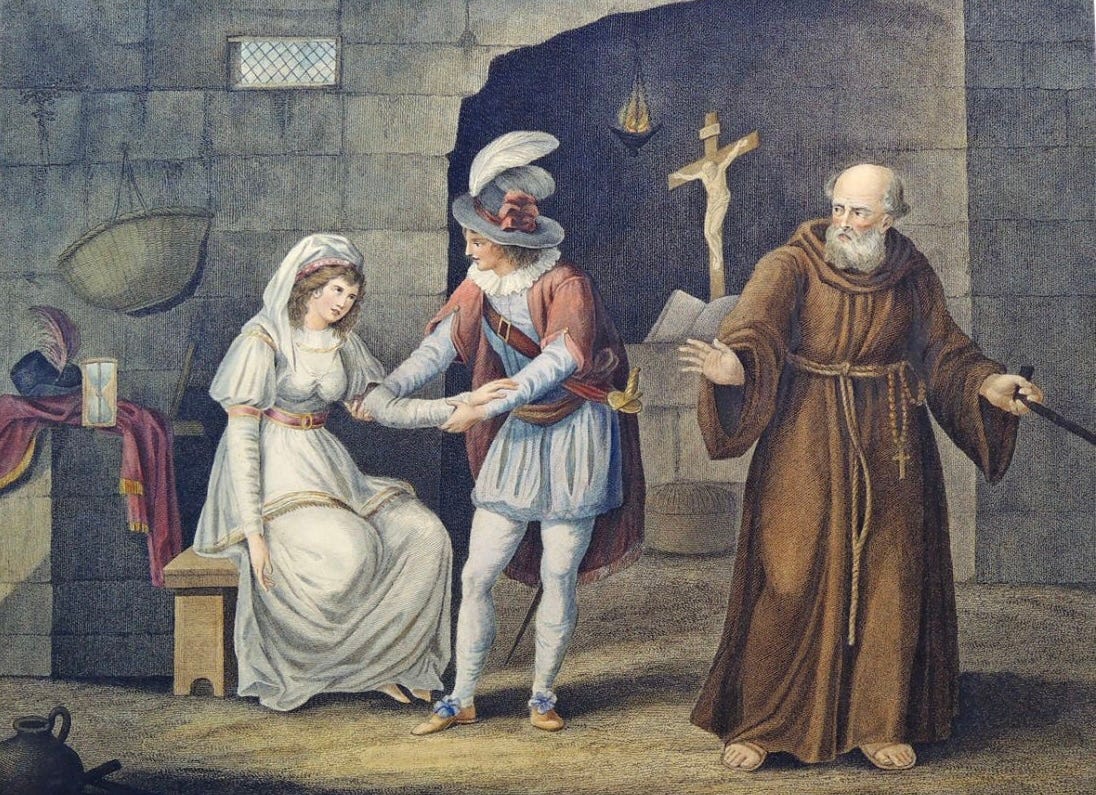
The play’s Chorus makes it clear that Romeo’s infatuation is primarily surface-level, describing him as “bewitched by looks”. Even Friar Lawrence, who has a warm relationship with Romeo, is shocked by the speed at which he switches up his romantic interests. When Romeo asks Friar Lawrence to officiate his wedding with Juliet, the priest exclaims:
Holy Saint Francis, what a change is here!
Is Rosaline, that thou didst love so dear,
So soon forsaken? Young men’s love then lies
Not truly in their hearts, but in their eyes.
For her part, Juliet moves (almost) as fast as Romeo, though she expresses hesitancy at how fast the relationship is developing. Her declaration of love in the balcony scene doesn’t help, for what she intended to say in private, Romeo secretly overhears. From that moment forward, Juliet struggles to resist Romeo’s advances, which are more emboldened now that he knows her heart.
The balcony scene is a pivotal moment for many reasons, not least of which because it reveals one of the most cutting moral insights of the play. In asking Romeo to “deny thy father and refuse thy name”, Juliet effectively demands that he abandon his identity. Here, Shakespeare demonstrates how nominalist philosophy, or the idea that “a Rose / By any other name would smell as sweet”, results in an individualistic approach to love and a destructive rift between family members.
Such emotionally driven and self-centered ardor leads not just to the dissolution of bonds between kith and kin, however, but also to the destruction of the lovers themselves. Friar Lawrence puts it best, warning Romeo that:
These violent delights have violent ends,
And in their triumph die, like fire and powder,
Which as they kiss consume.
But why is it, then, that we overlook all of this? What about Romeo and Juliet make them such sympathetic and compelling characters?
Interestingly, our judgment of this young couple says far more about us than it does them. It holds a mirror up to our modern-day notions of love and helps you understand the root causes of many of your own failures in the realm of romance.
So what can Romeo & Juliet teach you about what you keep getting wrong about love, and how you can get it right? Whether you struggle to find happiness in the relationship you’re in, or want to help your children find good partners for themselves, Shakespeare’s 400-year-old wisdom proves as insightful as ever.
It all starts with understanding what love actually is…