This is a guest piece by a great friend of the publication, historian and writer David Engels.
Millions of readers are familiar with The Lord of the Rings, sometimes through the movies, sometimes the novel. Yet most are entirely unaware of the profoundly Christian — or, to be more precise, Catholic — nature of the world into which they are drawn and which they usually come to cherish.
Some even regard Middle-earth as somehow essentially “pagan”: a universe of elves and dwarves, ancient kings, magic, sacred trees and polytheistic powers, all of which seem to be as far removed from churches, priests or biblical revelation as possible. And indeed, Christianity is never explicitly mentioned in Tolkien’s ‘Legendarium’; nevertheless, Tolkien himself left no room for doubt. In a famous letter, he wrote:
‘The Lord of the Rings’ is of course a fundamentally religious and Catholic work; unconsciously so at first, but consciously in the revision. That is why I have not put in, or have cut out, practically all references to anything like “religion,” to cults or practices, in the imaginary world. For the religious element is absorbed into the story and the symbolism.
The apparent contradiction disappears as soon as one understands Tolkien’s conception of literature. He cordially disliked allegories and had little interest in simply disguising Christian teachings as high fantasy, as was (rightly) attributed to C.S. Lewis’s heavy-handed Narnia.
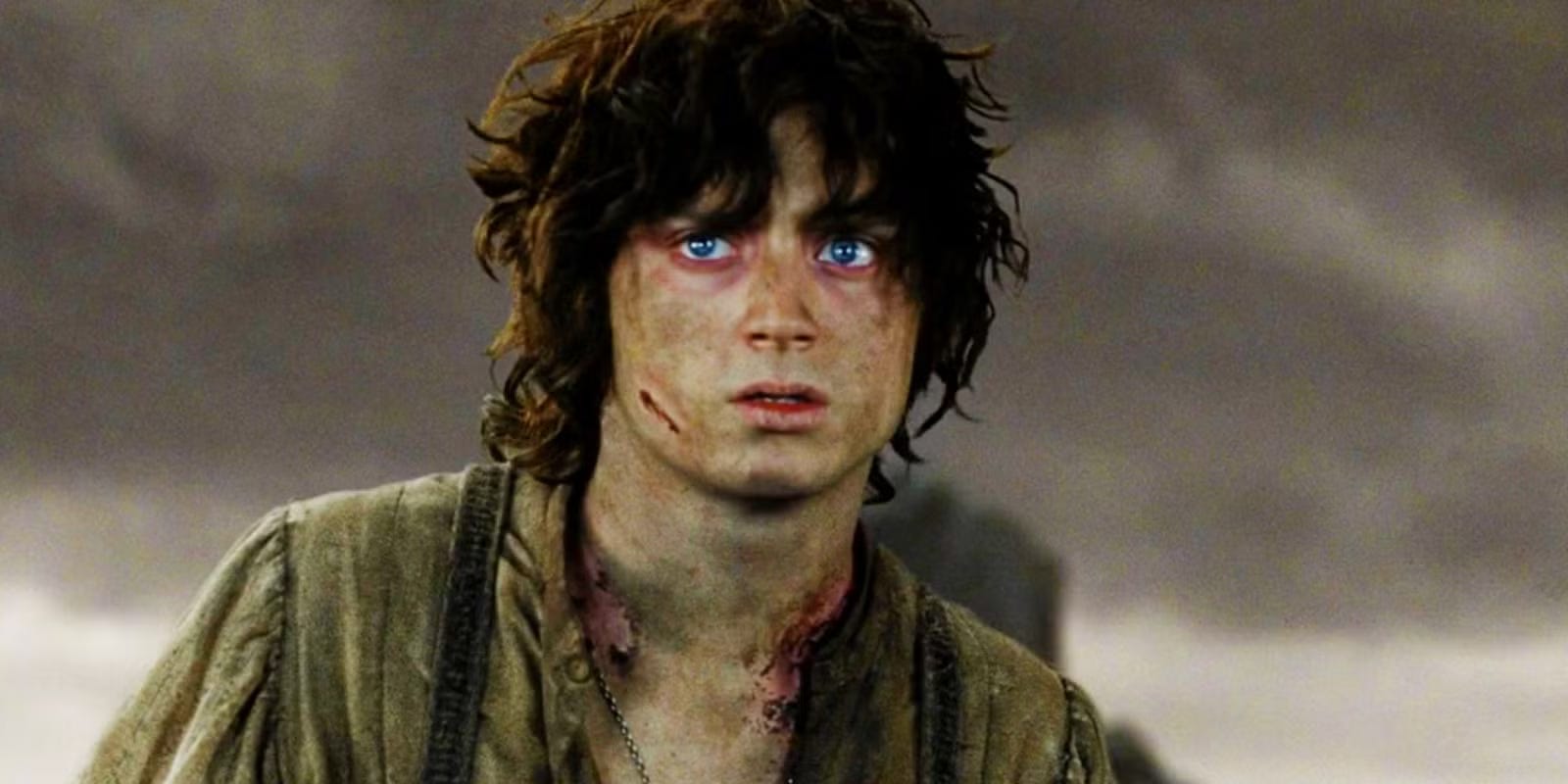
But in contrast to the lion Aslan, Frodo is not the Christ, and the Ring is not simply original sin, Galadriel the Virgin Mary or lembas the Eucharist. Middle-earth is far more subtle, yet in a certain sense also more radically Christian, than such a simplistic system of one-to-one identification would suggest: a world conceived by a mind so deeply shaped by Catholicism that Christian notions of creation, evil, freedom, sin, sacrifice and redemption became part of its very fabric…
Don’t forget to join our book club…
Our final session on Dostoevsky’s The Idiot is today, October 21.
This evening, we are voting on our next read-along!
Read the Great Books as a member of our book club, and you’ll get:
New, full-length essays and articles every week
Biweekly book club discussions and reading guides
Access to our incredible community of readers
The entire archive (200+ articles, essays, and podcasts)
A Faith Bought at a High Price
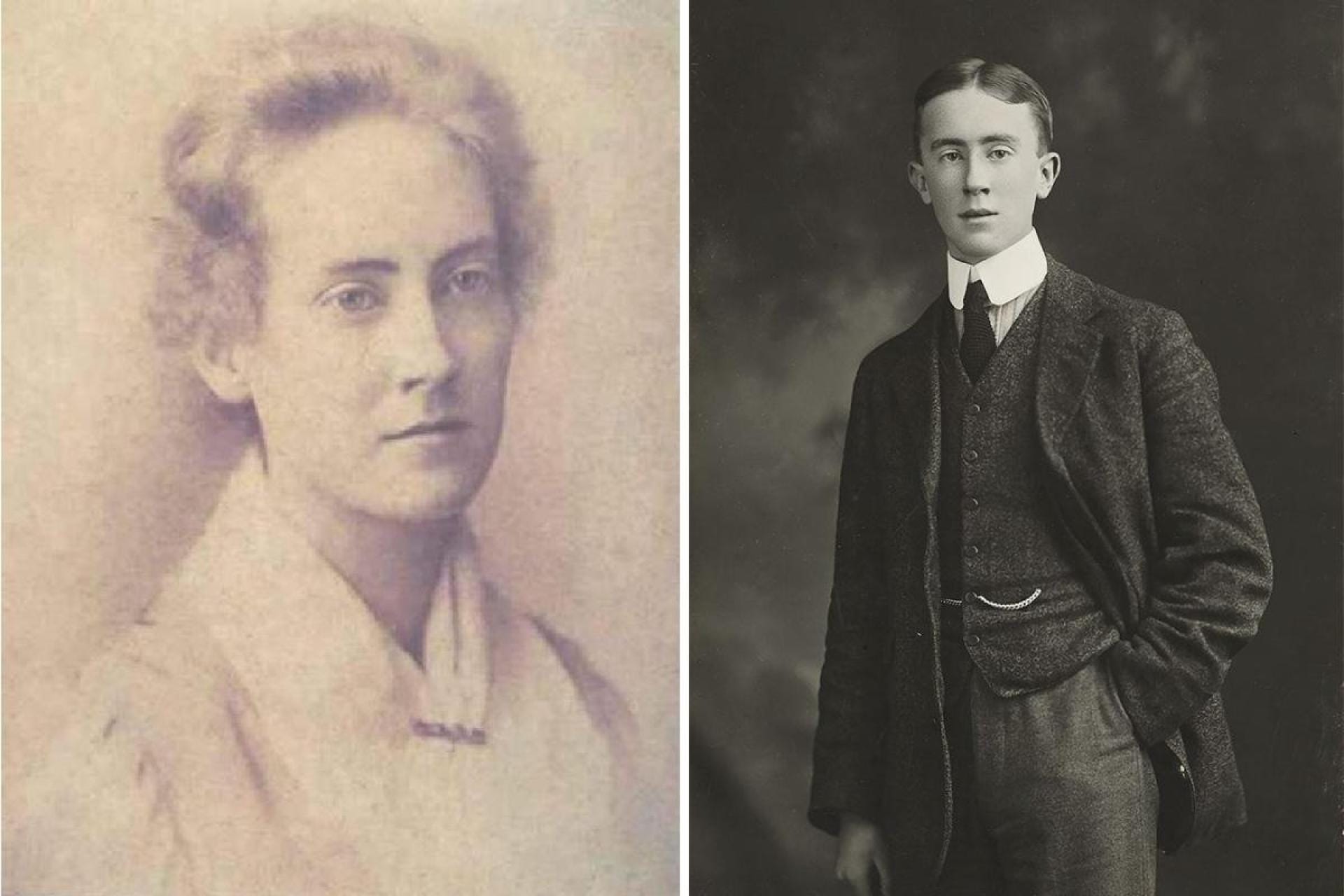
Of course, Tolkien’s Catholic worldview cannot be separated from his biography. Born in 1892, Tolkien lost his father when he was still a very small child, while his mother, Mabel, converted to Catholicism; a decision that offended parts of her Protestant family and exacerbated the financial difficulties she faced whilst raising her two infant sons. When she died in 1904, aged only 34, Tolkien was twelve years old: he always regarded her as a martyr in the truest sense of the word, as she had suffered and even somehow died for her faith, and believed that his own Catholicism had been bought at the price of her sacrifice and should be cherished as his most valuable treasure.
Following the loss of both his parents, Tolkien came under the guardianship of Father Francis Morgan, an Oratorian priest associated with the circle of the great Cardinal John Henry Newman, the father of modern British Catholicism. The Roman faith thus entered Tolkien’s life not primarily as an abstract intellectual system, but as something closely linked to motherhood, self-sacrifice, loyalty, suffering and love, and also endured the trenches of the World War, the deaths of most of his closest childhood friends, the disappointments of his professional life at Oxford, and the tragic civilisational and industrial upheavals of the early 20th century which he witnessed first-hand when so many of the landscapes he had adored became prey to sprawling industrial estates. Until his death in 1973, Tolkien remained a devout, practising Roman Catholic who endeavoured to attend Mass daily, and one of his sons even became a priest.
This biographical aspect is crucial to understanding Middle-earth. Tolkien did not first create an imaginary universe and then somehow artificially insert Christian symbols into it. Rather, his faith formed the fertile ground from which this universe sprang. Reflecting precisely on this dynamic, Tolkien even described his own artistic creative process as a ‘sub-creation’: Man cannot create ex nihilo, as God does, but since he himself is created in the image of God, he can participate in the divine act of creation by creating secondary worlds; and it is not surprising that, in some of his more speculative writings, Tolkien even reflected on the impression that Middle-earth had not been ‘invented’ by him, but rather had been ‘revealed’ to him, so that he regarded himself as a chronicler rather than a creator (a point which, moreover, has profound transcendental implications when viewed from the Jungian perspective of ‘active imagination’).
A Christian Cosmos Without Christianity?
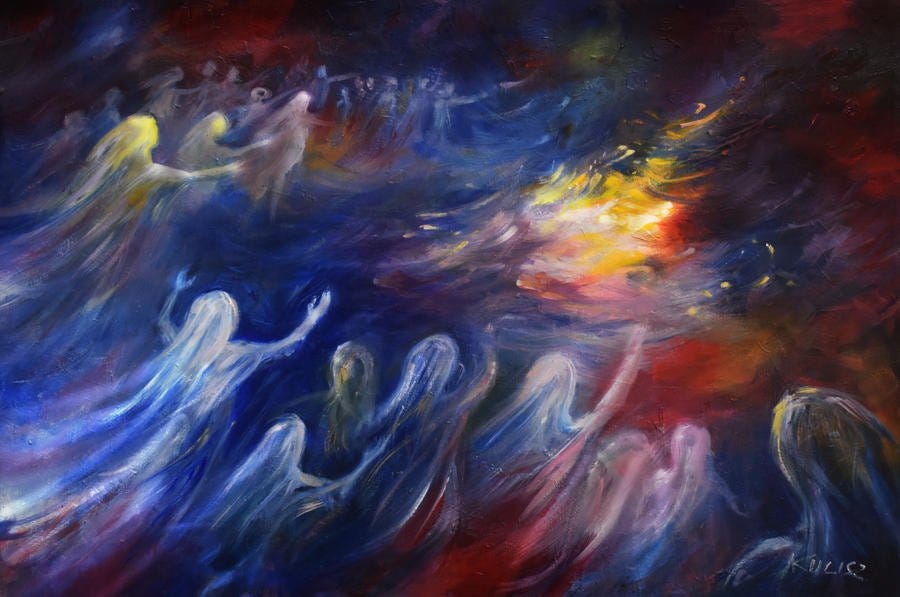
The Christian aspects of Tolkien’s Legendarium are most clearly evident in the countless legends collected by his son in the Silmarillion, the true key to understanding Middle-earth and doubtlessly his main work.
Tolkien’s mythology begins with a single Creator, Eru Ilúvatar, who remains the ultimate transcendent reference of the world until the end. At the beginning of time, Ilúvatar creates angelic beings, the ‘Ainur’ or ‘Valar’, and invites them to take part in a great music that somehow prefigures the history of the world to come. Melkor, however, the greatest of these beings, sows discord in the music because he seeks to impose his own will upon it and desires to acquire a creative power independent of Ilúvatar. Here, Tolkien reflects the classical Christian understanding of Satan and evil: Melkor’s fall is as much a consequence of his ‘non serviam’ as of his hatred for mankind, and the more he refuses to fulfil Ilúvatar’s will, the more he loses his creative power and can only corrupt, disfigure and parody what has already been created; orcs, trolls and the numerous other monsters of Middle-earth thus reflect this metaphysical barrenness of evil. Hence, in the end, even Melkor’s rebellion cannot ultimately escape divine providence, and the discord he sows makes the resulting music even more beautiful in a way Melkor himself, ‘that power which eternally wills evil and eternally works good’, as Goethe once put it, cannot foresee.
The history of Arda thus unfolds in the shadow of a primeval Fall that is repeated time and again by the other ‘races’ of created beings as they all attempt to appropriate as their own that which they have received as a gift. Fëanor’s love for the Silmarils turns into greed and then rebellion; Men flee from an initial conflict with Melkor, which they prefer not to mention, but which implicitly alludes to the Christian myth of the Garden of Eden; Sauron’s original desire for order becomes a lust for total control; Saruman’s knowledge degenerates into manipulation; even the Númenóreans, blessed with extraordinary longevity as a reward for their loyalty to the Valar, rebel because they cannot accept mortality, etc.
This last theme is particularly important, as in Tolkien’s work, death is not a punishment, but ‘Ilúvatar’s gift’ to humanity. Thanks to death, Men are not bound forever to the created world, as is the case with the immortal Elves who, even after dying, are reembodied. Yet, as the nature of death has been obscured by the Enemy, men begin to fear precisely that gift which frees them from the bonds of this world and places them even higher than the Elves, who are bound to Middle-earth for ever. To be sure, the desire for immortality is legitimate, but it becomes destructive when man attempts to attain through worldly power that which can only be received in a transcendent manner.
The same Christian framework also characterises The Lord of the Rings. Its central conflict does not lie between competing interests as in G.R.R. Martin’s Machiavellian parody of Tolkien, but between transcendent principles, though (contrary to an often-repeated prejudice) the boundaries between good and evil are never simplistic or Manichean: Boromir fails where Faramir resists, yet redeems himself through his willingness to make sacrifices; Saruman gradually succumbs to evil out of his desire to understand; Gandalf is fully aware of the limits of his own power to resist the Ring; Gollum wavers between remorse and relapse; even Frodo and Sam are not immune to temptation, though the former ultimately yields to a pressure far too powerful for him, etc.
What is most striking, therefore, is that redemption does not come about through strength or will-power alone as in the usual Hollywood movie, itself a late secularised offshoot of Pelagianism: Frodo voluntarily accepts his calling and carries the Ring further than one could reasonably have expected, yet at the decisive moment, he cannot help but fail, when, standing at the Cracks of Fate, he claims the Ring for himself. His mission is nevertheless successful, as Gollum seizes the Ring and plunges into the fire; a Gollum who is only still there because Bilbo, and later Frodo, had shown him mercy. Thus, what appeared even to the good-hearted yet short-sighted Sam to be ill-advised compassion becomes the instrument through which, ultimately, divine Providence accomplishes what human (or rather, hobbit) heroism cannot do.
This is the most obvious (but by no means the only) example of Tolkien’s famous concept of ‘eucatastrophe’: the sudden reversal from a seemingly inevitable catastrophe to redemption – not a cheap and easy ‘happy ending’, and even less a vulgar deus ex machina, but the realisation that man must fight, choose, suffer and remain faithful, yet cannot save himself in the end. At the decisive moment, grace brings to completion what human effort alone cannot achieve – a perspective that stands not only in fundamental contrast to the self-sufficient heroism of typical blockbusters, but also to the heroic and often tragic worldview of pagan mythology.
For the same reason, Christological motifs are distributed amongst several heroes, rather than being concentrated on a single allegorical Christ figure: Gandalf experiences death and returns transformed; Aragorn is the hidden king who treads the paths of the dead and returns to heal and restore his kingdom; Frodo is the sufferer who takes a crushing burden upon himself for others and is thereby permanently marked – each of them reflects something of Christ without simply ‘embodying’ Christ, because the world of Middle-earth is not a copy-paste of the ‘historical’ world, but in many respects a ‘prequel’ whose (forgotten) history prefigures central elements of salvation history in the same way the deeds and the prophecies of the Old Testament announce the New Testament.
Chronology itself subtly underpins the Christian framework. The Ring is destroyed on 25 March, which is the traditional Feast of the Annunciation and, according to an ancient Christian tradition familiar to medieval scholars such as Tolkien, also the original date of the Crucifixion: the decisive victory over evil in Middle-earth, in which Aragorn offers up the entire army of Gondor as a conscious sacrifice of hope and in which Frodo collapses under the weight of the ultimate temptation, only for his sacrifice to be brought to fruition by Providence, takes place on that traditional date associated both with Christ’s entry into the world and with the fulfilment of redemption through sacrificial death.
The Marian dimension of Middle-earth is equally significant. Tolkien once associated his own perception of beauty ‘in grandeur and simplicity’ with the Blessed Virgin Mary and even translated the Ave Maria, the Sub tuum praesidium and the Litany of Loreto into Quenya, the language of the Noldorian High Elves. This sensibility is particularly evident in Elbereth, the Queen of the Stars, whose name the Elves and Hobbits invoke in the darkness in the same way as Christians invoke the name of the Virgin Mary as ‘Stella maris’, as well as in Galadriel, whose beauty, mercy, light and intercessory presence are also unmistakably reminiscent of Catholic Marian devotion. Tolkien himself confirmed the connection between these figures and Marian devotion when he wrote: ‘The invocations of Elbereth and the character of Galadriel, as described directly (or through the words of Gimli and Sam), were clearly linked to Catholic Marian devotion.’ Yet here, too, this is not a matter of allegorical identity, as of course, neither Elbereth nor Galadriel is the mother of Christ; rather, the Marian ideal of beauty – as something at once pure, powerful, maternal and transcendent – has flowed into the imaginative bloodstream of Middle-earth because it was present with the almighty and all-knowing God from the beginning of creation.
Even the apparent paganism of Tolkien’s world must therefore be understood within this broader context. The Valar are not ‘gods’ who compete with the Creator or somehow exclude him from everyday business, but angelic beings fully subordinate to Ilúvatar, who can only partially discern his intentions. Similarly, the heroic ethos inherited from Germanic and Norse mythology and so obvious in the Lay of Túrin or the history of the Rohirrim is not rejected, but rather, in a sense, ‘baptised’: courage, loyalty, honour and resistance to seemingly insurmountable adversity are integrated into a Christian universe in which heroism finds its fulfilment only through humility and grace, and even the ultimate tragedy of Túrin Turambar finds its sublimation in the prophecy that it would be his role to slay Morgoth at the last battle and re-establish the balance of justice.
Tolkien and the Renewal of Christianity
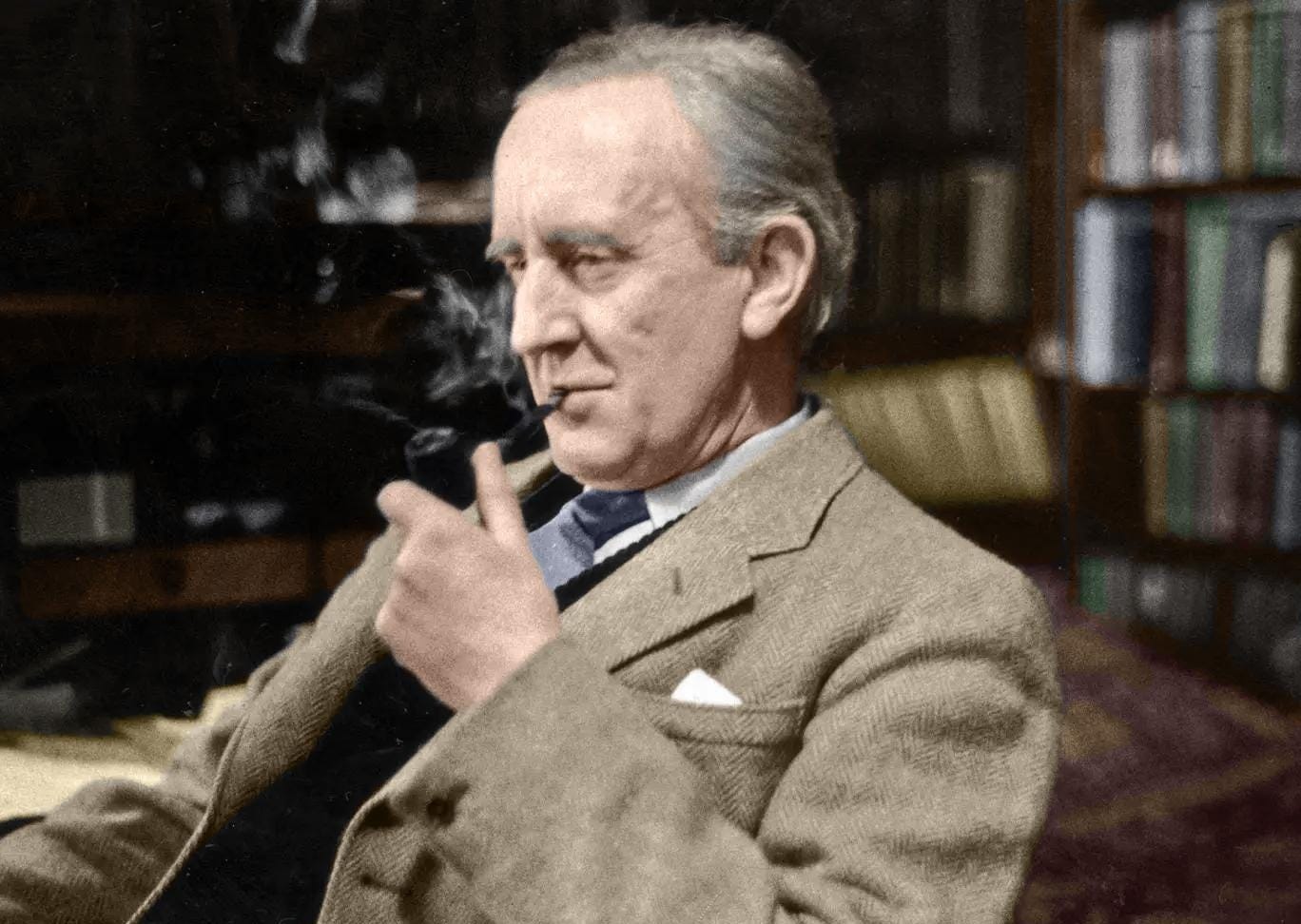
All this may explain why Tolkien is far more than just one of so many successful authors of fantasy literature. In an increasingly post-Christian society, many readers encounter realities in Middle-earth for which they may initially lack a theological vocabulary: good and evil, sacrifice, providence, sin, mercy, sacred kingship, beauty and the hope of a final victory beyond history. And very often it may not even occur to them that these elements are by no means merely a form of escapist archaism, since Tolkien never demands assent to a particular doctrine or imposes a specific interpretative framework on his audience. The reader learns to love the beauty of Rivendell, the sacrifice of Lúthien, Sam’s humility, the mercy shown to Gollum, Huan’s fidelity, Aragorn’s kingship or Frodo’s sacrifice long before they necessarily understand the theological assumptions that give these things a significance far beyond the mere inner workings of Middle-earth: the reader’s imagination is converted to a Christian sensibility even before the intellect realises that such a conversion has even begun.
And it is precisely here that Tolkien’s particular significance for a renewal of Christianity in the present day may lie. Christianity can never be restored solely through rational victory in theological debates or, even worse, political success, because a civilisation that understands neither the Christian vision nor its importance for its own identity must first regain the ability to perceive its omnipresence, beauty and coherence.
Tolkien offers precisely such an initiation by repeatedly showing what a world looks like in which creation is still enchanted, evil is real, freedom entails responsibility, beauty points beyond itself, and true heroism may lie in suffering rather than in heroic triumphalism — truths that are, of course, as valid for Middle-earth as they are for the ‘real world’, though we have lost the capacity to recognise them as such in everyday life and to recognise everyday life itself as a spiritual struggle as important for our own souls as Frodo’s journey to Mordor.
‘Aurë entuluva’ — ‘The day shall come again’ — is therefore more than a heroic battle cry; it expresses the deepest Christian conviction that darkness is real, and humankind cannot redeem itself alone, but that beyond the shadow, there remains a light that evil can never reach and that ultimately flickers in each of us.
This is a guest piece by a great friend of the publication, historian and writer David Engels. Please give his excellent work a follow! You can subscribe to his Substack for free, here: