

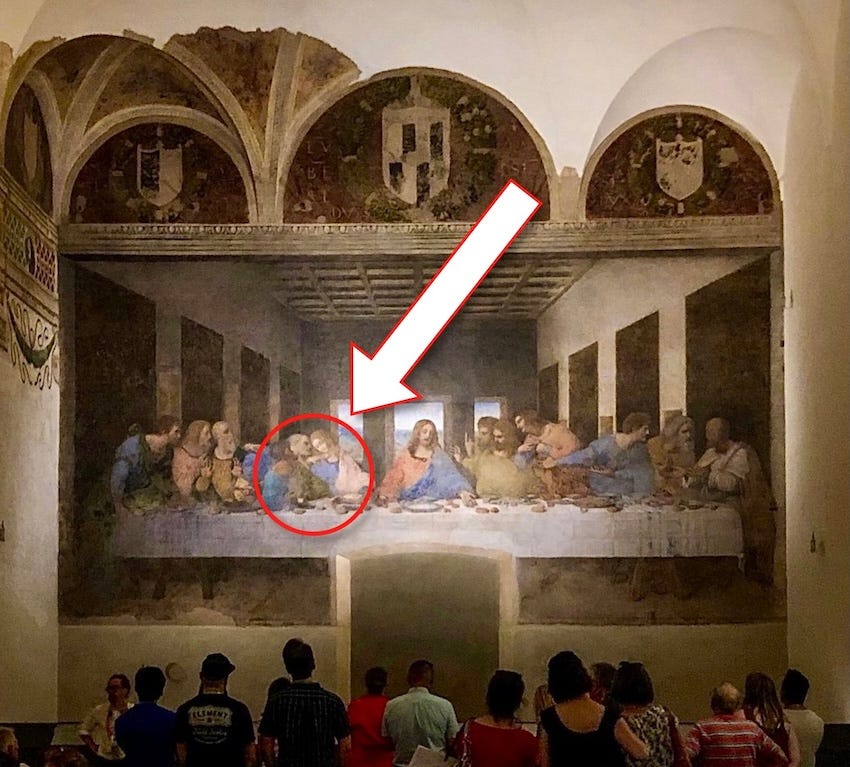
Few works of art have sparked as much intrigue and debate as Leonardo da Vinci’s Last Supper.
A cornerstone of Western art that has captivated viewers for centuries — not only for its artistry, but for the layers of symbols and messages concealed within.
What secrets lie in the shadow of Judas’s betrayal?
How does Christ’s calm demeanor hold firm against the storm of human emotion?
And is there any truth to Dan Brown’s Da Vinci Code?
Today, we break apart all of these questions to reveal what makes The Last Supper one of the most enigmatic and enduring masterpieces of all time…
Don’t forget to join our book club!
We just started East of Eden by Steinbeck. It isn’t too late to join: the next discussion is on Wednesday, August 26, at noon ET!
You can watch back the first session (on Chapters 1-18) here.
We are 100% independent, funded only by the members of our incredible community. Support us by joining with a paid membership. You’ll get:
Full-length articles 2x per week
The entire archive (200+ articles, essays, and podcasts)
A Theatrical Drama
First, many are not aware that Da Vinci’s Last Supper is actually a mural, painted on the wall of a church refectory in Milan. Leonardo was working for Ludovico Sforza, Duke of Milan, who requested the popular subject of the Last Supper be painted in the monks’ dining hall.
Leonardo took far longer to finish it than Ludovico had liked, but when he finally unveiled it, it was obvious why. This was no ordinary Last Supper scene, but one of the most enthralling narrative paintings ever produced.
Leonardo’s version was, among many things, a drastic break with tradition. While earlier depictions show Christ calmly dispensing bread and wine, Leonardo chose a different focus. It is the precise moment that Christ announces:
“One of you will betray me.”
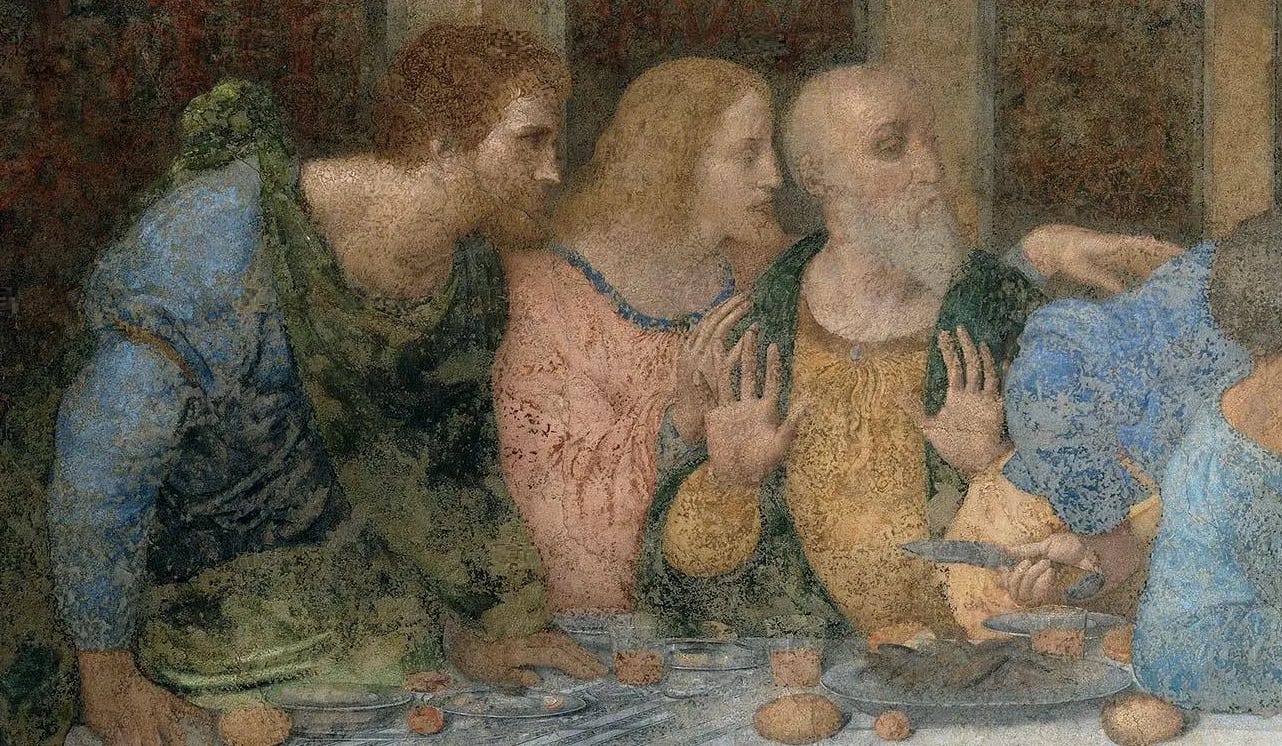
This revelation sends shockwaves through the Apostles, each reacting in their own unique way. The scene is alive with motion and emotion: hands gesturing, faces contorted, bodies leaning in or recoiling in a moment of masterfully choreographed drama.
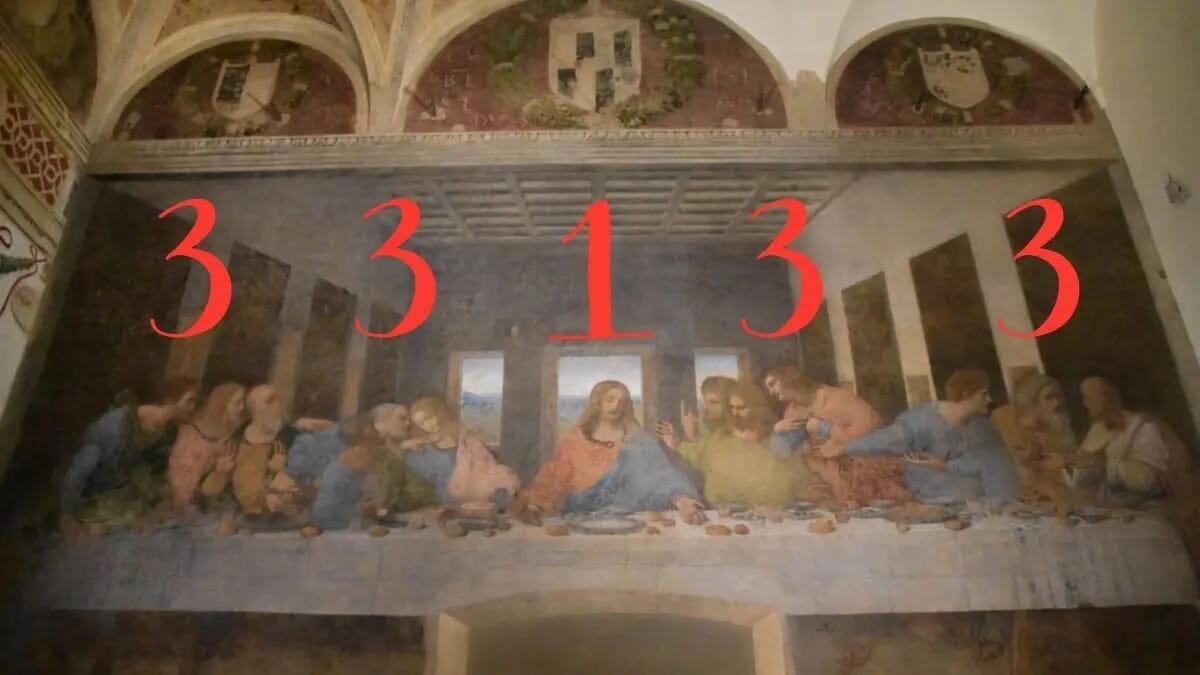
The composition further amplifies this dynamic tension. The Apostles are grouped into sets of three, their gestures and positions arranged to create a visual path that leads the viewer’s eye toward the center. At the center of this chaos, of course, is the serene and composed figure of Christ.
Leonardo’s use of linear perspective — a hallmark of Renaissance art — further emphasizes this focal point, with the architectural lines of the walls and ceiling converging around Christ’s figure, as so:
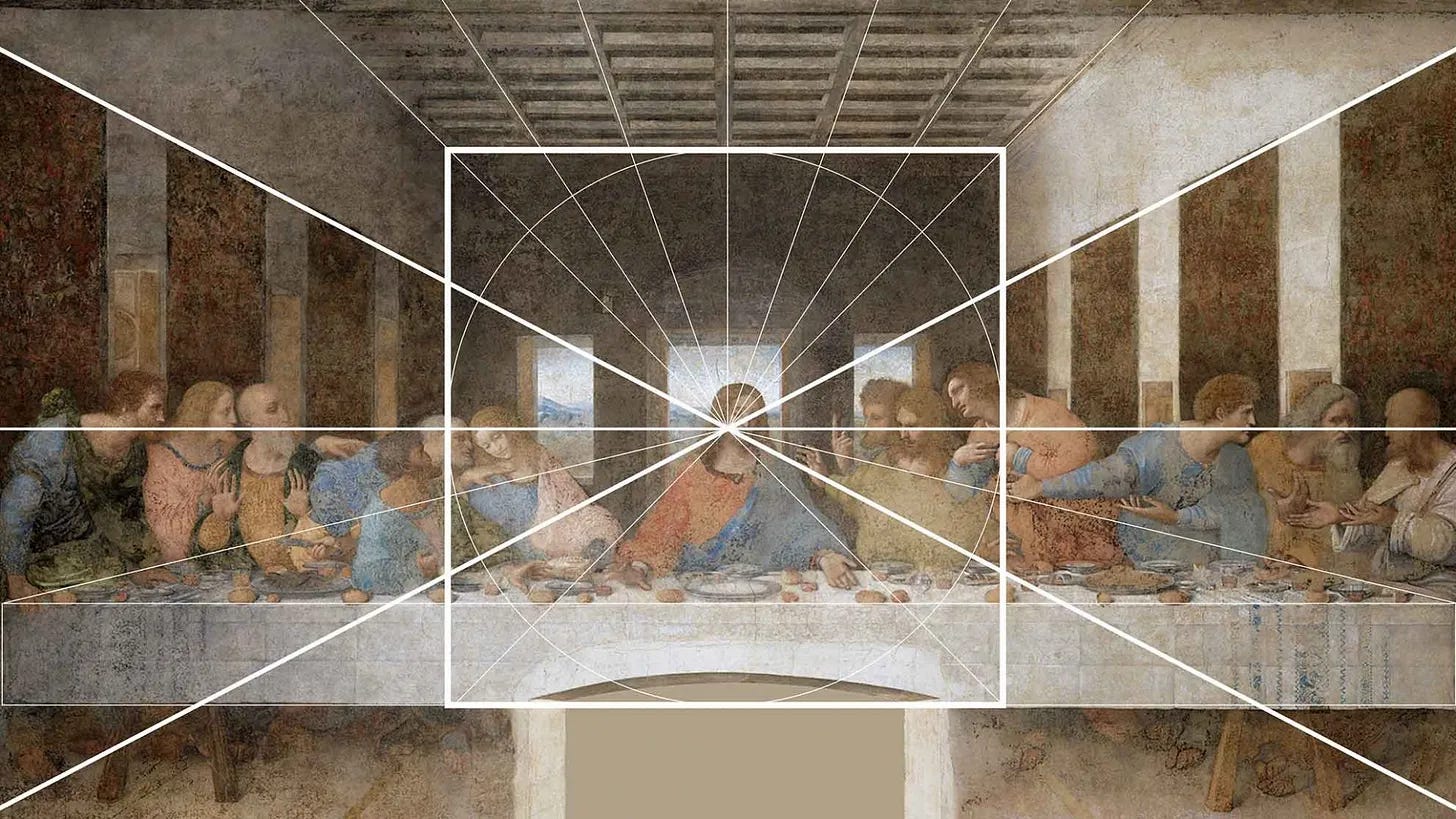
In the midst of this human chaos, Jesus thus remains the embodiment of divine calm. His body rests in a triangular shape: Leonardo’s way of symbolizing the Holy Trinity and emphasizing Christ’s divine centrality in the composition.
Remember, as ever with Leonardo’s work, not a single detail is accidental…
Hidden Symbols and Controversies
To give a sense of the symbolic depth of the painting, notice that each Apostle’s reaction is layered with its own meaning.
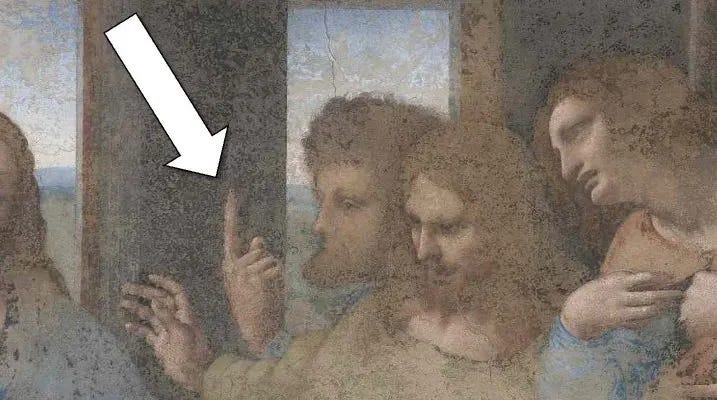
Saint Peter clutches a knife, foreshadowing both his defense of Christ during his arrest and Judas’s demise. Saint Thomas raises a single finger, a gesture that recalls his later demand for proof of the Resurrection (that of placing his finger into Christ’s wounds). Some even speculate that Thomas’s pose, skeptical yet curious, may be a self-portrait of Leonardo himself — a remarkably honest insertion of the painter’s own doubt into the work.
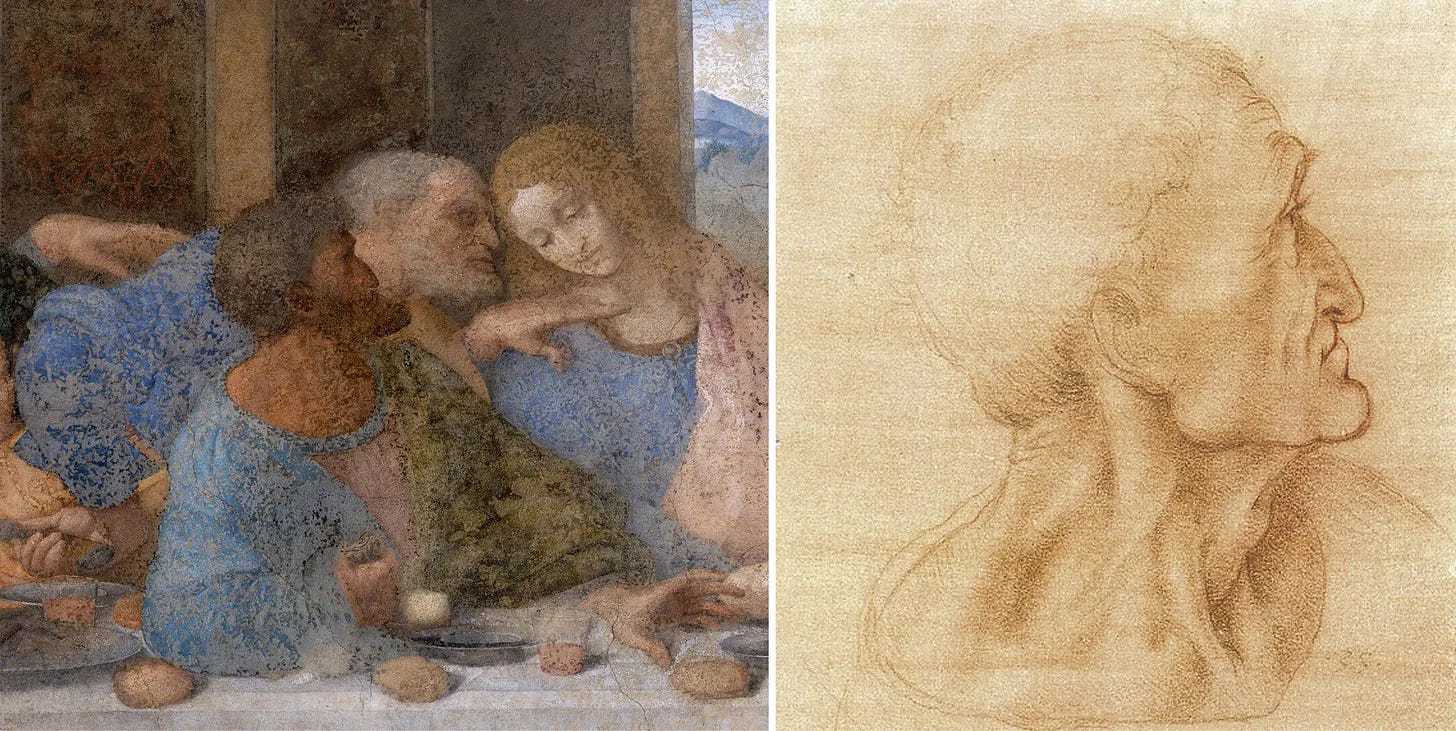
Then there is Judas. Seated somewhat apart from the others, he leans back aghast, clutching the bag of silver coins that he received for his betrayal. A tipped-over salt container sits in front of him, a symbol of his broken covenant with God.
We still have Leonardo’s preparatory sketches of Judas, and we can see that he took great care to make him the ugliest in the room. Leonardo searched long and hard for the ugliest model he could find, and his appearance contrasts him starkly with Christ’s idealized visage.
Yet arguably the most contentious figure in the painting is the one seated to Christ’s right.
Some claim this is Mary Magdalene, the female follower of Jesus present at both the crucifixion and burial, but about whom relatively little is otherwise known. Proponents of this theory point to the figure’s undeniably feminine appearance, an idea made extremely popular by Dan Brown’s The Da Vinci Code.
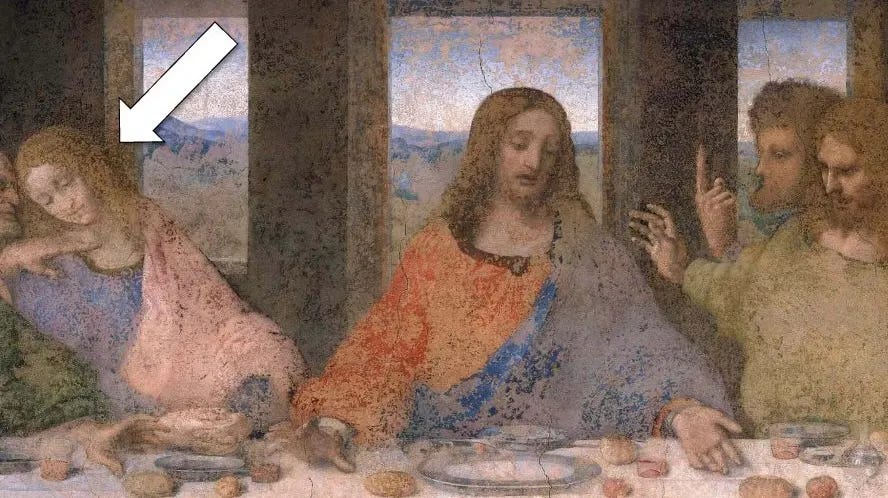
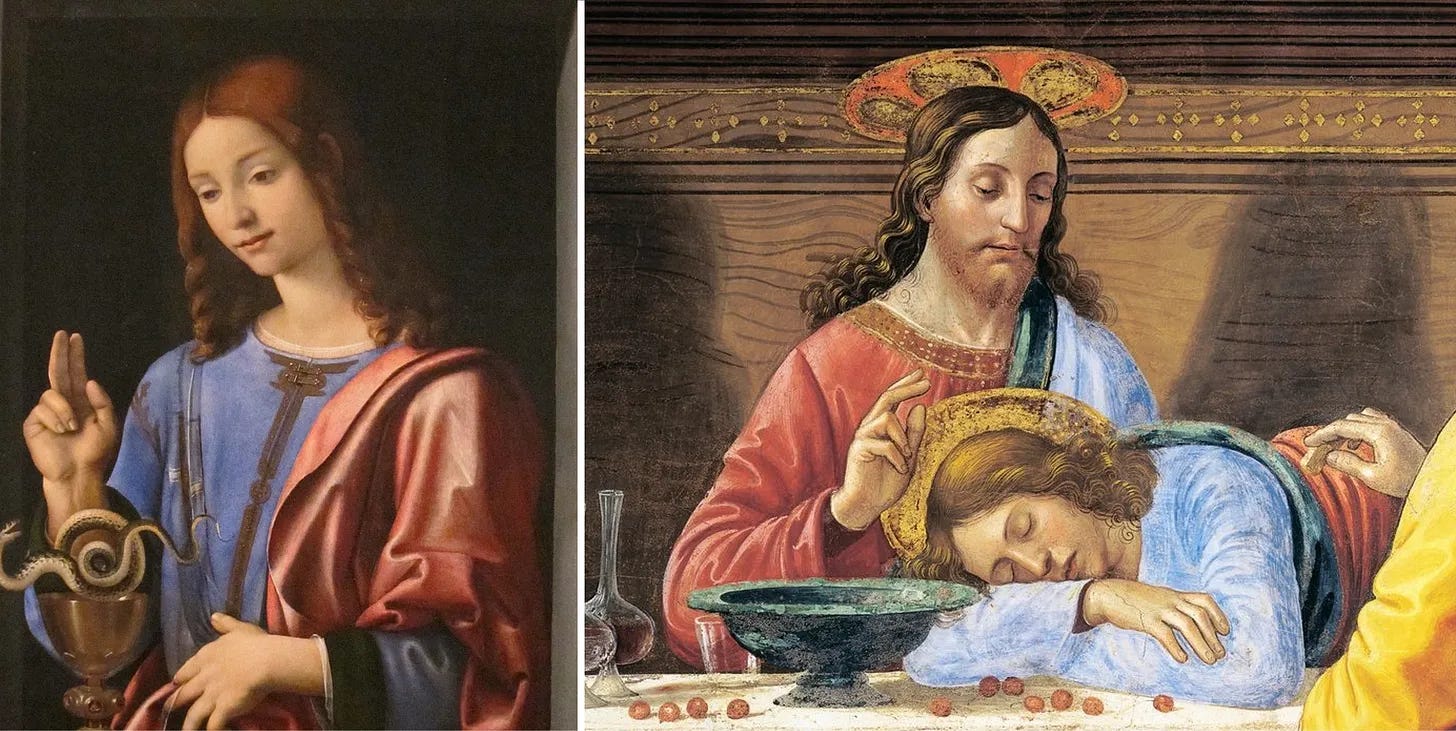
However, art historians typically argue that it must be Saint John, traditionally depicted in Renaissance art as feminine to accentuate his youthful, gentle nature. Moreover, if it were in fact Mary Magdalene, then the absence of John elsewhere in the painting would be without precedent — no other depiction of the Last Supper omits him. You can make up your own mind…
These theories feed into the idea of Leonardo as a great skeptic of Christianity and thus the quintessential Renaissance rebel, secretly embellishing commissioned religious works with his personal jabs at the faith.
Another such theory points to the lack of halos above the characters’ heads, which is clearly unusual for a devotional Last Supper depiction and often interpreted as carrying Leonardo’s skepticism about Christ’s divinity.
But this conclusion severely underestimates Leonardo’s subtle brilliance. Look closer and you’ll realize Christ is framed not by a traditional halo, but by the light of the central window — a kind of natural halo. What might that imply?
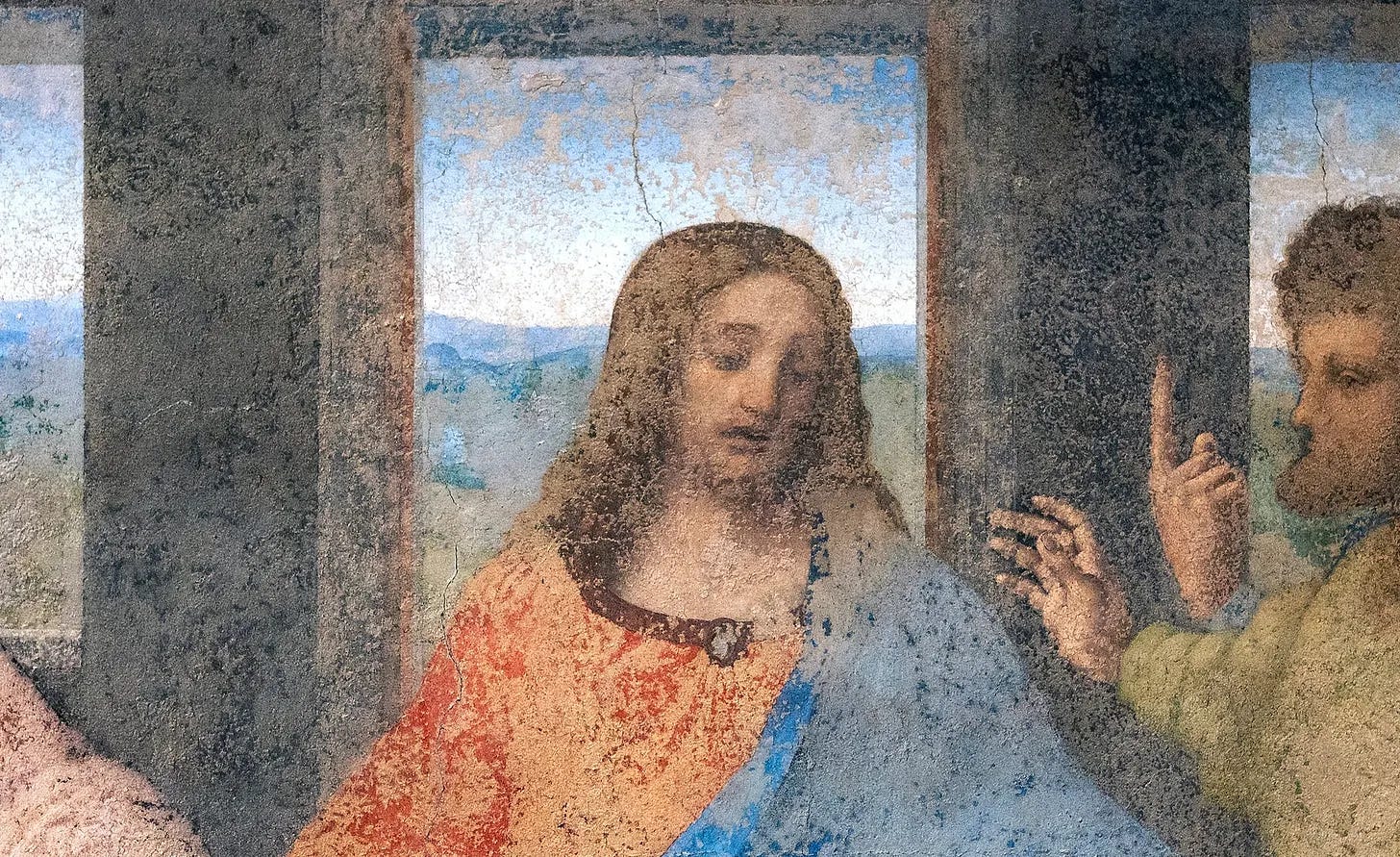
This choice underscores both Leonardo’s theological understanding and his profound artistry. It’s a clever composition that brings Christ down to an entirely earthly understanding: his divinity is not imposed but intrinsic, and fully tied to the natural order.
We know that Leonardo found truth not only in scripture, but also in nature. This inclination, of course, drove him to the stunning scientific observations and discoveries he made throughout his life, but also inspired him to find radical new ways to connect his art, science, and faith.
Scholars will always debate the extent of Da Vinci’s personal faith, but we know from the historical record that he was at least an unorthodox Christian. However, his art proves that he knew how to dovetail his Catholic theology with the philosophical undercurrents of the Renaissance and the revolutionary spirit that drove him to greatness.
A Deeper Message?
Beyond its many symbolic details, The Last Supper perhaps conveys one more, deeper message. The Apostles’ grouping into threes is not just an artistic device, but a statement of theological significance. Indeed, many believe it provides a connection to Lamentations 3:31–33:
For no one is cast off by the Lord forever. Though he brings grief, he will show compassion, so great is his unfailing love. For he does not willingly bring affliction or grief to anyone.
Why this passage in particular?
Because, it seems to me, the theme of forgiveness is central to this painting. We see in Christ’s expression a sombre acceptance of Judas’s betrayal: he’s saddened by the treachery he must announce, but simultaneously at peace with it — and the shortcomings of human nature.
In this sense, The Last Supper is far more than just a technical masterpiece of the Renaissance revolution. It is a meditation on chaos and order, upon faith and forgiveness.
While it foreshadows the awful event of Judas’s betrayal, its most profound message conveys not despair, but hope. Christ’s serenity in the midst of human frailty reminds us that grace and redemption are always within reach, even for those who falter.
Thank you for your marvelous commentary! I have always thought of the very feminine character at Jesus’ right to be Mary Magdeline and wondered how the Church could miss something so obvious . I still prefer thinking it is Mary Magdeline! Thank you!
Thank you for this thoughtful commentary. I enjoy to start my day with content such as this!