

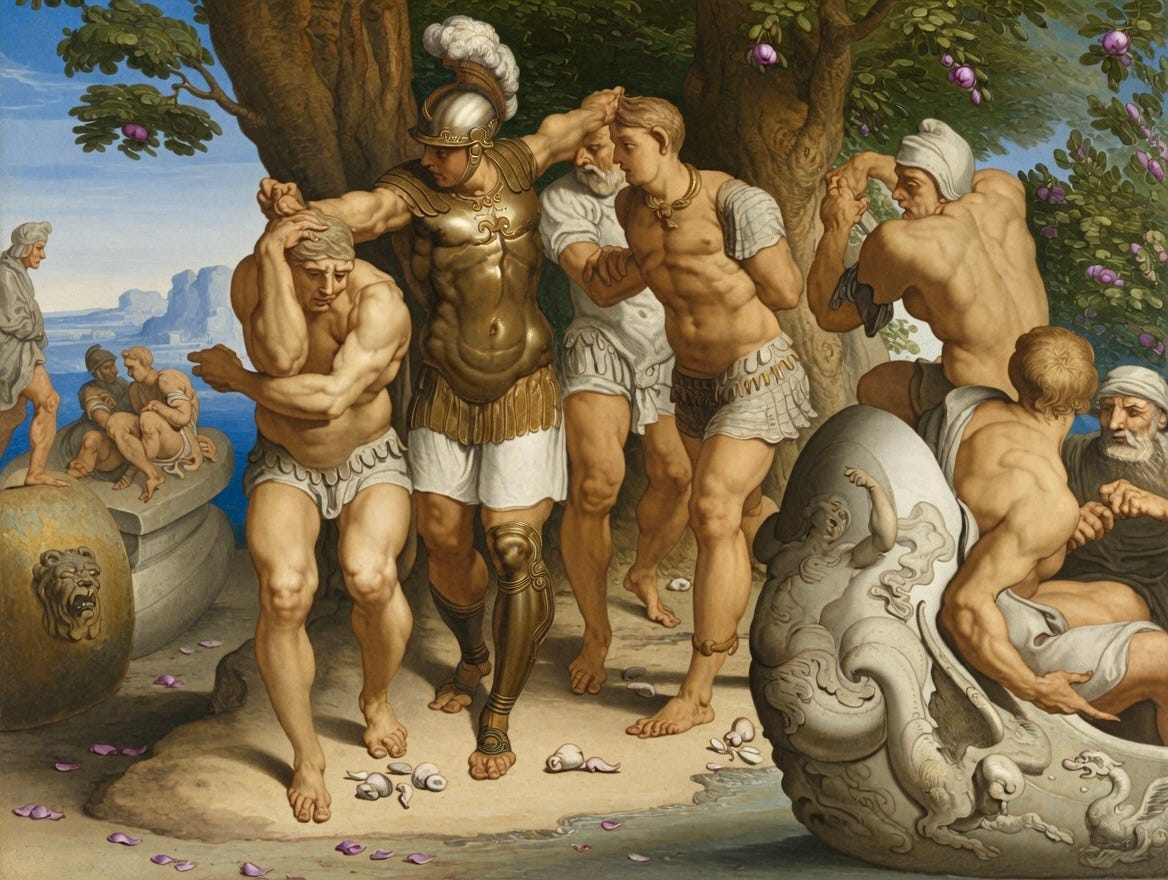
Homer’s Odyssey is one of the most action-packed tales of the Western world. From the showdown with the Cyclops to the slaughter of the suitors, the poem is replete with dramatic adventure. Yet among these many escapades, one in particular gets far too often overlooked:
The encounter with the Lotus-eaters.
What happens on the island of the Lotus-eaters isn’t glamorous, but it’s one of the most significant episodes in the entire Odyssey. Although it looks straightforward on the surface, it’s packed with hidden meaning and a prophetic warning about the dangers of our modern world.
And the craziest part? Christopher Nolan left it out of his film entirely.
Today, then, we travel to the far-flung island of the Lotus-eaters to explore the meaning of this misunderstood tale, and what Homer wants you to realize before it’s too late…
Don’t forget to join our book club!
We’re just about to start East of Eden by Steinbeck! The first discussion is on Wednesday, August 12, at noon Eastern Time — join us!

We are 100% reader-supported. This newsletter is free, but if you’re able to support, please consider a paid membership. You’ll get:
Full-length articles 2x per week
The entire archive (200+ articles, essays, and podcasts)
Simply a Myth?
But first off, who are the lotus-eaters, and where is their island? You might be surprised to learn it’s not something Homer made up.
Roughly 200 years after the Odyssey was written, the historian Herodotus (5th century BC) was confident the island of the Lotus-eaters still existed. In his Histories, he describes the people and island as such:
A promontory jutting out into the sea from the country of the Gindanes is inhabited by the lotus-eaters, who live entirely on the fruit of the lotus-tree. The lotus fruit is about the size of the lentisk berry and in sweetness resembles the date. The lotus-eaters even succeed in obtaining from it a sort of wine.
-The Histories Book 4, Chapter 177
The later historian Polybius identified the modern-day Tunisian island of Djerba as the home of the Lotus-eaters. But more important than the location of their island is what the Lotus-eaters do, which is why Homer immortalizes them in his poem.
Lost to the Lotus
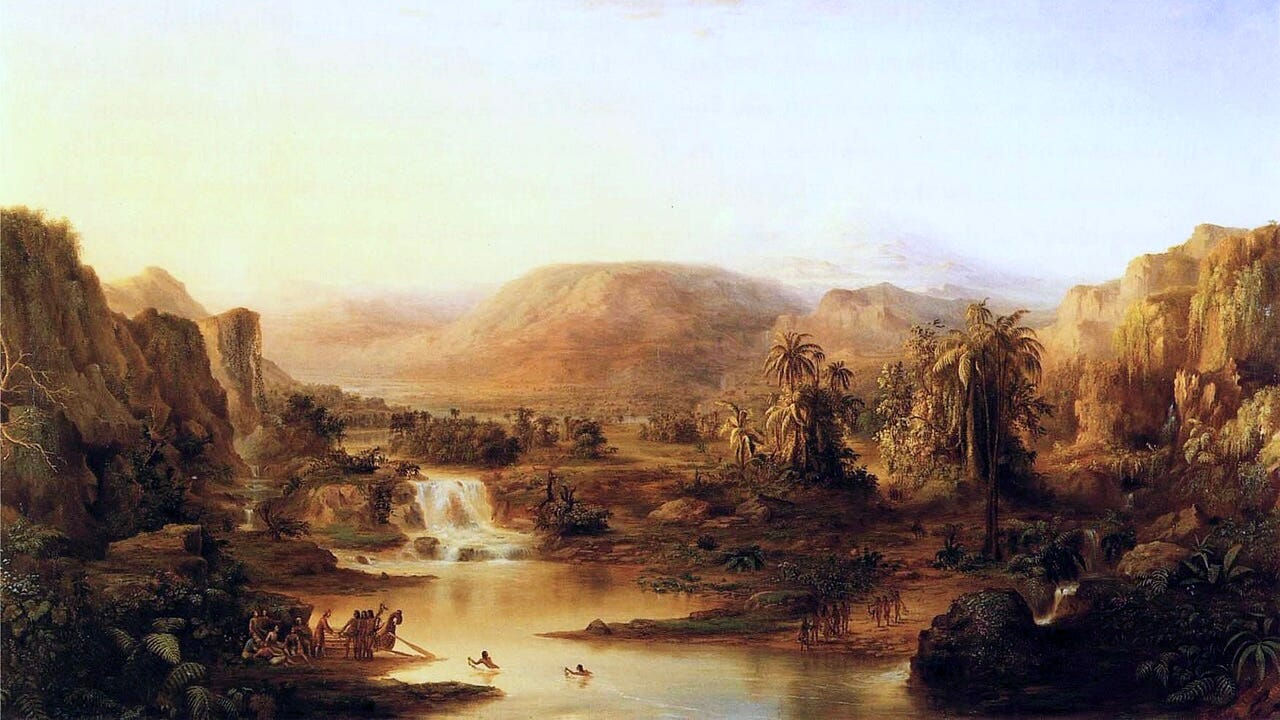
After drifting for nine days at sea, Odysseus and his men finally come across dry land. They go ashore to collect fresh water, and then sit down to eat their lunch together. After their meal, Odysseus sends three of his men to go see “what manner of men the people of the place might be”.
When his men don’t return, Odysseus begins to worry. Samuel Butler, in his famous prose translation of the Odyssey, renders Odysseus’s retelling of the story as such:
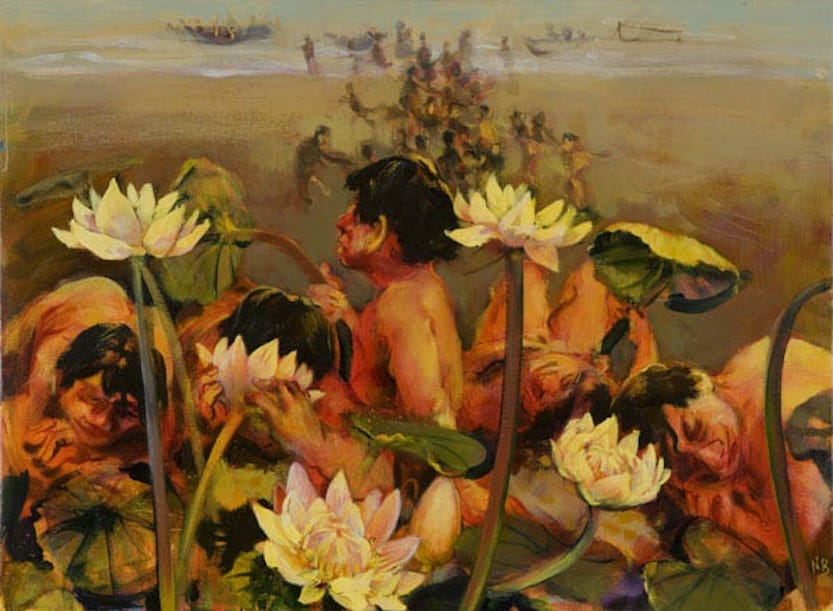
[They] went about among the Lotus-eaters, who did them no hurt, but gave them to eat of the lotus, which was so delicious that those who ate of it left off caring about home, and did not even want to go back and say what had happened to them, but were for staying and munching lotus with the Lotus-eaters without thinking further of their return…
In order to get them back, Odysseus has to drag the men back to the ships by force: “though they wept bitterly, I forced them back to the ships”. He ties them down so they can’t escape, and commands the rest of his crew to board immediately. They set sail and speed away from the island, and Odysseus is all too relieved…
The Modern Lotus
But why? Why this much drama over a tiny incident involving just three men?
The reasons become clear once you understand the symbolic power of the lotus. Its danger is not in that it poses a physical threat to Odysseus and his crew. In fact, it’s quite the opposite. The reason the lotus is so deadly is that it overloads you with pleasure, taking away all sense of urgency.
In this state of pleasure and relaxation, you forget your mission and your purpose. Odysseus records that the men who ate of the lotus flowers completely “left off caring about home”, which is to say they forgot about everything of value in their life: their home, their family, etc. And it’s not simply that they didn’t care about them anymore, but that they entirely forgot about them. It’s as if their entire reason for living had disappeared.
This is the reason why Homer dedicates time to this small yet powerful story. In a poem full of action and adventure, it’s easy to think the monsters and beasts are the most terrifying threats you face. But because they’re so obviously dangerous and remind you that death is a real possibility, they alert you to the value of life, and remind you of why you’re fighting.
Homer suggests that actually, the real danger is a life so comfortable that you forget what you were trying to do in the first place. This is the reason why the lotus flower, far more than the Sirens or the Cyclops, is representative of the threats posed by modern society.
Statistically speaking, it’s highly unlikely you’ll ever go to war or die of famine. However, it is certainly possible that an addiction to your phone will derail you from your mission in life. An abundance of food, entertainment, and outsourced thinking (i.e., relying too heavily on AI) is far more likely to destroy your life than physical discomfort or abject poverty ever will.
Like Odysseus, you are called to your own kind of greatness. When properly developed and deployed, your unique gifts and talents can be used to heal the world and bring beauty to a culture in need. Along your path, you’ll certainly encounter difficulties, and at times find yourself trapped between Scylla and Charybdis.
But, if you are to take Homer’s advice, you’ll remember that these challenges are the least of your difficulties. The real threat, which you will need to fend off every day, is that of the lotus flower: a delicious indulgence that brings you immediate satisfaction, and makes you forget what you were even fighting for.
Want to follow in the footsteps of Odysseus? Flee the lotus at all costs.
Excellent analysis. It reminds me of my favorite episode of the long defunct TV cartoon series, The Tick. The episode was about The Tick and his sidekick (Moth?) trying to save America from its enemy, the Ottoman Empire, which was made from pieces of furniture, of course. Their most powerful weapon was The Comfy Chair, from which no man could escape, once he'd sat in it and enjoyed its pleasures. Victims lost their will to strive for anything but comfort.
Excellent take👍♥️