

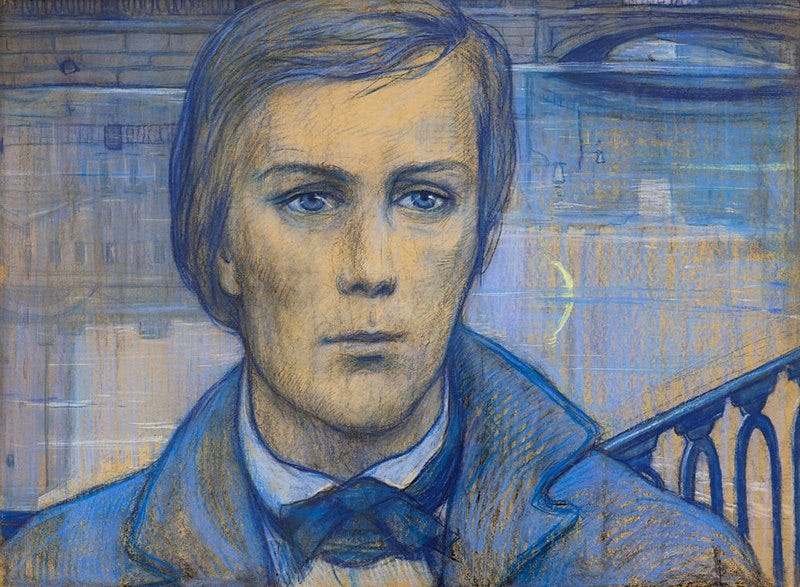
Fyodor Dostoevsky is one of the greatest Russian authors of all time. His novels such as Crime & Punishment, The Brothers Karamazov, and The Idiot are all set against the specific backdrop of 19th century Russia, yet they convey timeless and universal truths. The sweltering streets of Saint Petersburg could just as easily be replaced with those of modern-day Miami, and little would change.
So what is it about Dostoevsky’s work that makes it resonate so strongly with readers today?
To answer that question, I’ll follow Dostoevsky’s own method, and attempt to communicate the universal by rooting it in the deeply human and individual. What follows, then, are five of the main lessons that I myself have learned by reading Dostoevsky.
My hope is that these reflections on faith, evil, and the gravity of conscience, although specific to my own interpretation of Dostoevsky, can help you connect with how his work might resonate with you.
Does Dostoevsky deserve his reputation as one of the greatest authors of all time? Let’s find out…
Reminder: this is a teaser of our paid subscriber essays.
If you’d like to support our work, please consider a subscription. You’ll get:
New, full-length articles 2x per week
The entire archive (200+ articles, essays, and podcasts)
We just started reading ‘The Great Divorce’ by C.S. Lewis in the book club. The first discussion is on Wednesday, July 15, at noon ET — join us!
1) Evil Is Not “Out There”
Today more than ever, it’s easy to point the finger at all the evil in the world around you. Everything that’s going wrong seems to stem from this political party, that group of activists, or so-and-so economic policy. But while this is a comforting (and often politically expedient) fallacy, the actual story is far less palatable.
The uncomfortable truth Dostoevsky forces you to confront in his writing is that true evil isn’t somewhere “out there”. It dwells inside you. By itself, this isn’t such a radical statement — most people would agree with the idea that you should work on yourself before critiquing others.
But when Dostoevsky asks you to wrestle with the fact that evil dwells inside you, he’s not asking you to pay lip service to the idea. He wants you to genuinely consider: what if you lived like you’re the most evil person you know? What would you do differently? How would your gaze turn inwards?
Dostoevsky recognized that we all have a tendency to make hierarchies of evil in our minds. Of course you’re not as evil as a murderer or a human trafficker, you tell yourself. But it’s precisely for this reason that Dostoevsky asks you to seriously consider the fact that you have a far greater capacity for evil than you imagined.
Because for as much as you want to fight the evil “out there”, Dostoevsky knew the battle can only be won when you fight just as fiercely on the personal front. The best way to combat the misdeeds of others is to first confront the evil insider yourself.
2) Redemption Comes From Where You Least Expect
Dostoevsky is lauded for his quote “beauty will save the world”, yet the settings of his stories are often far from beautiful. His novels unfold in seedy taverns, squalid back alleys, and under the sweltering heat of the Saint Petersburg sun. Drunkards, despots, liars, libertines, nihilists, and narcissists fill the pages of his novels.
Yet the true beauty in Dostoevsky’s writing originates precisely here. The author is at his best when he documents how the seeds of grace and redemption are planted and sprung even in the most sordid of soil. Oftentimes, he does so borderline ironically; in ways his characters can’t themselves fathom.
One such example comes with the famous line:
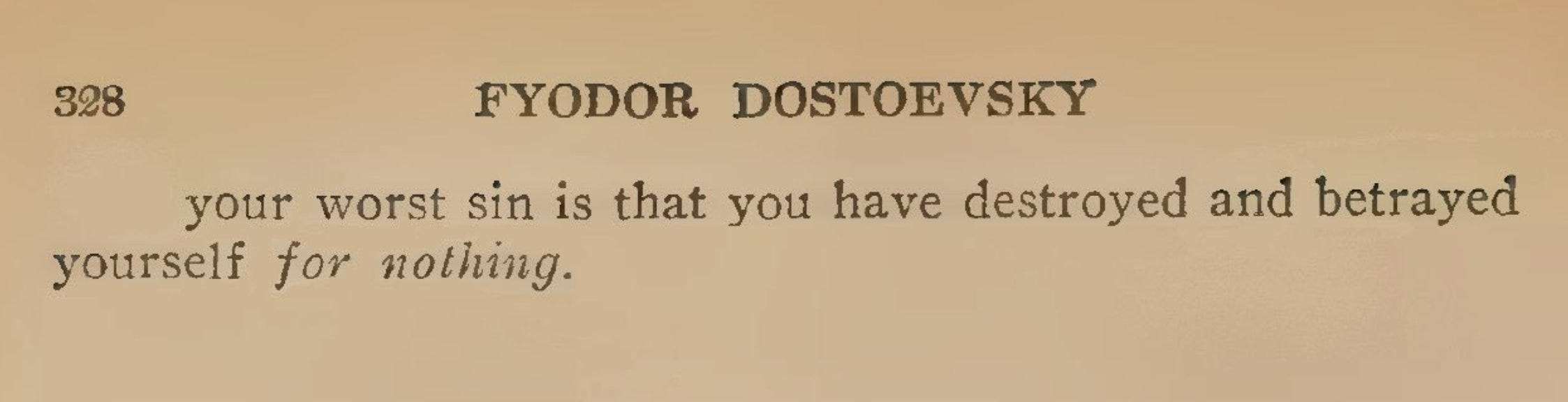
Even today, this quote is mainstream in the online world, and is often used to pile onto those who have made fools of themselves publicly — a fact which Dostoevsky himself would find quite ironic!
The quote originates from Crime & Punishment, and is delivered by Raskolnikov as he admonishes Sonia for turning to prostitution to support her family. The great irony, however, is that he accuses the innocent of that which he himself is guilty. For while Sonia temporarily became a prostitute to stave off destitution (i.e., not “for nothing”), Raskolnikov murders a pawnbroker to steal her money, but then hides the money and never uses it.
In other words, he is the one who truly destroyed and betrayed himself for nothing!
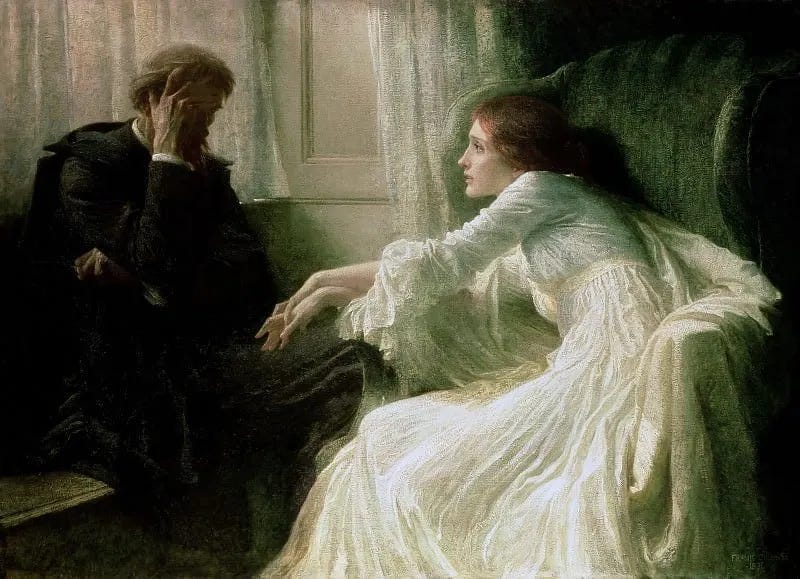
Dostoevsky uses this scene to pave the way for Sonia’s later role as a redemptive force in Raskolnikov’s life. Through her example and encouragement, he musters the courage to confess his crime and submit to the punishment, thus opening the door to an eventual future of true love and happiness — none of which would be possible, of course, were it not for the humble prostitute who served as the conduit to his redemption.
But how is it that Raskolnikov got himself in such a mess in the first place?
It all comes down to him ignoring the most immediately practical of Dostoevsky’s lessons…