

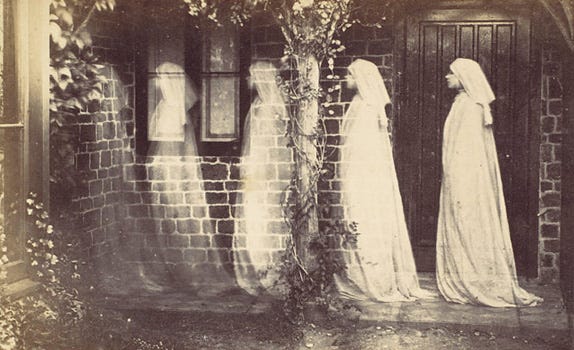
Ever since the Civil War, Southern Gothic literature has captured the imaginations of millions. But while most depictions of the South win over readers with romantic depictions of quaint, countryside living, Southern Gothic takes an unexpected — and much darker — approach.
The one defining feature of the Southern Gothic genre is its grotesqueness. Horrifically violent crimes, deranged characters, and decidedly unhappy endings offer sharp juxtapositions to the idyllic portrait often painted of the American South. Yet the affection people have for Southern Gothic doesn’t lie simply in its shock value. Rather, it has to do with something far deeper, an exploration of the most raw elements of the human experience.
Today, we look at five defining works of Southern Gothic literature to see what makes this genre unique. What keeps readers coming back to it, despite all the bizarre characters, stomach-churning gore, and frankly weird plots?
The answer might surprise you…
Don’t forget to join our book club!
We’re currently reading Dostoevsky’s The Idiot together. The next discussion is on October 21 — see the full reading schedule here.

Study the Great Books as a member of our group, and you’ll get:
New, full-length essays and articles every week
Biweekly book club discussions and reading guides
Access to our incredible community of readers
The entire archive (200+ articles, essays, and podcasts)
1) A Good Man Is Hard to Find — Flannery O’Connor

Shocking violence, multigenerational conflict, and oddball, misfit characters: if you want a full taste of the Southern Gothic palate in one sitting, this short story is for you.
“A Good Man Is Hard to Find” depicts a family road trip gone wrong, and culminates in a dramatic meeting with an escaped convict. But what stands out most about this meeting isn’t the tension or violence. Rather, it’s how God’s grace suddenly appears at the most unexpected moments.
Georgia-born author Flannery O’Connor was a master at subtly depicting how God’s grace is found in the most unlikely places. So subtle, it might be argued, that some readers fail to see it entirely! But with O’Connor, you must keep in mind that what’s left unsaid is just as powerful as what’s written on the page, and nowhere is this more true than with this story.
At the same time, “A Good Man Is Hard to Find” displays O’Connor’s talent for well-timed comic relief and her ability to make characters come to life in shocking, memorable ways. It’s a tale you can read on a Sunday afternoon, as are many of O’Connor’s short stories. We also recommend “Revelation” and “The Life You Save May Be Your Own.”
Editor’s note: I personally benefitted greatly from turning to analyses of O’Connor’s stories after reading them. These can help you understand the spiritual dimensions of O’Connor’s work, especially when it’s far from obvious.
2) The Fall of the House of Usher — Edgar Allan Poe
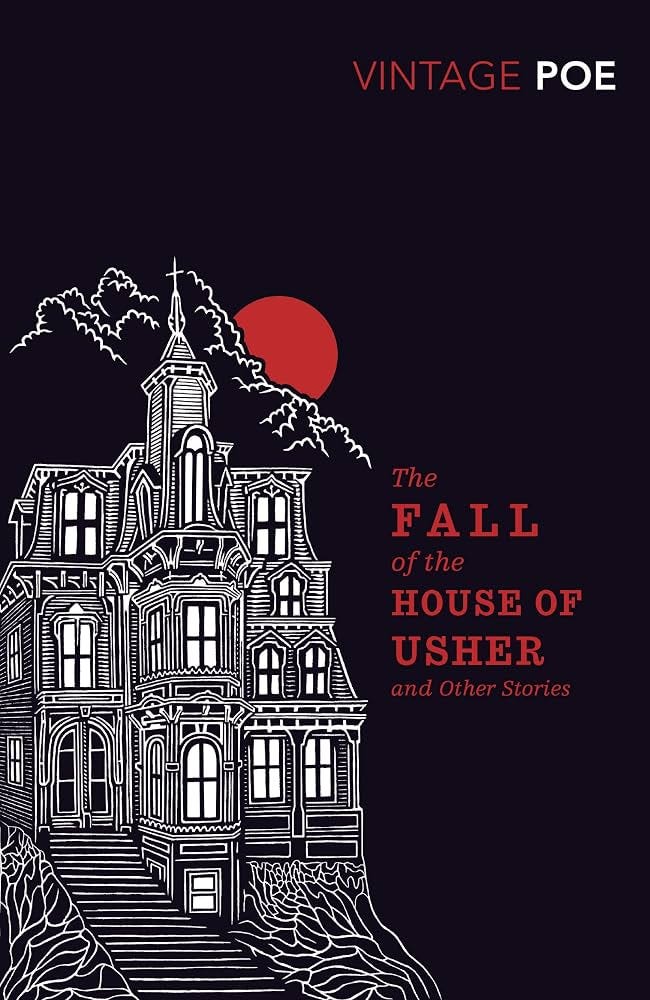
Widely regarded as the father of Southern Gothic literature, Poe developed much of his fascination with the macabre South as a young man stationed at a military base in Charleston, South Carolina. His most famous short story, “The Fall of the House of Usher,” tells the tale of two siblings whose ancestral mansion falls into decay alongside their own physical and mental health. The story exemplifies Poe’s genius for using physical settings to reflect the psychological condition of his characters, as the crumbling mansion mirrors the physical and mental deterioration of the family within.
“The Fall of the House of Usher” is classic Poe, and draws on haunting themes like fear, madness, decay, and death. If you’re hungry for more Poe, try his poetry as a bonus: “The Raven,” “Annabel Lee,” and “The City in the Sea” all color the Southern Gothic mood.
3) The Sound and the Fury — William Faulkner

You’ll feel like an accomplished reader after working through this one! The Sound and the Fury is one of Faulkner’s most unique novels, and is told through unreliable narrators, fragmented sentences, and stream-of-consciousness prose. The story follows four siblings’ descent into devastation and disrepair in their relationships as they contend with each other’s sins and mental illnesses.
The grotesque is pretty significant with this one, as it includes brushes with incest, suicide, and castration. But perhaps what makes it most gripping to read is how Faulkner’s masterful writing makes you unable to peel your eyes away from this family — the consequences of their decisions are so horrific, so catastrophic that you can’t help but wait to find out what could possibly happen next.
You’ll find an additional layer of intrigue in your simultaneous pity, disappointment, and anger at the siblings’ treatment of each other, but this strong evocation of emotion is all part of the draw to the Southern Gothic genre. If you’re captivated by The Sound and the Fury, reach next for Faulkner’s Absalom, Absalom! and his Pulitzer Prize-winning The Reivers, both set in his native Mississippi.
4) Their Eyes Were Watching God — Zora Neale Hurston
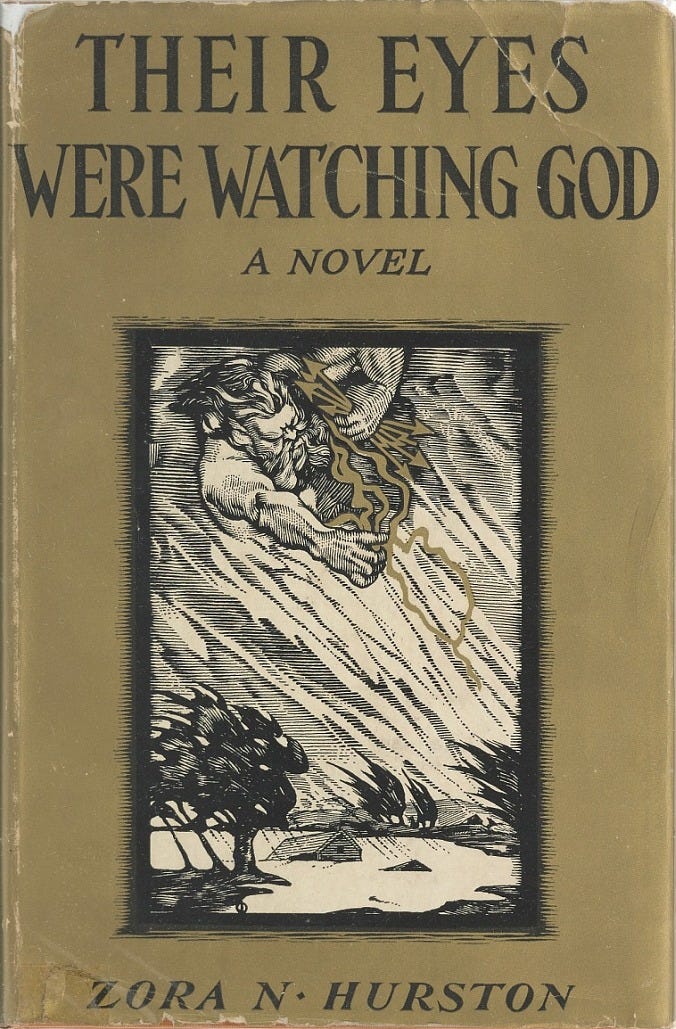
Their Eyes Were Watching God depicts the South through the eyes of an African American woman coming of age in small-town Florida. Set at the turn of the century, the novel follows its protagonist with unabashed honesty into her experience in romantic relationships, finding personal freedom, and learning what it means to survive a fall from grace.
The book is unflinching in its explorations of human relationships for all their triumph and devastation alike, and will have you cheering for the main characters on one page and feeling shocked by their decisions on the next. For quicker reads by Hurston, consider her short stories “Sweat” and “The Gilded Six Bits.”
5) A Streetcar Named Desire — Tennessee Williams
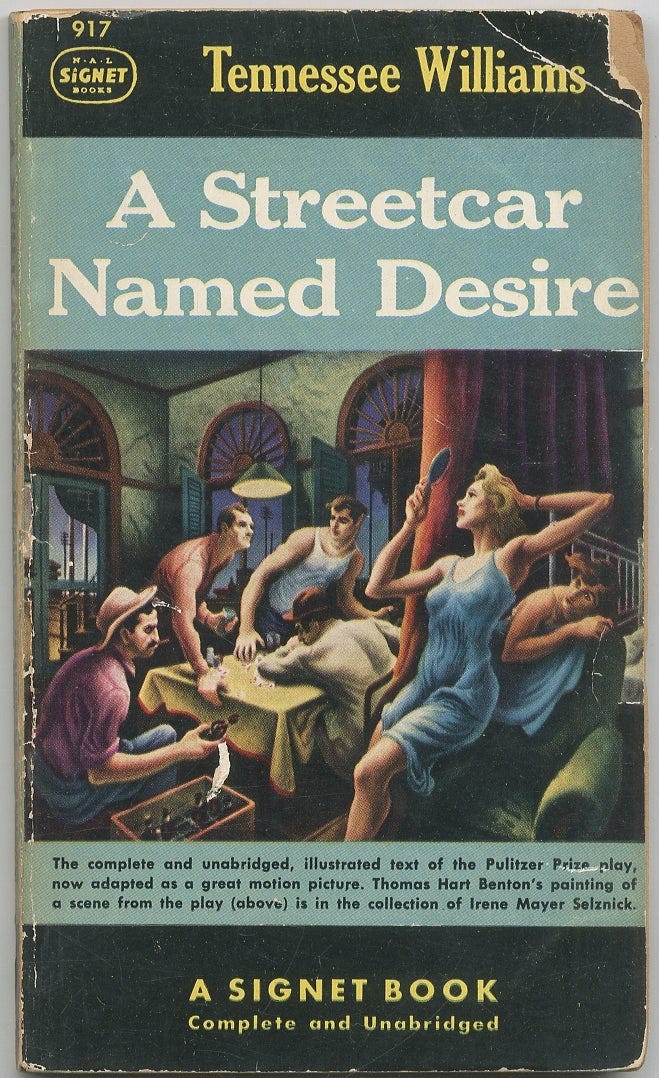
Tennessee Williams was a master of developing well-fleshed, fascinating characters, and A Streetcar Named Desire displays his best of this skill. Through the story of two middle-aged sisters and a hot-tempered husband, Williams explores the psychological torment that can arise from clutching too ardently to a long-gone past.
Aside from its macabre nature, this is perhaps what much of Southern Gothic literature is best known for: hauntings not by supernatural apparitions, but by the ghosts of homes, lifestyles, and social circles that once were. Williams expertly homes in on this backdrop in almost all of his works, and it’s clear to see where he drew this inspiration from: as a Mississippi native who spent time in New Orleans, he spent a great deal of time around older southerners who remembered life both before and after the losses of the Civil War, World War I, and the Great Depression.
If you’re interested in reading something a little different from a classic novel, you’re in luck here – as a play in three acts, Streetcar proves to be a quick read that will uniquely engage your imagination as you rely on dialogue alone. For other works by Williams with equally larger-than-life characters, try his plays Cat on a Hot Tin Roof, Vieux Carré, and Summer and Smoke.
P.S. We recently published a piece on Flannery O’Connor on our sister publication, Ascend.
Many are turned off by the stories of Flannery O’Connor, as they see her tales as brutal, grotesque, and unsettling. And, well, all of that is true.
But O’Connor is a spiritual master — a teacher of the soul — and the brutality in her Southern Gothic fiction is not simply for shock value. It has a purpose, if you can stomach it…

Great selections. You should read Flannery O'Connor in the book club!
Thank you for this! I’ve been looking for a good Southern Gothic primer. I love A Streetcar Named Desire and anything Poe, and look forward to hopping into the others on the list.