


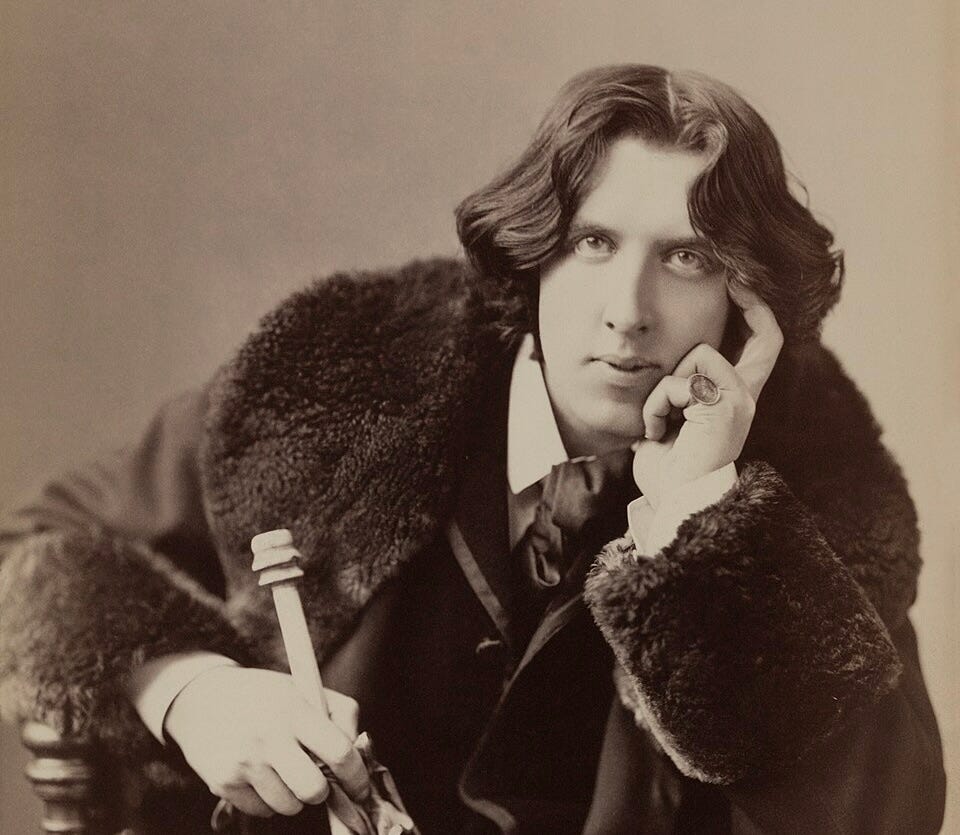
Oscar Wilde famously converted to Catholicism on his deathbed. It was an astounding end to the life of Europe’s most notorious aesthete, a man whose name became practically synonymous with the decadent movement.
But as shocking as Wilde’s conversion seemed at the time, history reveals that perhaps it shouldn’t have been so unexpected. Indeed, a surprising number of late 19th and early 20th century decadents converted to Christianity, from the erotic artist Aubrey Beardsley to decadent-pioneer-turned-Benedictine-oblate Joris-Karl Huysmans.
So what’s the reason for this? On the surface, Christianity couldn’t have anything less to do with decadentism, the “sex, drugs, and rock and roll” of the Belle Époque. But upon deeper investigation, the two worldviews have far more in common than most people realize.
Today, we explore the hidden link between decadentism and Christianity, and what each reveals about the other. Most importantly, we’ll look at how these seemingly at-odds worldviews can help you deepen both your faith and your understanding of what it really means to live life to the fullest.
Reminder: this is a teaser of our paid subscriber essays.
If you’d like to support our work, please consider a subscription. You’ll get:
New, full-length articles 2x per week
The entire archive of content (200+ articles, essays, and podcasts)
Yearning for Beauty
O, reason not the need! Our basest beggars
Are in the poorest thing superfluous.
Allow not nature more than nature needs,
Man’s life is cheap as beast’s.
-King Lear, Act II, Scene 4
For many Christians, it’s all too easy to critique the decadents. Their promiscuous and extravagant lifestyles flew clearly at odds with Christian morality, and undermined established social mores. Oscar Wilde was famously convicted of practicing homosexual acts, but most decadents were unimpeded by the law. Beardsley’s erotic prints circulated freely, and Huysmans’s novel À rebours became an international bestseller.
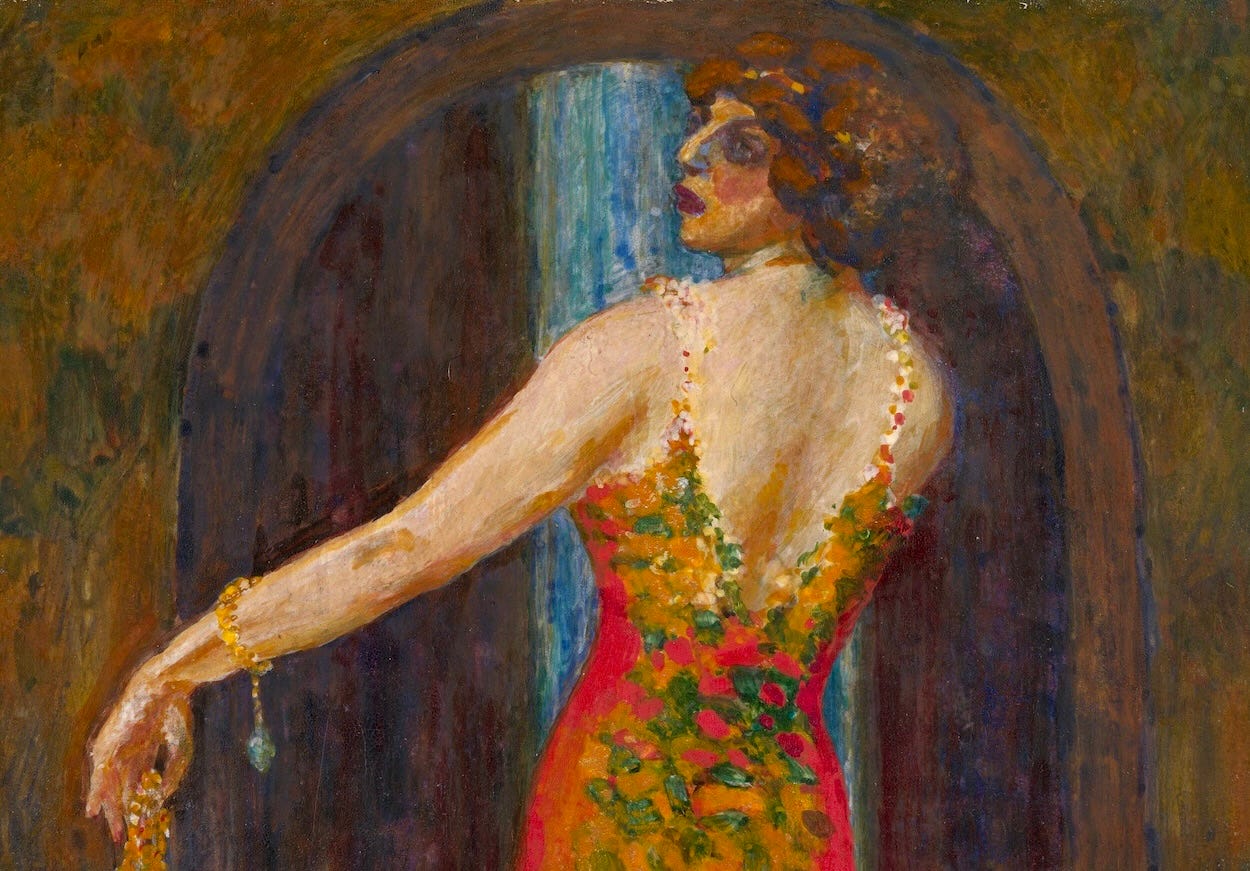
Yet in their obsessive pursuit of love and beauty, dandies and aesthetes exhibited a sort of world-weariness not unfamiliar in Christianity. In many ways, decadentism was a reaction to the large-scale industrialization of the 19th century, and sought to rediscover the things that made life worth living. Many decadents saw their landscapes and cities destroyed by a zeitgeist that preferred quantifiable material output to unquantifiable beauty, and they lashed out against it.
Their reaction caused them to focus on the human need for unnecessary beauty, something Shakespeare himself had identified nearly 300 years prior. Yet they went too far. Italy’s decadent poet par excellence, Gabriele D’Annunzio, once wrote of his own “need for the superfluous” (his words) that:
I could have lived very well in a modest house … taken tea in a threepenny cup, blown my nose on handkerchiefs at two lire the dozen … Instead, fatally, I have wanted Persian carpets, Japanese plates, bronzes, ivories, trinkets, all those useless lovely things which I love with profound and ruinous passion.
Yet in their pursuit of material beauty, the decadents inevitably came up against its limitations. Some intuited what this would lead to: in his review of À rebours, for example, French critic Jules Barbey d’Aurevilly wrote he could sense its author would soon have to choose “between the muzzle of the pistol and the foot of the cross.”
He was not wrong. Nearly a decade after the publication of his novel, Huysmans took holy orders.
Mischief & Misdirected Love
The poet Dante would not have been surprised by Huysmans’s conversion. Because although decadentism and Christianity might seem like polar opposites to us today, medieval thinkers saw things differently. And nowhere is this outlook better cataloged than in Dante’s own Divine Comedy.
In the second of the three canticles that comprise the Comedy, Dante traces the journey of souls as they climb the “mountain of Purgatory”. This mountain is composed of 10 terraces: one pre-Purgatory terrace at the bottom, then seven terraces corresponding to the seven deadly sins, then two final terraces where the Earthly Paradise is found.
The terraces that correspond to the deadly sins are split into three categories: sins of perverted love, deficient love, and misdirected love. The first three deadly sins of pride, envy, and wrath constitute perverted love. Acedia (sloth) constitutes deficient love, while the triad of greed, gluttony, and lust constitute misdirected love.
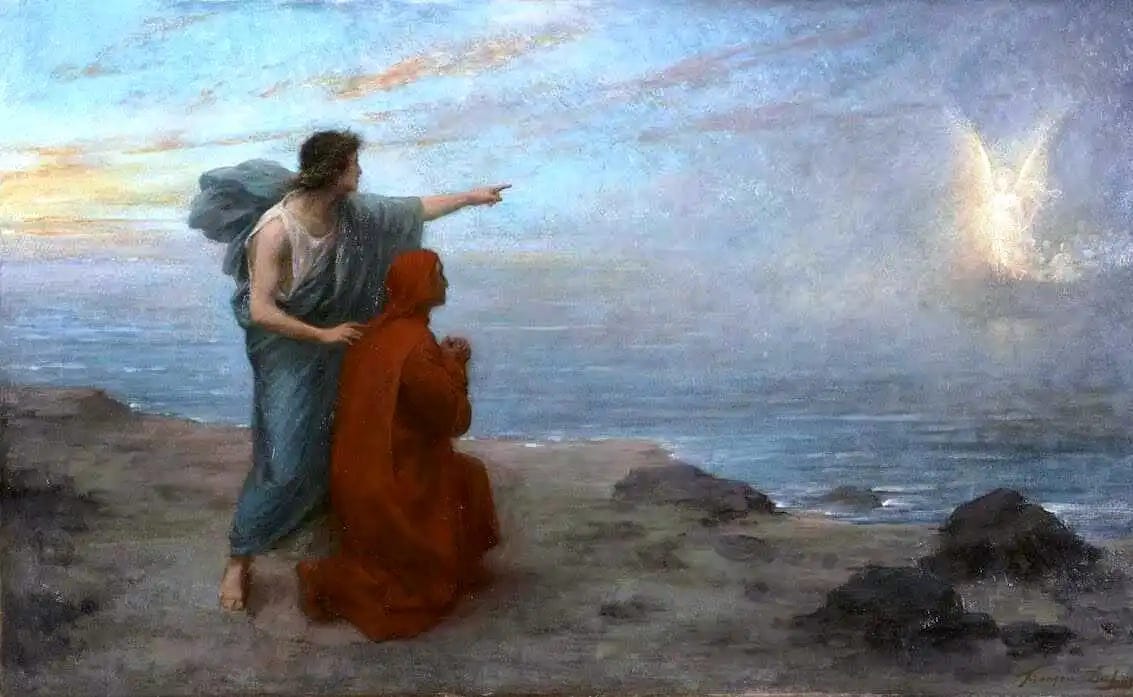
According to Dante, sins of misdirected love are the easiest to overcome. This is because they constitute a love of the right things, but in excess. Wealth, food, and sex are all inherently good things, and only by placing improper emphasis on them do you stray into sin.
So what does any of this have to do with Oscar Wilde converting to Catholicism? Simply put, Dante would have understood that the decadents pursued and emphasized all the right things, but in excess. Yet their underlying desires were aimed at the good — and because of this, there are still many things they can teach you.
But what can decadent aesthetes possibly teach you about something sacred like faith?
As it turns out, quite a lot. Because at the core of their creed is an idea that goes back thousands of years in Christianity. Understanding it is the key to living a properly ordered and meaningful life, and knowing how to enjoy God’s creation…