



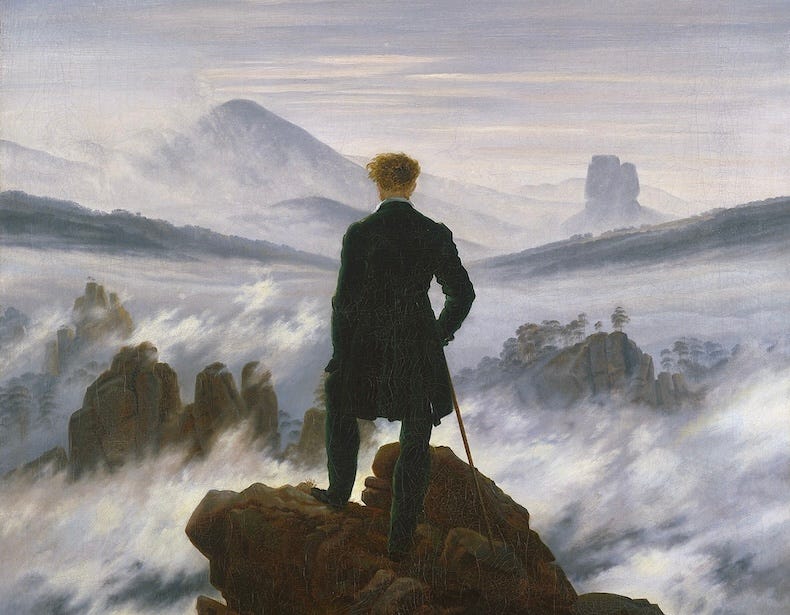
Everyone hates suffering. By its definition, it is painful. Naturally, we try to avoid it, and we are told that a good life is one in which you suffer as little as possible. The idea that anyone would ever choose to suffer is practically unthinkable.
Unthinkable to us, that is. But not to our ancestors.
For while modern life teaches you that suffering is to be avoided at all costs, history teaches just the opposite. The Greeks saw suffering as a conduit to growth. The Romans praised those who willingly pursued hardship, including their enemies. Even biblical texts, from the Old Testament prophets to the New Testament gospels, speak to the benefit of suffering: after all, is it just a coincidence that through Christ’s death humanity is saved?
Most people believe that the less suffering in your life, the better. But today, we explore why suffering is actually a good thing — and how, if you know how to embrace it, it can make you beautiful…
Reminder: this is a teaser of our paid subscriber essays.
If you’d like to support our work, please consider a subscription. You’ll get:
New, full-length articles 2x per week
The entire archive (200+ articles, essays, and podcasts)
Life Without Suffering
Before we explore the specific benefits of suffering, it helps to begin by looking at what happens in the absence of general difficulty and hardship.
All across the world, there is a common archetype running through history; an archetype of loss and decay. Central to this is the concept that difficulty builds resilience that leads to success, whereas comfort and ease lead to entropy and decline.
“Shirtsleeves to shirtsleeves in three generations” is one such phrase that captures this idea neatly. It supposes that wealth is built and squandered within three generations: the first struggles and builds, the second consolidates, and the third, isolated by wealth from the pressures of reality, grows lazy and wasteful.
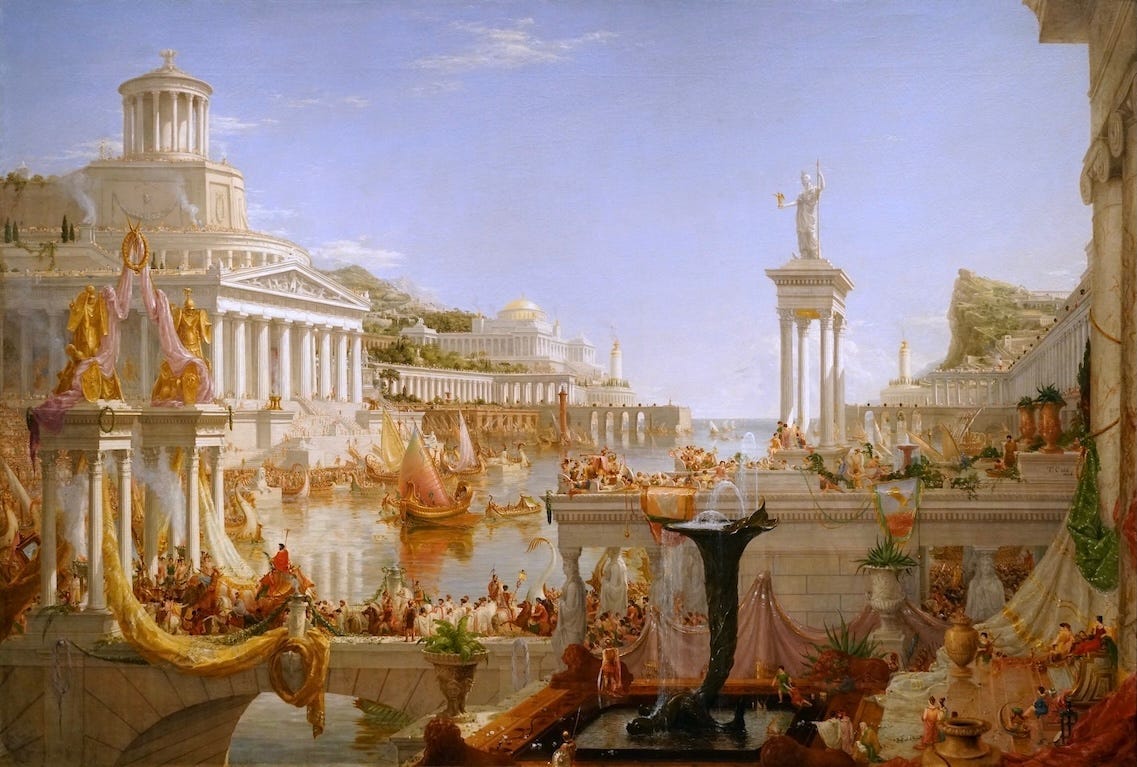
A similar idea is reflected in the popular online meme about the course of civilization: “hard times create strong men, strong men create good times, good times create weak men, and weak men create hard times.” Although this specific quote comes from a 2016 novel by G. Michael Hopf, the idea behind it goes back at least as far as the 5th century B.C.
In his Histories, the Greek historian Herodotus describes a moment when one of the Persians suggests to Cyrus the Great that they should conquer land where it’s easier to live, “since the land we possess is small and also rugged”. But the king’s response gives them pause, and convinces them to change their minds:
Cyrus, hearing this and not being surprised at the proposal, bade them do so if they would; but he exhorted them and bade them prepare in that case to be no longer rulers but subjects.
“For,” said he, “from lands which are not rugged men who are not rugged are apt to come forth, since it does not belong to the same land to bring forth fruits of the earth which are admirable and also men who are good in war.”
-Herodotus, Histories, 9.122
The fact that Cyrus’ advice successfully changes the mind of the Persians reveals that they saw truth in the king’s words. But if the ancients could recognize this wisdom, then why can’t we?
Or, in other words, when did our culture start to see suffering as a bad thing?
Shih Tzus & Soma
For believe me! — the secret for harvesting from existence the greatest fruitfulness and the greatest enjoyment is: to live dangerously!
-Friedrich Nietzsche
Life is full of danger. From the moment of conception, your life is threatened by a thousand forces. Injury, sickness, or natural disaster can bring you to your knees in a moment. True security is nothing but an illusion: an outbreak of plague, an EMP blast, or the eruption of the Yellowstone Caldera could instantly change every aspect of life as you know it.
And yet, people are still addicted to the pursuit of security. While part of this is human nature, other aspects of it are cultural as well, such as obsessive “health-maxxing” or anxiety over one’s retirement accounts. On this cultural point, the philosopher Nietzsche was prescient in writing that “society has tamed the wolf into a dog, and man is the most domesticated animal of all”.

This was no exaggeration on Nietzsche’s part. The Shih Tzu, for example, is a descendant of the Chinese Grey Wolf, a ferocious animal that can take down prey several times its size. The Shih Tzu, on the other hand, has grown so reliant on its human owners that it has almost no instinct for self-provision. And this, in Nietzsche’s mind, is the same thing that occurred with modern man.
When Nietzsche writes that “man is the most domesticated animal of all”, he means that society domesticated man for the same reason it domesticated the wolf: out of fear. In other words, society tames man so that it can live without fearing him.
To be fair, not all aspects of this are bad: obviously, there are significant upsides to building a culture that prizes trust and collaboration over unbridled ambition, violence, and dominance. But at the same time, it is clear that this domestication can go too far. Watching sports on TV replaces playing them, going on adventures in video games replaces going on them in real life, and subscriptions to OnlyFans models offer only a shallow simulacrum of true human intimacy. In each of these cases, there are major financial incentives for those who would have man reduced to the state of pure consumer.

So, in a world where the powers that be benefit from your domestication, how do you escape the trap of servitude and fight to live with meaning? For Nietzsche, as for the Greeks and the Romans, the answer is simply: embrace suffering.
But interestingly, this is the same answer Christianity provides. Even though Nietzsche raged against Christianity for contributing to the domestication of man, Greek and Roman philosophy doesn’t actually diverge that much from biblical wisdom. The main difference is that Christianity takes it one step further.
What is it, then, that these ancient creeds teach? How do you, on the most practical level, embrace suffering? How do you channel it to make you beautiful?
That’s exactly what we look at next…