



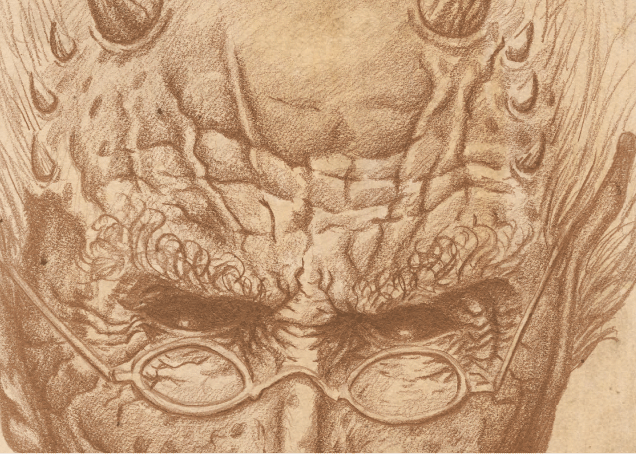
I HAVE no intention of explaining how the correspondence which I now offer to the public fell into my hands…
So begins the author’s preface to The Screwtape Letters. Written, or rather “found” by C.S. Lewis, the book is a collection of epistles from senior demon Screwtape to his nephew Wormwood. In them, Screwtape offers his nephew advice on how to tempt humans away from God (“the Enemy”) and into hell.
The correspondence opens with Screwtape admonishing Wormwood for a rookie mistake: choosing to focus on argument over distraction. “From the way some of you young fiends talk,” he writes, “anyone would suppose it was our job to teach!” He goes on to explain why distraction is key to the corruption of souls, and gives a specific example of a time he used it to lead a man to hell.
Today, we look at why the devil wants you distracted, and what you can do about it. By studying Screwtape’s methods, you’ll learn about the inner workings of distraction — and most importantly, how to overcome this most diabolical of temptations…
Reminder: this is a teaser of our paid subscriber essays.
If you’d like to support our work, please consider a subscription. You’ll get:
New, full-length articles 2x per week
The entire archive (200+ articles, essays, and podcasts)
Don’t Awake His Reason!
Rome wasn’t built in a day, and neither are powerful demons. As such, Screwtape starts off his letter by correcting a classic error in junior tempters: the presumption that reason and materialism alone are enough to lead men (the demons’ “patients”) to hell.
He begins his letter as such:
MY DEAR WORMWOOD,
I note what you say about guiding our patient’s reading and taking care that he sees a good deal of his materialist friend. But are you not being a trifle naïf? It sounds as if you supposed that argument was the way to keep him out of the Enemy’s clutches.
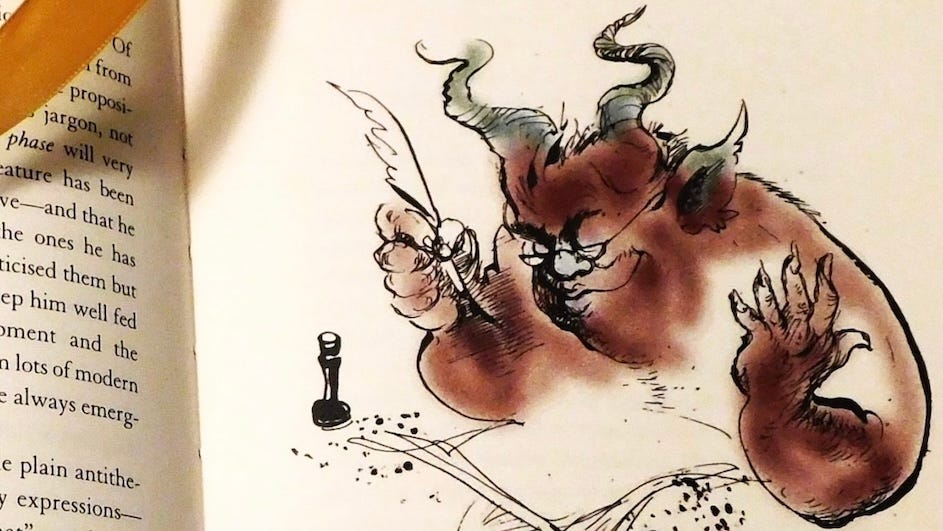
Why does Screwtape insist that argument is such a bad thing? Haven’t thousands of men been persuaded away from God by the arguments of atheists? Yes, of course. But for a strategically-minded demon, argument is never a safe bet. It exposes them to a specific kind of risk, one which usually isn’t worth taking. Screwtape explains:
The trouble about argument is that it moves the whole struggle onto the Enemy’s own ground. He can argue too…
By the very act of arguing, you awake the patient’s reason; and once it is awake, who can foresee the result?
Clearly, Screwtape doesn’t think reasoning patients into hell is a strategy worth pursuing. It opens the door to competition, which is never a safe route. What’s especially interesting is that he even discourages Wormwood from allowing his patient to pursue the hard sciences.
For all the talk of science being in conflict with faith, Screwtape seems to think otherwise. He explicitly warns Wormwood about this, writing:
Above all, do not attempt to use science (I mean, the real sciences) as a defence against Christianity. They will positively encourage him to think about realities he can’t touch and see. There have been sad cases among the modern physicists.
So if Wormwood isn’t supposed to use reasoned arguments to lead his patient to hell, what is he supposed to do?
That’s where it gets interesting…
Jargon Is Your Best Ally
Far better than argument, Screwtape advises, is distraction. As for the specific techniques used to distract a patient, there is an infinite variety.
One of the more interesting suggestions Screwtape offers to Wormwood is to distract his patient not from thinking, but from the nature of critical thought itself. He advises Wormwood to make sure his patient does not “think of doctrines as primarily ‘true’ or ‘false’, but as ‘academic’ or ‘practical’, ‘outworn’ or ‘contemporary’, ‘conventional’ or ‘ruthless’”.

By having his patient evaluate ideas not by their content but by their labels — progressive, conservative, liberal, fascist, feminist, woke, racist, etc. — Wormwood can ensure he never engages meaningfully with their content. This is a strategy Screwtape can not emphasize enough, and he underscores the point explicitly:
Jargon, not argument, is your best ally in keeping him from the Church. Don’t waste time trying to make him think that materialism is true! Make him think it is strong, or stark, or courageous — that it is the philosophy of the future. That’s the sort of thing he cares about.
On top of this method of distraction, there is one that is even more potent. Continuing his point about the follies of rational argumentation, Screwtape advises Wormwood on the following:
Even if a particular train of thought can be twisted so as to end in our favour, you will find that you have been strengthening in your patient the fatal habit of attending to universal issues and withdrawing his attention from the stream of immediate sense experiences.
Your business is to fix his attention on the stream. Teach him to call it “real life” and don’t let him ask what he means by “real”.
The best objective for any demon, then, is to tempt his patient with “the stream of immediate sense experiences.”
What’s going on in politics today? What’s the latest influencer drama? The most recent natural disaster or moral outrage? One wonders if Screwtape himself was behind the naming of the social media “feed”.

But it’s not just social media that distracts us from meaningful thought. Screwtape goes on to explain to Wormwood how, even in an age long before social media, he used a single moment of distraction to successfully doom a patient to hell: “He is now safe in Our Father’s house.” But in outlining his methods, Screwtape unintentionally reveals the key to resisting the demons’ tricks.
So how is it, then, that you successfully avoid the distraction and temptations of the devil? That’s precisely what we look at next…