

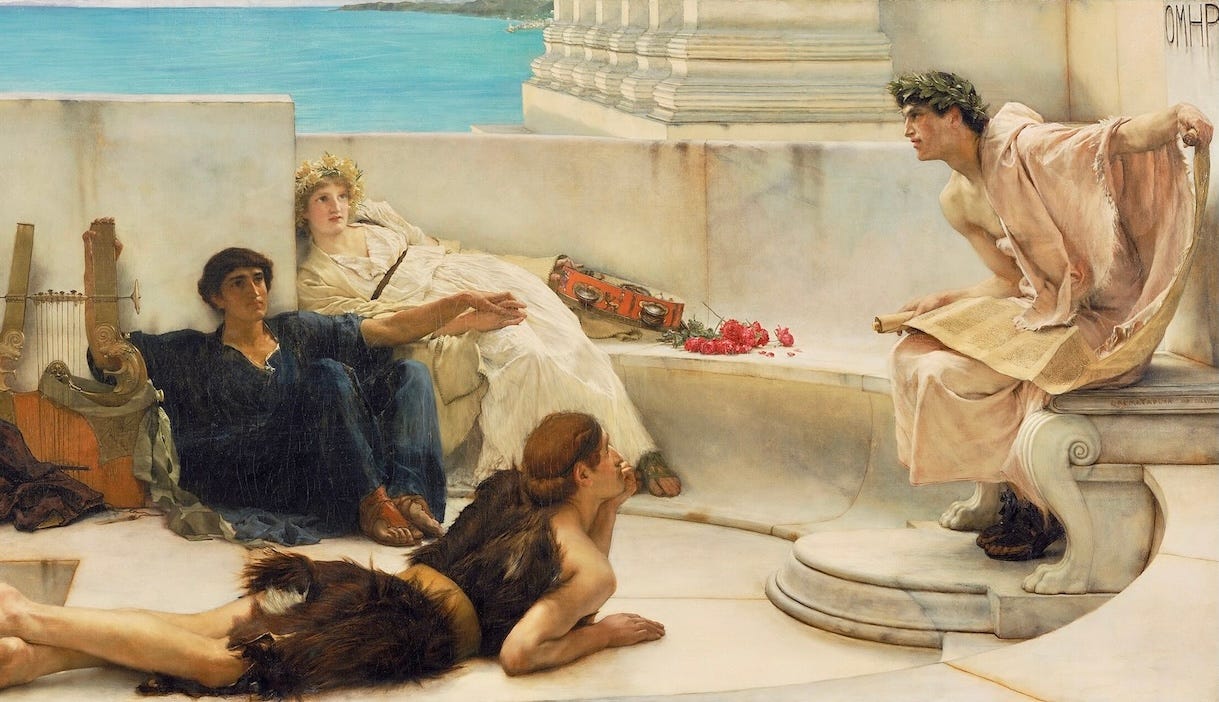
When you think of Greek literature, the works of Homer are likely the first to spring to mind. The Iliad and the Odyssey have a monopoly on the attention we pay to Ancient Greece, and with good reason. But when it comes to engaging with other works from the Greeks, many people both start and end their journey with Homer.
That’s why today, we take a look at five other must-reads of Greek literature. These are works that showcase what the Greeks did best, which was to effortlessly blend literary art with philosophy and moral instruction.
Whether you’re looking to enrich your own intellectual life, or discover more classics to share with your children, you can’t go wrong with these five works. After all, there’s a reason they’re still being read thousands of years later…
1) The Anabasis – Xenophon
When 10,000 Greeks lost their commanders to treachery, Xenophon stepped up to lead them home across hostile territory. Anabasis, his account of their return, is a masterclass on leadership and understanding the human psyche.
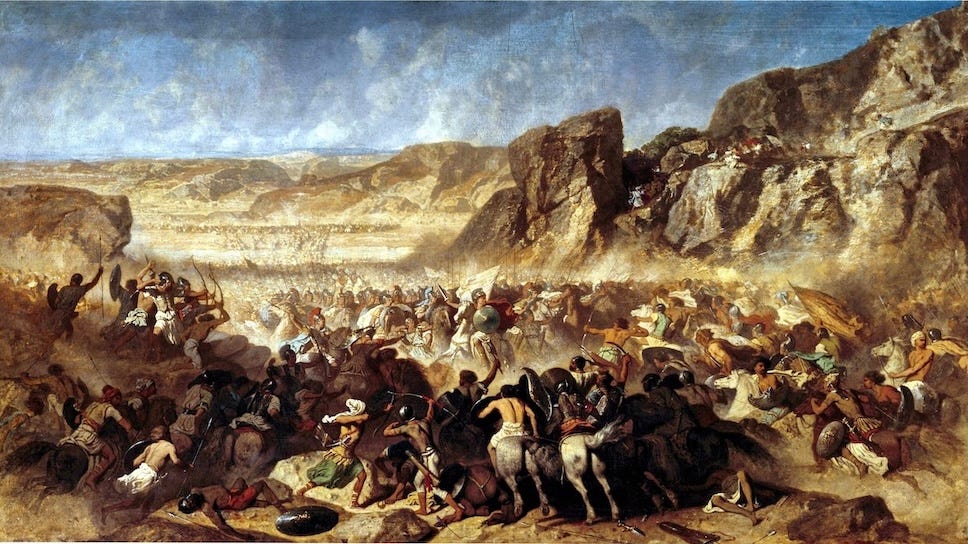
Having marched nearly all the way to Babylon, Xenophon and his men suffer ambushes, frequent skirmishes, and near-constant harassment as they march out of Persian territory. But despite it all, Xenophon manages to keep them composed and leads them all the way back to the shores of the Black Sea. When they finally glimpse the first Greek city from the heights of a cliff, the war-hardened men break down and weep tears of joy.
Much like Julius Caesar in his Commentaries on the Gallic War, Xenophon pens his Anabasis in the third person. His writing is straightforward and unadorned, making Anabasis a great text for students of Attic Greek. But whether you read it for historical or linguistic reasons, you’ll undoubtedly learn about human psychology along the way. Specifically, you’ll discover the tools that allowed Xenophon to preserve morale, and keep the army from despair on its long trek home.
2) The Clouds – Aristophanes
Aristophanes’ satire follows a man’s enrolment into a school of philosophy, only to find the intellectuals there so frustrating and unhelpful that he burns the place down.
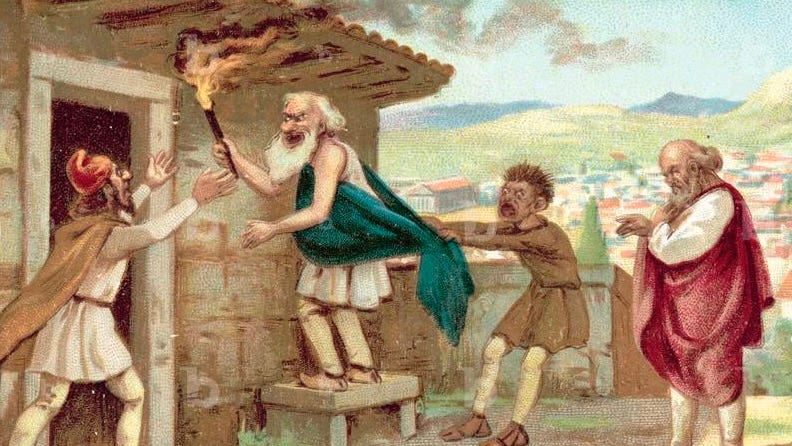
As a “comedy of ideas”, The Clouds explores the difference between proper education and useless sophistication. Interestingly, it also includes an unflattering portrayal of Socrates, which Plato believed influenced the trial and subsequent execution of his ill-fated teacher.
The play ends with a son beating up his father, threatening to do the same to his mother, and explaining why he is justified in his actions. It’s a poignant ending to a play which, through comedy, highlights the limitations of philosophy. Aristophanes shows that once detached from moral restraint, knowledge and verbal cleverness can be used to justify anything, even violence against one’s family.
3) Rhetoric – Aristotle
Aristotle’s Rhetoric teaches you everything you want to know about the art of persuasion.
Unlike many of the characters in The Clouds, Aristotle realizes that argument is not a purely logical exercise. In his Rhetoric, therefore, he outlines a “realpolitik” approach to convincing others by examining how real people think, feel, and decide.
Aristotle analyzes different types of speech and the role emotion plays in judgment, revealing not just how to structure arguments and establish credibility, but also how to recognize which rhetorical tricks are being played on you. For that reason alone, it’s a work that those who wish not to be seduced by ChatGPT would do well to read…
4) History of the Peloponnesian War – Thucydides
Thucydides’ History of the Peloponnesian War is one of the most sober works ever written about politics. Covering the long conflict between Athens and Sparta, Thucydides records key episodes that reveal how power actually functions.
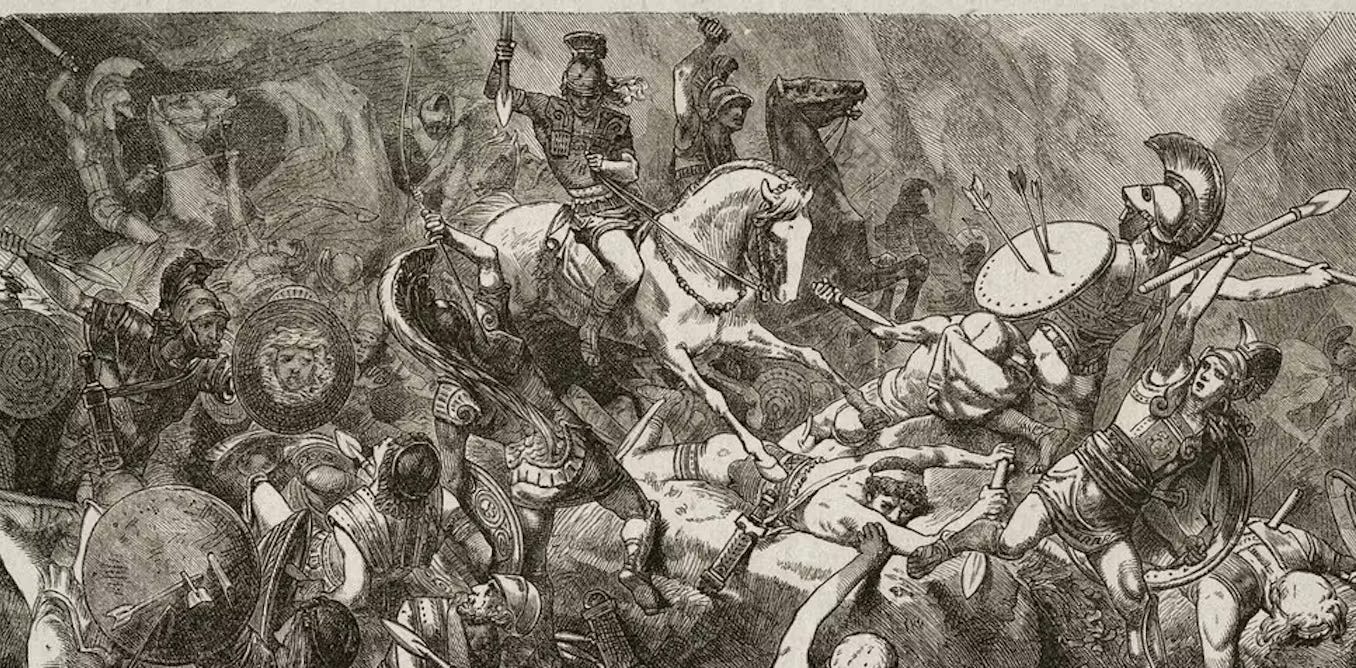
In the Melian Dialogue, for example, Thucydides recreates a conversation between Athenian diplomats and the rulers of the island Melios. When the Athenians tell them to surrender or be destroyed, the Melians raise objections: their island is neutral, not strategic to the Athenians, and conquering it would be unjust. But the Athenians respond by saying that none of that matters, because: “the strong do what they can and the weak suffer what they must.”
What matters most, Thucydides shows, is not so much what ought to happen, but what people are willing and able to do. Those are the real laws of power politics, not principles and ideals. It is a sober outlook that foreshadows a later Roman phrase: “if you want peace, prepare for war”.
5) Oedipus Rex – Sophocles
Sophocles’ classic tale of a man destined to kill his father and sleep with his mother is about much more than incest. It’s a metaphor for what happens when certainty is mistaken for clarity, and when the wisdom of tradition is jettisoned for the sake of present concerns.
Just as in Shakespeare’s King Lear, blindness is a theme running throughout the play. Oedipus’ refusal to literally see the truth leads to actual blindness, and the play reaffirms that “there are none so blind as those who won’t see”.
But of course, Oedipus Rex is far more than that. This Saturday, we break down for our premium subscribers everything that the play teaches about wisdom, pride, curiosity, and how to avoid self-sabotage. It is one of the Greek world’s greatest works of art, and a harrowing warning for our culture today. To get it, sign up below…
Thank you for reading! If you’d like to support us, please do consider a premium subscription:
Full-length articles 2x per week
The entire archive of content (180+ articles, essays, and podcasts)
We have just started reading Plato’s Republic in the book club. The first meeting is TODAY, January 14, at noon ET — the Substack live stream will be at this link.

Guilty as charged. My greek literature reading began and ended with Homer. I’ll be looking to pick some of these up soon!
I know two of them, 'Oedipus Rex' and 'The Clouds'. The other three, I shall look for the other three. Excellent advice.