

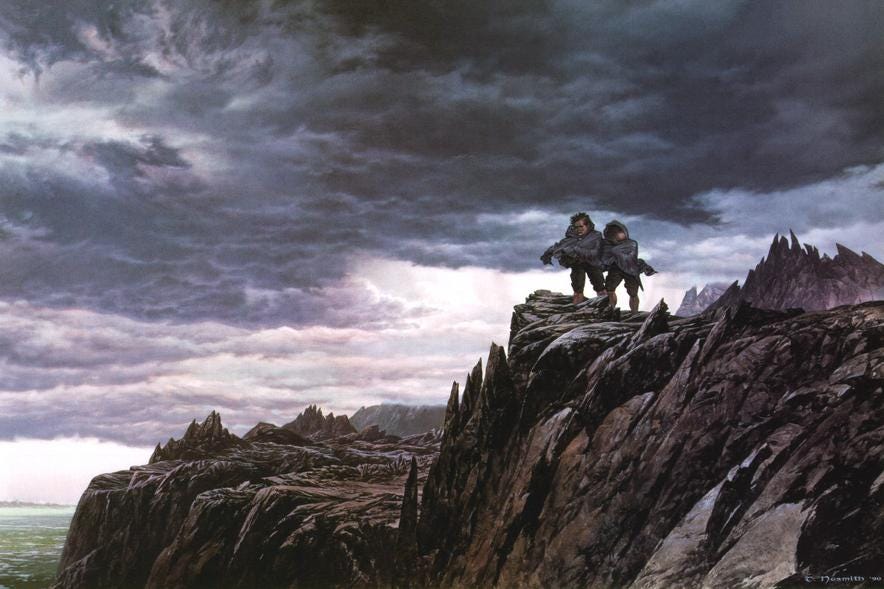
It’s easy to feel overwhelmed in today’s world. Our social media feeds present a constant stream of new conflicts and difficulties emerging every day. Things feel like they’re constantly going from bad to worse, and you’re always being made aware of problems you didn’t even know existed. Sometimes it’s hard not to feel burdened with despair.
Yet despite all of this, some people are still able to stay positive in the midst of these challenges. What is their secret, and how do they remain optimistic in the face of the world’s chaos?
Today, we look at why the key to a good life is being able to find beauty in the midst of chaos, and life in the midst of loss. We’ll look at specific examples of how others have managed to do so in the past, and how you can replicate their success in your own life.
Because in a world that constantly threatens to overwhelm you, resilience in the face of despair just might be the most important trait you can cultivate…
Reminder: this is a teaser of our paid subscriber essays.
If you’d like to support our work, please consider a subscription. You’ll get:
New, full-length articles 2x per week
The entire archive (200+ articles, essays, and podcasts)
It’s Always Been This Way
The first step in recognizing beauty in the midst of chaos is to reframe the way you look at the world.
It’s easy to read the news and come away thinking things are worse than ever before. The notion that we live in “unprecedented” times is a particularly popular talking point. But in reality, all it takes is an honest look at history to realize that most of the things we think are uniquely bad really aren’t that unique at all.
War, plague, and natural disaster: unfortunately, these are all parts of the human experience. They unsettle us because they shake us from the notion that we can build a “secure” life, but in reality nothing is secure. Disaster is always on the doorstep.
Speaking to his students on the eve of World War II, Oxford professor C.S. Lewis took time to dwell on this point exactly:
The war creates no absolutely new situation: it simply aggravates the permanent human situation so that we can no longer ignore it. Human life has always been lived on the edge of a precipice…
Even those periods which we think most tranquil, like the nineteenth century, turn out, on closer inspection, to be full of cries, alarms, difficulties, emergencies.
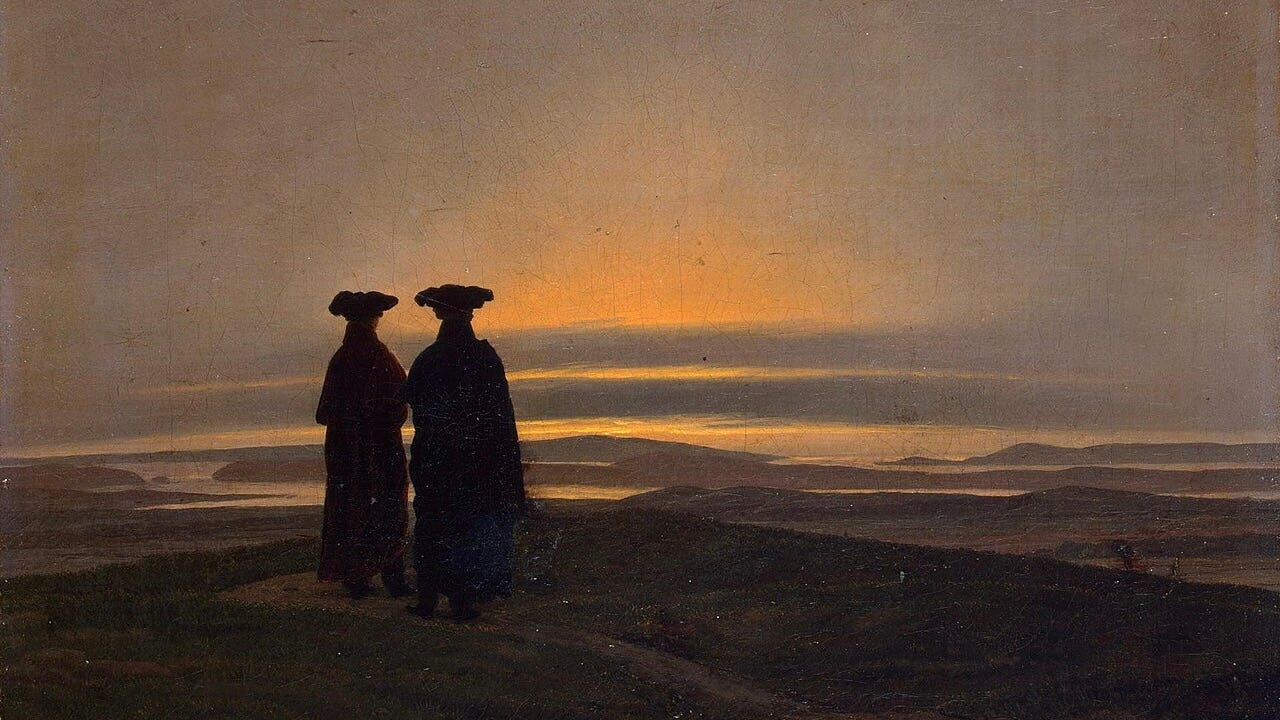
Even if you were to argue that our challenges are “unprecedented” in the sense that they could only ever happen in our era, you’d also have to consider that this was true for everyone who ever lived: all of history’s greatest trials were “unprecedented” for the time, and yet people still overcame them. On the whole, people have been through much worse than what we suffer today.
This historical perspective is helpful in giving you the footing you need to take the next steps, because if you think everything we face is uniquely terrible, you’ll never have the strength to look for beauty in its midst…
Beauty in Destruction
Throughout history, people have always managed to find beauty even in the most dire of circumstances — and often, it must be said, because of them. War is the best example of this, for it provides the tragic backdrop from which beauty stands out all the more clearly.
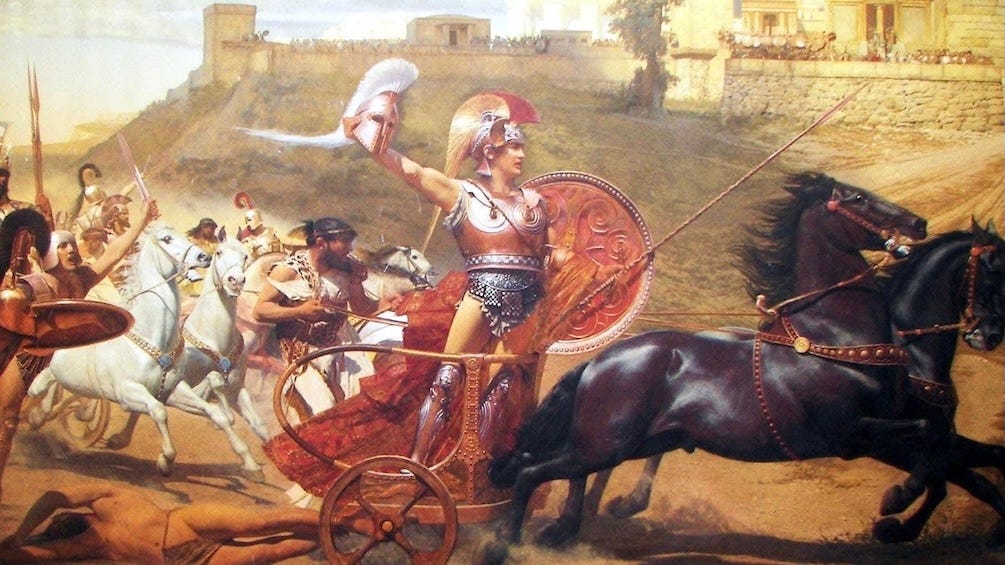
Homer’s Iliad is one work that captures this paradox. We have previously written about how the Iliad portrays war as both monstrous and magnificent, degrading and ennobling. Classicist Bernard Knox summarizes the poem’s approach to what W. B. Yeats called the “terrible beauty” of war as such:
The Iliad accepts violence as a permanent factor in human life and accepts it without sentimentality, for it is just as sentimental to pretend that war does not have its monstrous ugliness as it is to deny that it has its own strange and fatal beauty, a power, which can call out in men resources of endurance, courage and self-sacrifice that peacetime, to our sorrow and loss, can rarely command.
But, fortunately, beauty is found in more than just acts of courage and self-sacrifice. The Italian poet and aesthete Gabriele D’Annunzio, serving in the First World War, was able to spot and describe it even in the most unlikely of environments. Looking out from the trenches at the withering autumn trees, for example, he observed that:
Dry leaves fall delicately, like a love letter dropped furtively at the feet of the beloved.
When not on the front lines, D’Annunzio was stationed in Venice, where he regularly attended performances of baroque organ music. During one such evening, the Austrians launched an aerial raid of the city, and D’Annunzio’s date cowered in the corner as a hellish cacophony of bombs and anti-aircraft fire interrupted the organist’s performance. To soothe her, D’Annunzio commanded the organist to resume playing his toccata until the end of the raid. The prospect of death, D’Annunzio believed, was no reason to cease the music — rather, it made it all the more necessary.
It wasn’t just D’Annunzio who found beauty on death’s doorstep, however. Writing from the other side of the battle lines, his Austrian contemporary Robert Musil wrote that, in the face of imminent death, “an unaccountable inner freedom blossoms forth”.
So how did these men, and countless others like them, manage to hold such a perspective in the midst of senseless tragedy?
The secret, as we shall see, all comes down to a simple idea that is found everywhere from the writings of J.R.R. Tolkien to Ernest Shackleton’s unbelievable story of survival. It is a way of being that, if you embody it earnestly, will help you both overcome and find the beauty in life’s greatest calamities…