

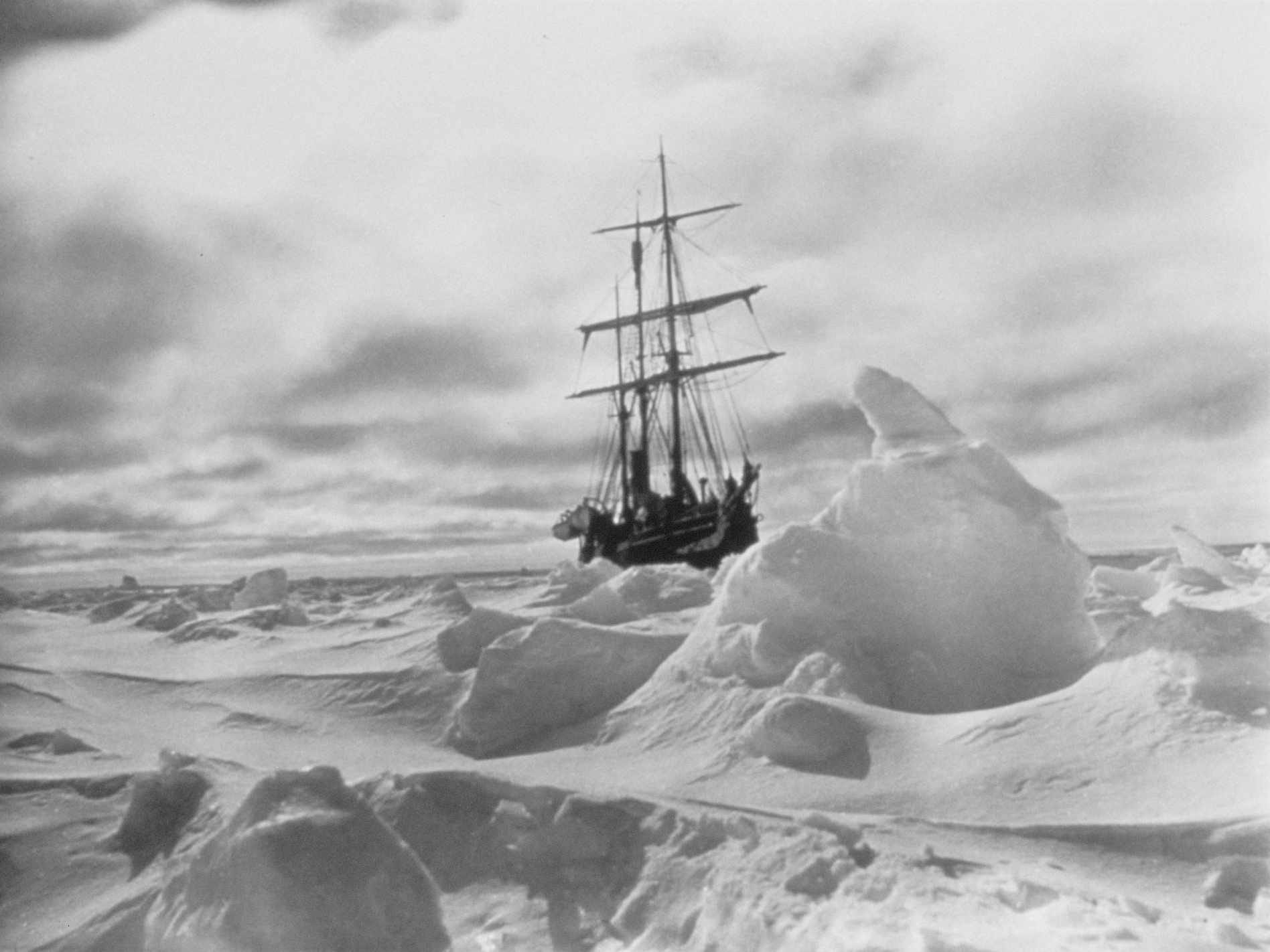
Men wanted for hazardous journey. Low wages, bitter cold, long hours of complete darkness. Safe return, doubtful. Honor and recognition in event of success.
While the story of Ernest Shackleton’s newspaper advertisement is perhaps a bit apocryphal, it nonetheless summarizes the ordeal his crew members knew they were signing up for.
Under the best of circumstances, the 1914 Imperial Trans-Antarctic Expedition would be grueling. Under the worst of circumstances, it would be fatal.
Despite such terrible prospects, Shackleton’s office was flooded with applications. Over 5,000 men put their names forward to embark on the perilous journey, willingly subjecting themselves to the low wages, bitter cold, and long hours of complete darkness inherent to this hazardous endeavor.
But as it turned out, the 50 men selected for the expedition got far more than they bargained for.
Today, we look at the remarkable story of Shackleton’s expedition: how the crew escaped what should have been certain death, and what their survival reveals about how to overcome impossible odds…
Reminder: this is a teaser of our paid subscriber essays.
If you’d like to support our work, please consider a subscription. You’ll get:
New, full-length articles 2x per week
The entire archive (200+ articles, essays, and podcasts)
An Ordeal Unlike Any Other
Shackleton’s attempt to cross the South Pole began with enthusiasm and ambition, but quickly turned into a blizzard of nightmare. Before the expedition had even reached terra firma, its main ship the Endurance was crushed by pack ice, and the entirety of the crew was stranded.
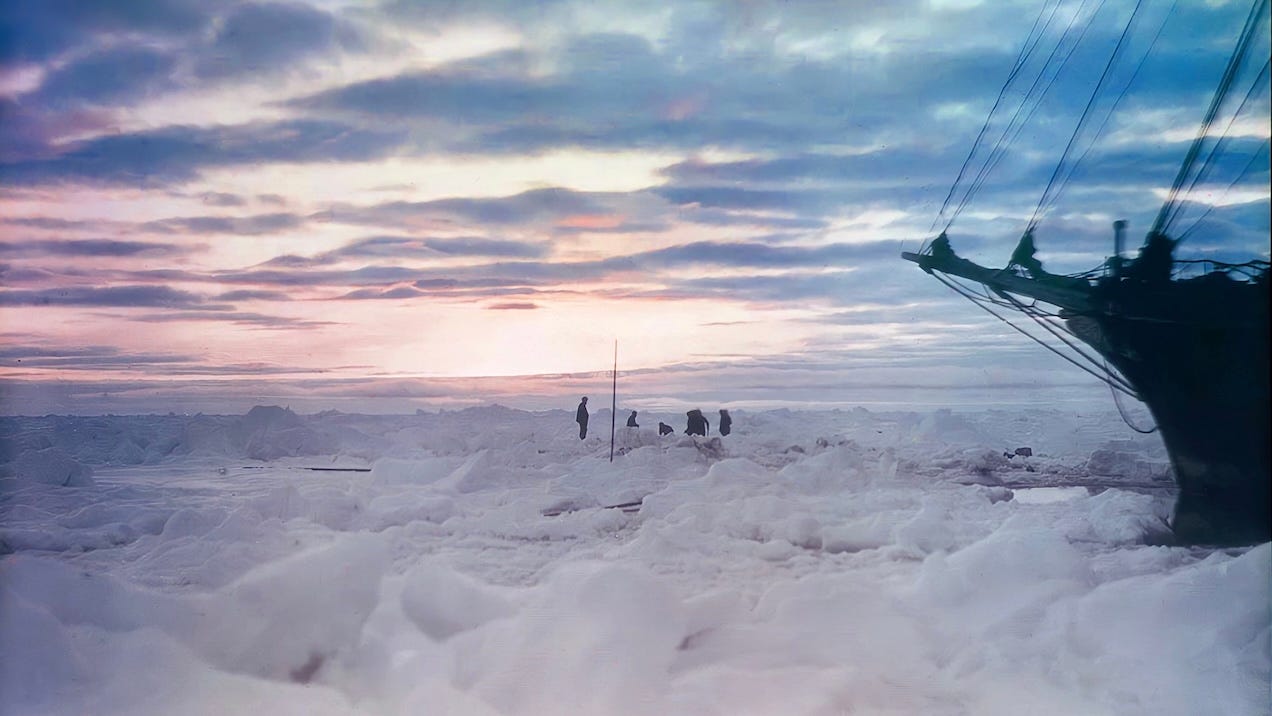
They were forced to survive on the ever shifting ice fields for 497 days before finally setting foot on solid ground again. This achievement, however, was far from the end of the endeavor. The dry land they had reached was Elephant Island, an uninhabited and desolate rock in the middle of the Antarctic Ocean, and not a place they could stay for long.
So it was that Shackleton resolved to embark on the most perilous step of the journey yet: sailing over 800 miles through hurricane-force seas to seek help on South Georgia Island.
In a Hail Mary attempt to get home, the crew of the Endurance used their remaining resources to assemble a 22-foot wooden lifeboat. Shackleton chose four men to accompany him and, navigating with nothing more than a sextant, made landfall on South Georgia after 16 days. But, having landed on the opposite side of the island, they then had to cross 32 miles of the island’s uncharted mountains and glaciers to reach town.
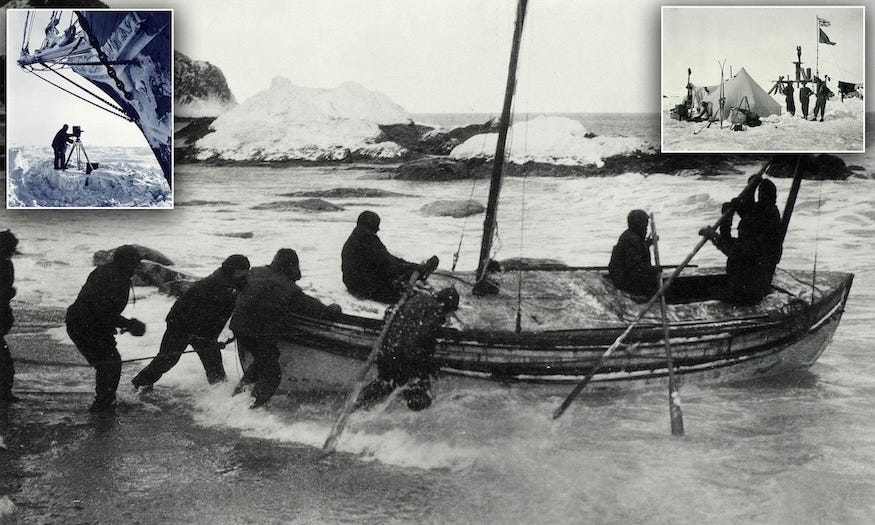
Upon doing so, Shackleton was eventually able to procure a ship to go and rescue the remainder of the crew, who had managed to survive for 4 and a half months during his absence. Incredibly, in the 19 months since their hellish ordeal had begun, not a single soul had been lost.
So, how did they do it?
A Question of Character
One major factor behind the survival of the men on Shackleton’s expedition comes down to a simple question of character: they were the type of men who had willingly signed up for something awful.
Even if Shackleton’s newspaper ad is apocryphal, there is no doubt that the men who applied for the Trans-Antarctic expedition knew that it would be trying and grueling. But yet they applied, and even outcompeted other men for the opportunity to be a part of something arduous.
Of course, they had no way of knowing just how miserable things would get. But when things did go awfully wrong, they were the type of men who could handle that pressure. The same might not be said for the naively overconfident crew of the Terra Nova expedition four years earlier, in which all five men who tried to reach the South Pole succumbed to the adversities of the Antarctic.
Recently, we wrote about the benefits of willingly embracing suffering. But there is also much to be said for the ability to recognize that suffering will thrust itself upon you no matter what. Some people, for example, must have expressed incredulity that Shackleton would attempt such a dangerous mission. Yet shortly after his expedition set out, WWI erupted in Europe. Men who would’ve given anything to avoid the Antarctic were nonetheless subjected to a different set of tribulations — discomfort always has a way of finding you.
This idea recalls the response of Aragorn to Theoden in The Lord of the Rings, when the latter declares he will not risk open war. As the ranger puts it bluntly, “open war is upon you, whether you would risk it or not.”
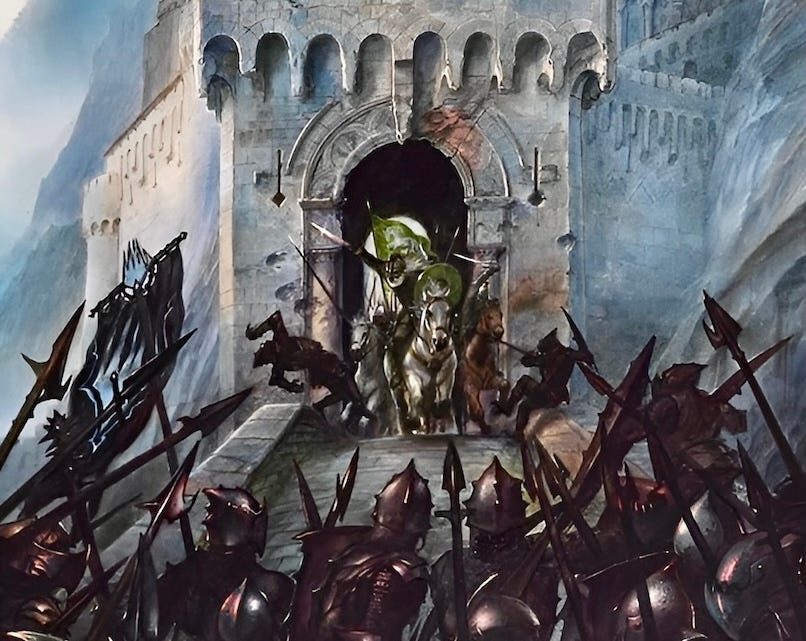
Just like the crew of the Endurance, it is only by being the type of person who willingly subjects yourself to discomfort that you can manage to overcome the great and unexpected tribulations of life.
But of course, this attitude is far from the only thing that carried Shackleton’s men to safety. To survive 19 months stranded in the Antarctic requires more than just personal discipline.
The secret to overcoming adversity can be boiled down to two remarkably useful pieces of advice — both simple concepts, but neither easy to implement when the stakes are literally life and death…