




It has been said that all of Western philosophy is a footnote to Plato. A provocative statement, for sure — but is it wrong?
The Republic is Plato’s most famous work of philosophy, and by far the most impactful. Imagined as a conversation between his mentor Socrates and various members of Athenian society, the Republic has influenced everyone from Aristotle to Augustine, Mussolini to MLK. It ignited a conversation that is 2,400 years in the making, the various threads of which have helped build Western Civilization.
Whether you know it or not, you swim in the ideas contained in the Republic. From the Allegory of the Cave (which influenced everything from 1984 to The Matrix) to more complex ideas like those of justice, political legitimacy, and the tripartite soul, Plato tills the soil from which the Western intellectual tradition springs. To read his work is to explore the roots not just of your own culture, but of your own mind.
Today, we take a look at Plato’s Republic to better understand how it built the Western world and why, over two millennia since its writing, it’s still more relevant than ever…
A big announcement…
Our sister publication, The Ascent, is becoming the Ascend Book Club!

Over there, we are doing much slower, deeper read-alongs of the great books. We are starting with Plato’s Republic on October 6.
See the bottom of this email for details…
The Eternal Questions
Despite the ancient origins of Plato’s Republic, the work is just as alive as ever before. This is because the questions it poses deal with the foundational elements of the human condition.
What is justice? Why should I be good when injustice benefits me? What makes a political regime legitimate? Who should rule? What is the purpose of education? All of these questions and more are put forward by characters in the Republic. But while you might expect them to be neatly resolved as in many philosophical treatises, they almost never are. Instead, Plato contents himself with leaving you to wrestle with these questions for yourself.
If you’re new to philosophy, this might feel frustrating. But the benefit of this approach is that it helps you identify the main struggles at the heart of any contemporary debate or political faultline. Behind every argument for or against abortion, for example, there is an appeal to justice — and that difference of opinion can’t be fully grasped without a discussion of the concept of justice itself.
That kind of discussion is exactly what Plato offers you.
Plato & Christianity
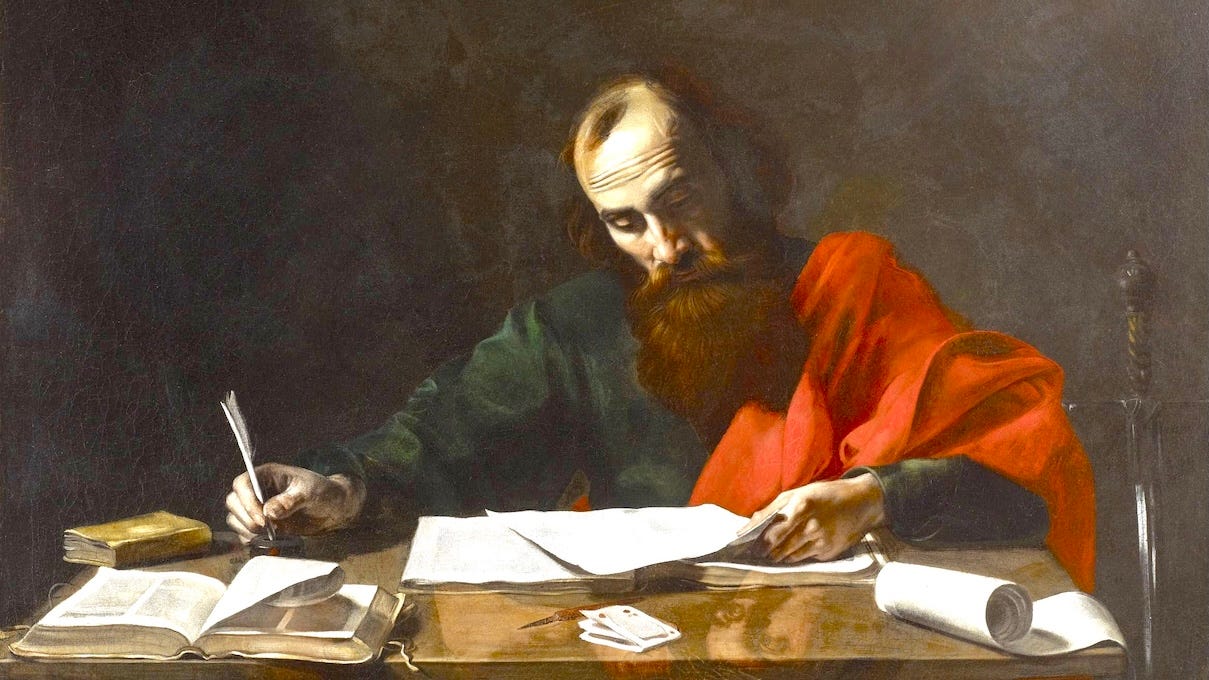
St. Paul writes in his letter to the Galatians that “when the fullness of time had come, God sent forth his Son”. But what is this “fullness of time”, and what does it have to do with Plato?
Traditionally, the fullness of time has been understood as the historical moment in which Hebrew faith coincided with Roman order and Greek reason. The inheritance of Jerusalem, Rome, and Athens sits not just at the heart of Western Civilization, but at the very core of Christianity itself. And Athens, of course, would be nothing without Plato.
Many of the ideas put forth in the Republic would later be absorbed into Christian theology, shaping the lives not only of countless believers, but of all those who grew up in the Christian West. Of course, not all of Plato was accepted by the Church — while concepts like the immaterial soul and the insufficiency of earthly pleasure were retained, others like eugenics and the transmigration of souls were cast aside.
Nevertheless, it is easy to trace a thread from Plato to Aristotle, Aristotle to St. Augustine, and St. Augustine to Dante. When you read the Republic, you’re able to see how much Greek thought influenced Christianity, and at the same time, how much Christianity influenced the world it grew up in. Many of Plato’s intellectual and moral instincts are not our own, and it is worth understanding why.
See Beyond the Modern World
This leads us to the final reason to read the Republic, which is that it serves to open your eyes to your own modern biases and presuppositions. Just as a fish can’t recognize the water it swims in, we as modern individuals can’t recognize our own assumptions about the world. Plato helps remedy that.
Many of the questions posed by the Republic challenge beliefs you might otherwise never think to challenge. “Democracy is good.” Why? “Equality is just.” In what sense? “Freedom makes us happy.” Does it? Many readers of Plato are shocked to discover just how un-modern he is, yet at the same time find a sense of freedom in this revelation.
Just like the teacher leading students out of the cave to discover a hitherto-unknown world, so too can Plato help you escape the cave of modern presuppositions to arrive at a more thoughtful and nuanced philosophy. Whether you love him or hate him, there’s no doubt you will be a better thinker after reading Plato — and there’s no better place for you to start than with the Republic.
Read It With Us…
In January, our own book club at The Culturist provided an introduction to Plato’s Republic. Now, we’re excited to announce something big…
We are beginning a much slower, attentive read-along of the Republic on our sister publication — because, as of today, The Ascent has become the Ascend Book Club!

We've been working on this for over a year now: a week-by-week curriculum, gathering 20+ scholars and 30+ episodes to guide you through it. We start on October 6, 2026, and end on August 31, 2027 (with a break for Lent).
All paid members of Ascend will gather once per month for the live discussions (hosted by Dcn. Garlick and guest scholars), and will receive a week-by-week curriculum of resources to guide the entire read-along. Click here to see the full reading schedule.
You can join this epic read-along by becoming a subscriber of Ascend right here:
Why are we doing this?
A close, careful read of the Republic will change your life. It is easily one of the greatest texts in Western Civilization, though many do not read it because it can be difficult to understand. We are breaking it down into 30+ episodes to help you understand this life-changing book.
Plato uses the character of Socrates to explore virtue, the soul, immortality, education, metaphysics, democracy, philosopher kings, and much more. It has been said that all of Western philosophy is a footnote to Plato, and if that is true, then reading Plato’s most famous work, the Republic, is worth more than reading 100 other books.
Here are just some of the scholars who will be appearing on the podcast (or the monthly book club sessions) to take us through the Republic between now and Christmas:

Along the way, there will be lots of discussion taking place inside the Ascend chat room — please join the dialogue!
As a subscriber of the Ascend Book Club, on top of the usual articles, you’ll now receive a weekly podcast on the great books. Additionally, all paid members will receive in-depth, week-by-week reading guides, essays, and access to the live book club discussions.
Furthermore, Ascend has made its ENTIRE, evergreen library of content available on Substack for all subscribers. It is an amazing, deep well of resources to help you read the great books (from Homer to Dante and beyond) and live a more beautiful life…
Note: nothing is changing here on The Culturist — our own book club will continue to function as usual. Don’t forget, our first session on Dostoevsky’s “The Idiot” is on September 23, at noon Eastern Time.

Incredible. Our years of content coming over to Substack to help build a new online book club will be amazing.
So many resources to help such an awesome community read the great books.
Good things are ahead.
Fantastic news, well done team!