


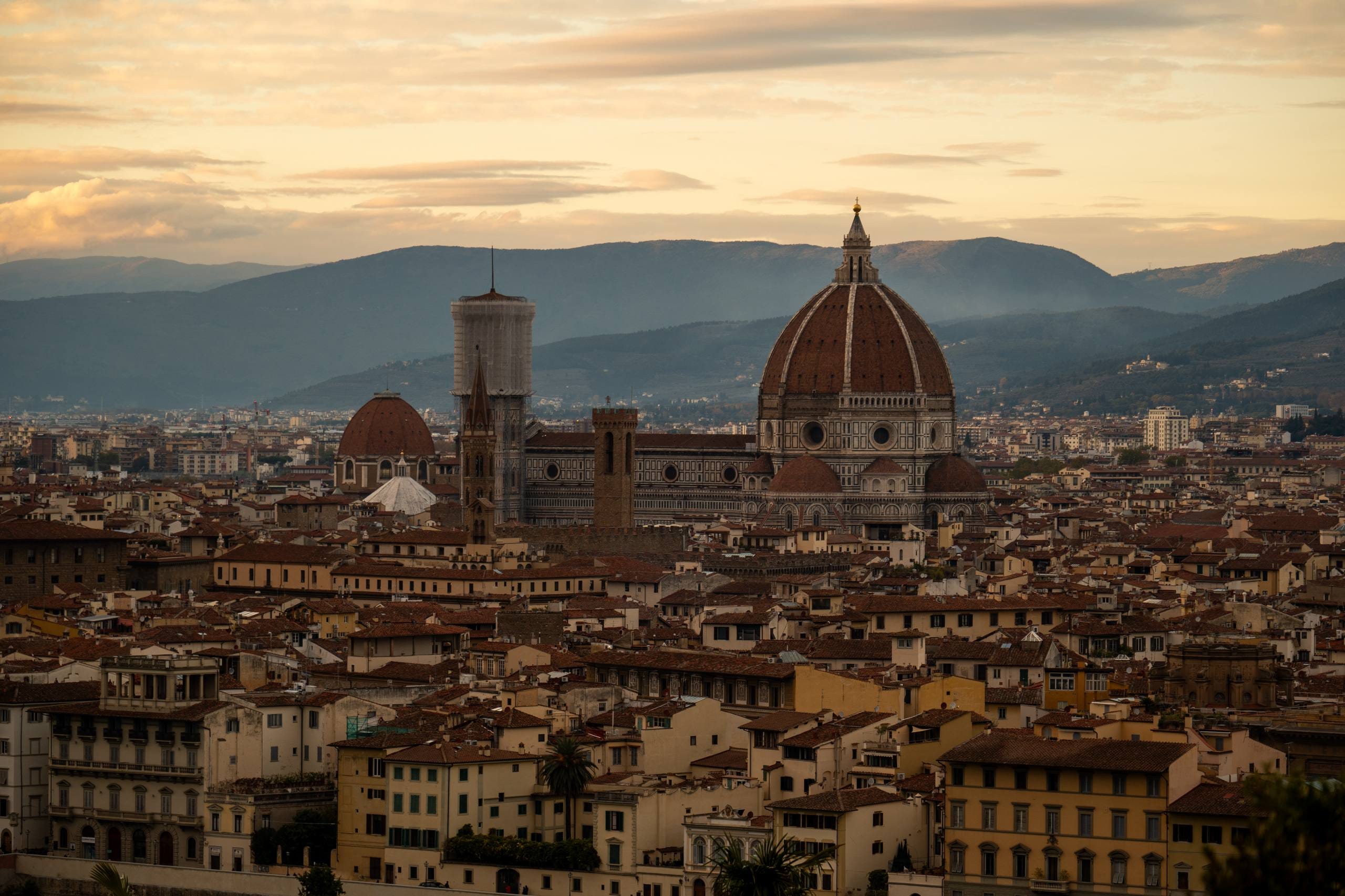
We started this year with an ambitious goal: to prove that great art is not dead.
All too often, you hear people ask why there’s no great art anymore. Given the state of today’s contemporary art galleries, it’s a fair question. But as we’ve written previously, there still are excellent artists out there, if only you know where to look.
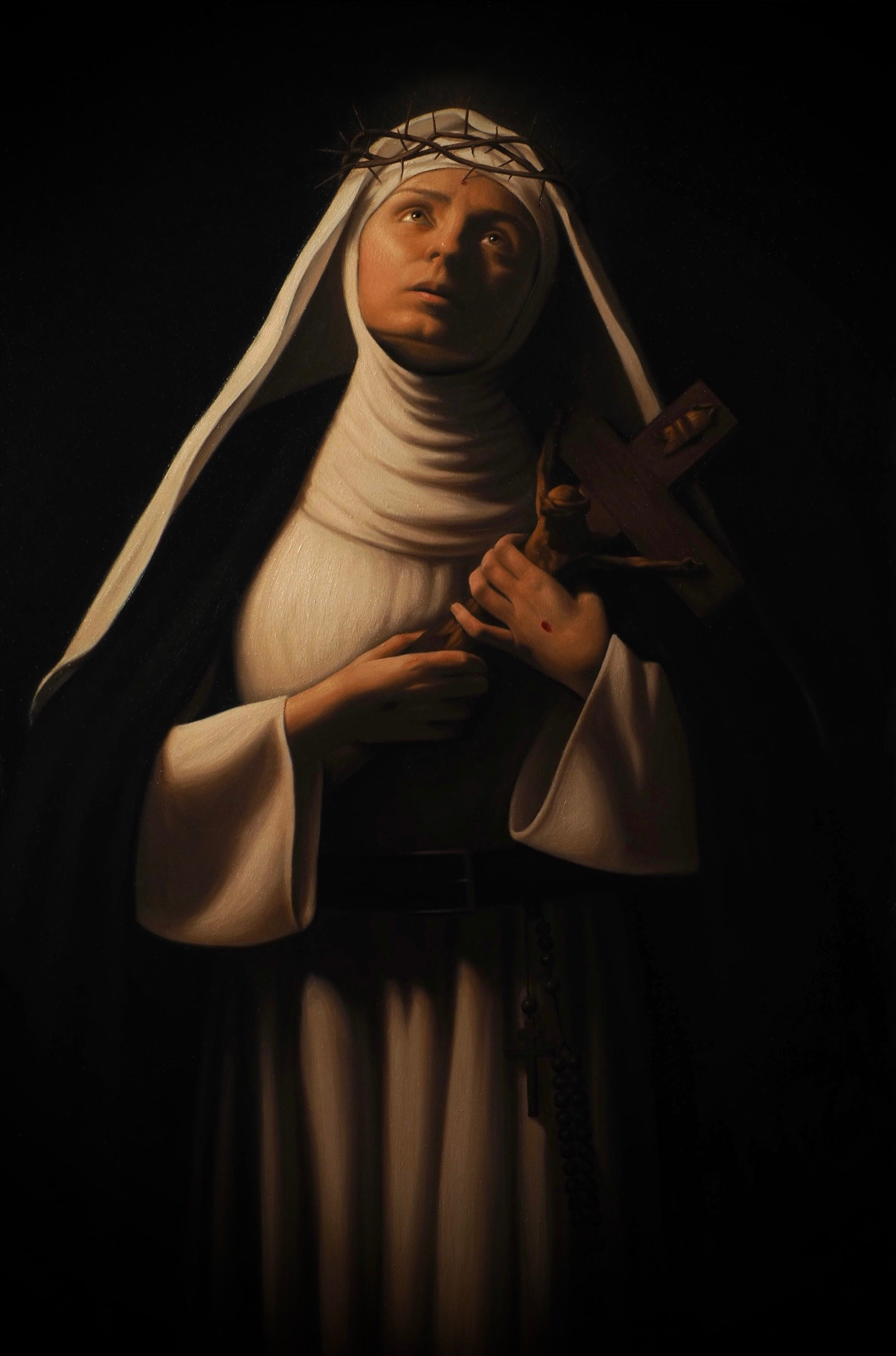
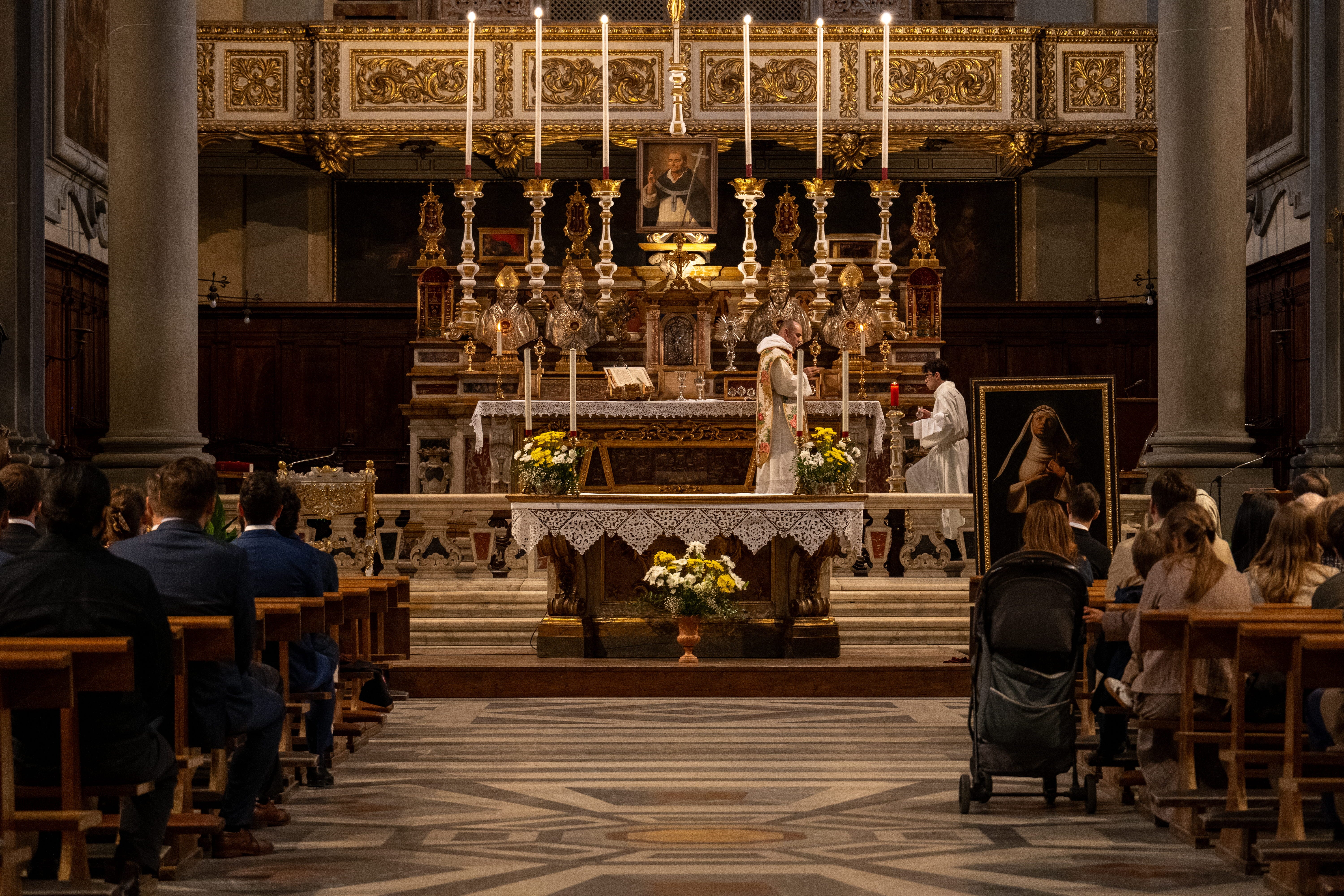
To put our money where our mouth is, we commissioned a life-sized portrait of St. Catherine of Siena from an up-and-coming artist in Florence. Two weekends ago, the painting made its debut — and what transpired at its unveiling shocked even us.
An incredible group of people flew in from the US, UK, Australia, France, Belgium, Austria, Hungary, Holland, Costa Rica and elsewhere to join us for the painting’s debut. Ivy League professors, Pentagon officials, AI executives, and European nobility counted amongst the diverse crowd that gathered to celebrate the unveiling. It reminded us never to underestimate the power of beauty to bring people together.
But more than that, our three-day weekend event in Florence gave us incredible hope for the future of art. In fact, we might be on the cusp of the New Renaissance — and here’s what it looks like…
Belief Expressed In Physical Form
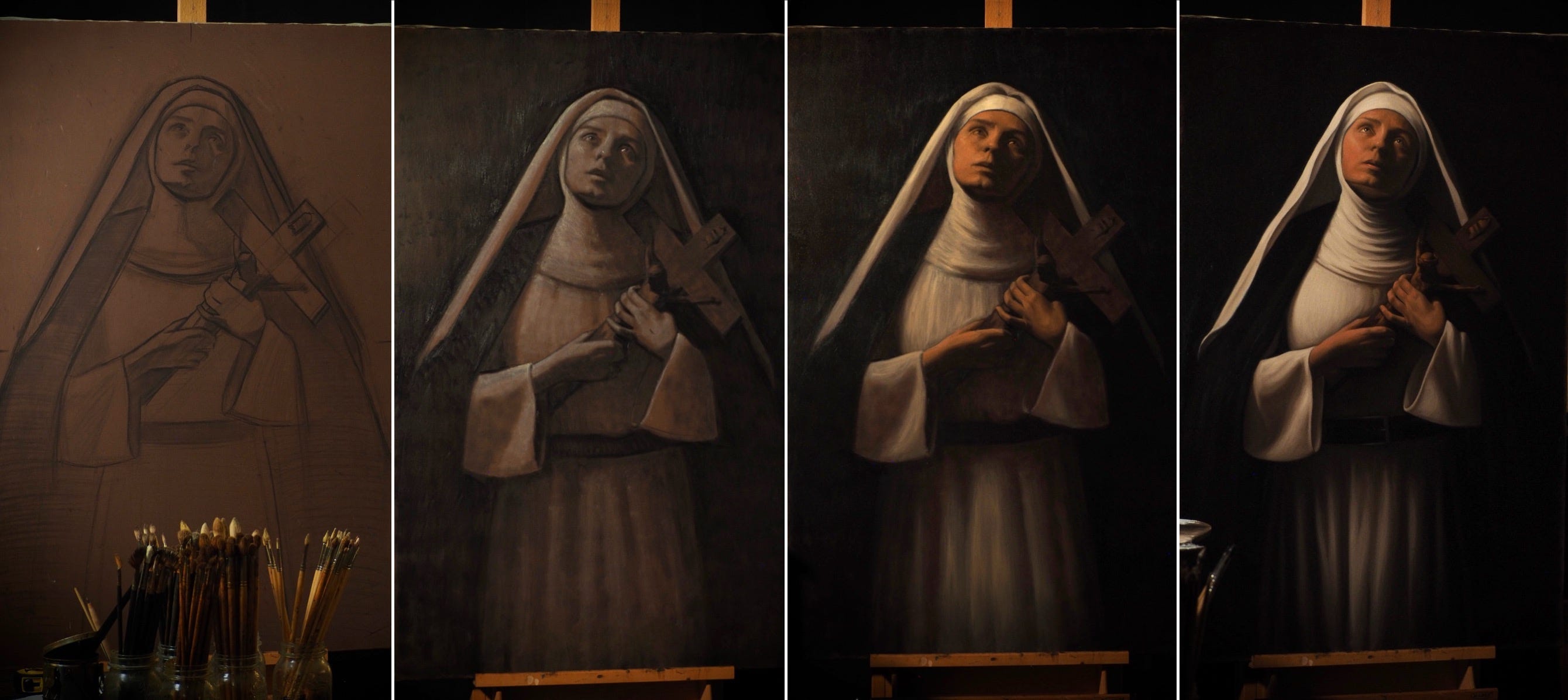
In the age of AI, one might be tempted to ask what purpose art even serves. What does a painting have to offer when you can now generate images, videos, and even video games on demand?
Quite a lot, actually. For starters, the prevalence of AI-generated content puts a premium on human-made art. As people interact with a world that is increasingly artificial, their craving for the real increases. Real art, real talent, and real creativity are poised only to increase in value in the following decades.
But there’s something greater fueling the New Renaissance. In our conversations with guests in Florence, we discovered that people long to see physical manifestations of their innermost values and beliefs. It is not enough to simply write articles or post memes about rebuilding the West. What people want to see is their beliefs made incarnate.
This of course spills into fields as varied as music, architecture, interior design, dress, and fitness, but visual art is unique in its approachability. Even with a low budget, you can commission a painting that represents your life and what you stand for. Indeed, the act of commissioning a work is in itself already testament to these things.
But while the New Renaissance begins with a desire to return to what’s human and give physical form to your beliefs, it is beauty itself that will propel things even further…
Building a Beautiful Future
As mentioned in the intro of this article, an incredibly diverse crowd of people joined us in Florence. Millionaires mingled with university students, and painters with AI engineers. On the surface, it was anything but a homogenous crowd. Just one thing unified them all: a love of beauty.
The weekend in Florence was, among other things, proof of beauty’s power to transcend differences and bring people together. At the same time, it was also a testament to the lengths people will go to in order to experience beauty, as participants traveled from all over the world to attend the unveiling and tour the artist’s studio.
But for as talented as Carl-Nikolas is,1 people didn’t come to Florence only for his work. They also came to be a part of the revival of great art itself. Because while it is one thing to celebrate talent, it is another thing entirely to be part of building the future: to reverse decline, and pave a way for a more beautiful future.
This was perhaps the most encouraging aspect of the weekend — to see artists, aristocrats, soldiers, students, professors, priests, businessmen, and more unite over a shared vision for the revival of the arts. If there is one thing they all agreed on, it was that “beauty will save the world.” And they all intended to play a part in bringing about that beauty.
Being All You’re Meant to Be
At the beginning of this project, we set out to do a few things. For starters, we wanted to shed light on the fact that — despite what it might seem — there are still talented artists stewarding the flame of the great tradition.
Beyond that, we also wanted to shine a light on the power of beauty to point to the divine. As Carl-Nikolas himself shared over the weekend, he began his painting career as an agnostic, and it was in searching for the source of beauty itself that he eventually came to faith. Now, he views his art as a tool to point others to God, and to a reality that transcends that of everyday division, problems, and politics.
Speaking of politics, his portrait of St. Catherine captures the spirit of a woman who famously convinced Pope Gregory XI to return the papacy from Avignon to Rome. This brings us to another one of our goals, which was to shed light on the extraordinary life of St. Catherine. Because while most people focus on the letters she wrote to the pope convincing him to return to Rome, they often forget how it is that she acquired the moral authority that made him heed her words in the first place: by serving her immediate neighbors with such love and generosity that others couldn’t help but recognize her sanctity.2
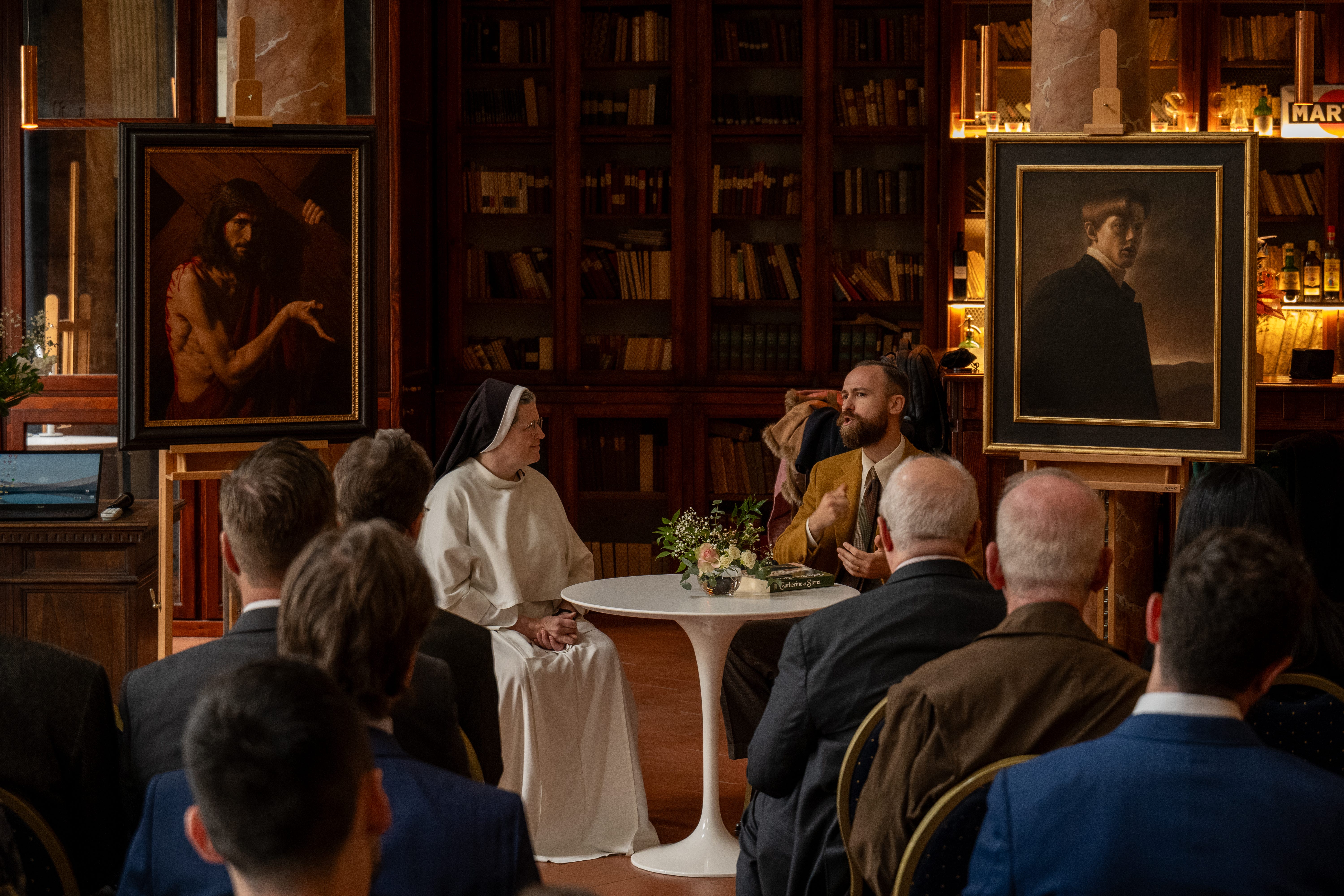
Lastly, we wanted to support a talented young artist in his career and help him get the recognition he deserves. On this note, we far exceeded our expectations: thanks to the number of new commissions made in the wake of our collaboration, Carl-Nikolas now has his schedule booked well into 2028!3 We are extremely proud of him and are grateful to have played a small part in helping facilitate his well-deserved success.
Also to you reading this, we couldn’t be more thankful. It is because of your support that we are able to invest in projects that shine the light on artists like Carl-Nikolas. Every post you share on Substack or email you forward to a friend is invaluable in helping us further our mission to encourage others in their pursuit of goodness, truth, and beauty. We are sincerely grateful.
On that note, we will sign off with the words of St. Catherine, whose animating spirit behind this project can surely serve as inspiration and encouragement to us all:
“Be who God meant you to be, and you will set the world on fire.”
You can view Carl-Nikolas’s work on Instagram, or follow his publication The Painter’s Gaze here on Substack.
For an extended overview on the life and spirituality of St. Catherine, check out this video with Sr. Mary Madeline Todd, OP.
If you’d like to commission a work from Carl-Nikolas, feel free to connect with Evan Amato, who can help you skip the waitlist.