


What is the true meaning of success? What does it look like to “win” the game of life?
Most people’s answer to this question defaults to observable success, like professional achievements, high income, exotic vacations, or a beautiful spouse. The more you do, the more you’re valued — hence why people like Elon Musk, Lionel Messi, and Warren Buffett are considered to be the “winners” in society.
But one man more than any other challenged this assumption. He was a man who had it all, who had done it all, and yet still felt deficient. He had all the success you could ever dream of, but still felt like a failure.
His name? Michelangelo Buonarroti.
That’s right. The painter of the Sistine Chapel, sculptor of David, and architect of Saint Peter’s Basilica often wrestled with the true meaning of success. His private writings reveal a burning focus on one recurring question: everything he had accomplished in his career, what was it all for?
Today, we look at the life of the world’s greatest artist to see what it reveals about the answer to this question. Fortunately for us, Michelangelo himself gives us a hint of it in his own writing — and what it reveals will change the way you measure your life’s success…
Reminder: this is a teaser of our paid subscriber essays.
If you’d like to support our work, please consider a subscription. You’ll get:
New, full-length articles 2x per week
The entire archive (200+ articles, essays, and podcasts)
We’re currently reading Homer’s Odyssey in the book club. The next discussion is on Wednesday, July 1, at noon ET — join us!
An Artist Unlike Any Other
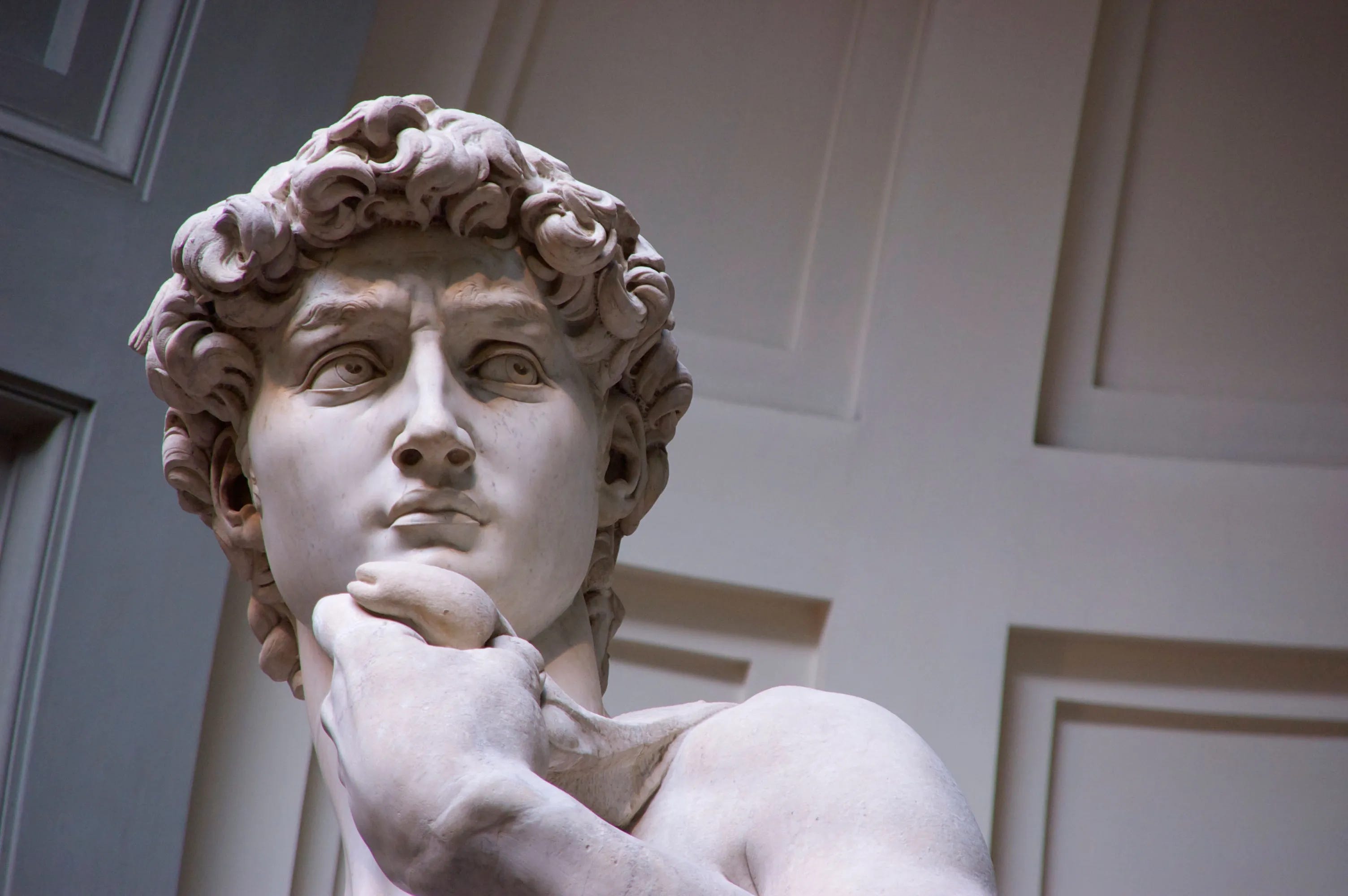
But first, let’s begin with an overview of Michelangelo’s opus. Sculpting was his favorite discipline, and in that field few — if any — have ever outdone him. His David is easily the most famous statue in the world, followed closely by his Pietà.
As the most famous sculptor of his time (and practically ever since) he was sought out by everyone who could afford him. He carved the tombs of Medici dukes and the Pope, and the statue of Moses he made for the latter was described by his contemporary Giorgio Vasari as “unequaled by any modern or ancient work”. All this is to say practically nothing, of course, of other statues like the Dying Slave or the Florentine Pietà.
Yet Michelangelo’s success was not limited just to this field. Although today the Mona Lisa contends with The Creation of Adam for the title of the world’s most famous painting, in the halls of power of 16th century Italy, Michelangelo was the undisputed champion. Works like The Last Judgment and the Doni Tondo are easy proofs of why.
But lest you think his success ends there, Michelangelo was also one of the greatest architects of his day. Many of Rome’s most iconic landmarks, such as St. Peter’s Basilica, Piazza del Campidoglio, and Porta Pia, were designed by his hand.
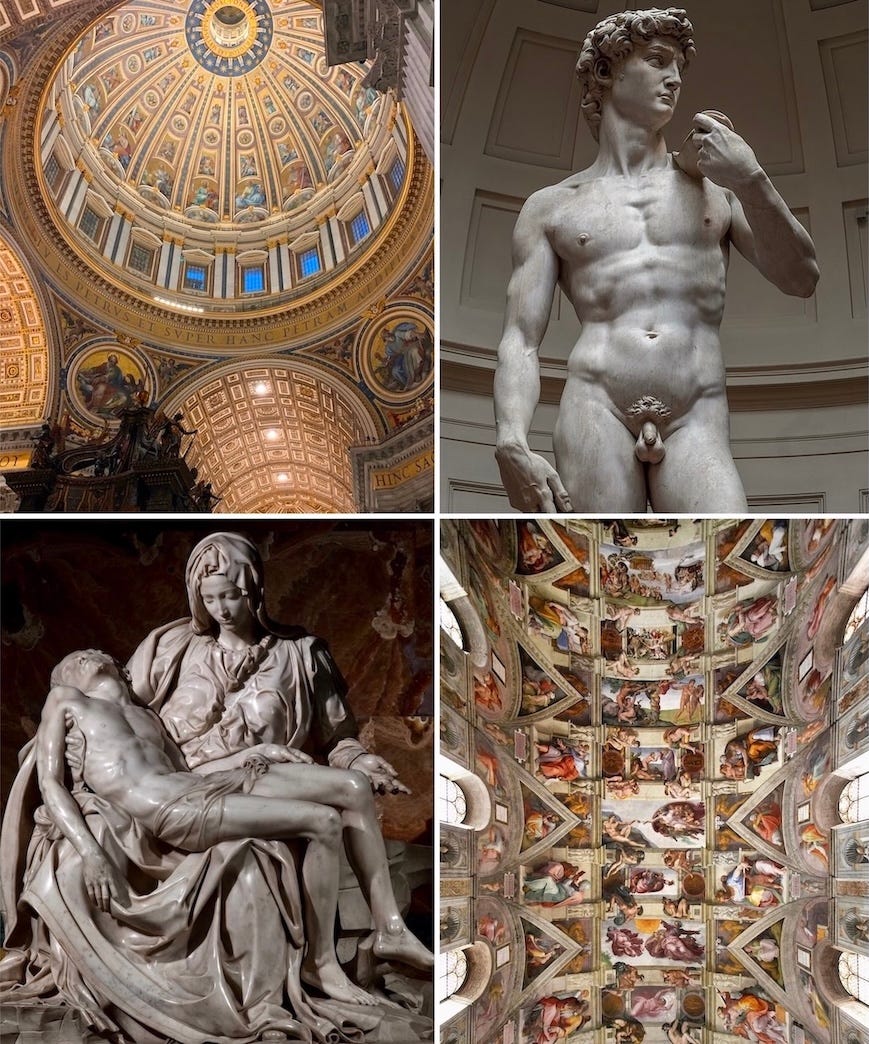
Simply put, Michelangelo was the consummate Renaissance man. He was considered a genius just as much in his day as he is in ours, and had the fame and fortune to back it up. All of this is what makes his perspective on worldly success all the more surprising…
A Man of Little Worth?
To us, Michelangelo’s career and legacy is about as vast and admirable as is possible for a person to achieve. But to Michelangelo, it was woefully insufficient.
In his private writings, and specifically in his poetry, Michelangelo deemed his great masterpieces to be in vain, and his existence to be of “little worth.” Interestingly, he was not the only famous artist of his time to come to this conclusion. Leonardo da Vinci, for example, famously admitted on his death bed that he had “offended God” by the lowliness of his efforts.
Michelangelo’s perspective on his own success is partially reflected by the work he created at each stage. Full of life and energy in his twenties, he created pieces like the Pietà, the Statue of David, and the Doni Tondo. In his thirties, he sculpted Moses and painted the Sistine Chapel.
But as Michelangelo entered his 60s, the mood began to change. He painted works like The Last Judgment, The Conversion of Saul, and The Crucifixion of Saint Peter — all paintings that focus, in one way or another, on death and what comes after. He also sculpted the Florentine Pietà for his own tomb, portraying himself in it as the Pharisee-turned-Christian Nicodemus.
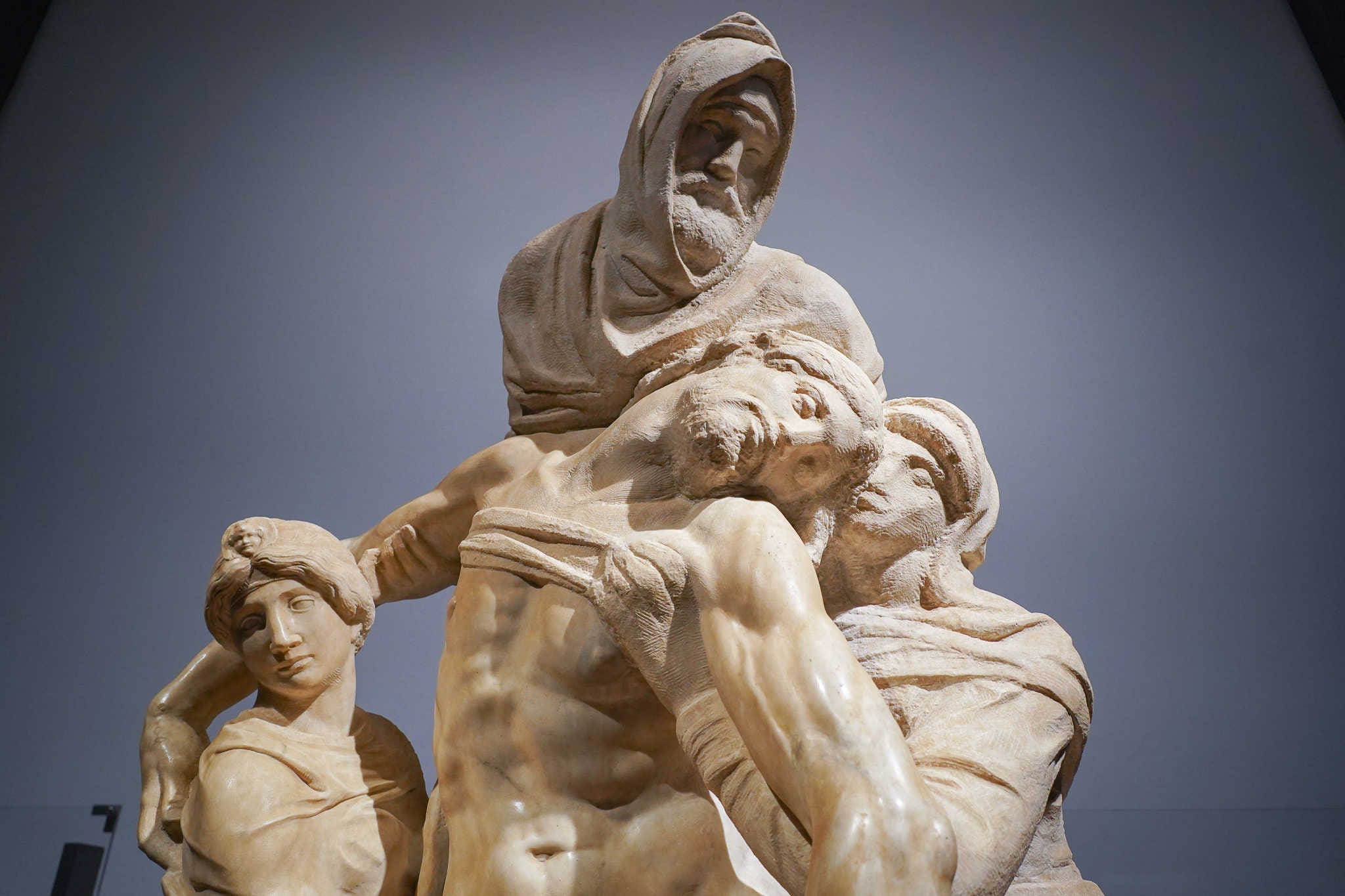
In all of these works, one message was clear: a sense of unworthiness and undeserving that no great achievement could ever undo. In a moment of remarkable honesty, Michelangelo wrote:
“I am a poor man and of little worth, who is laboring in that art that God has given me in order to extend my life as long as possible.”
Why did he feel this way? And if satisfaction can’t be found in your achievements, no matter how impressive or widely they are admired, then where can it be found?
This is surely a question that everyone, especially creatives, must come to ask. How can your work or craft bring you lasting fulfilment?
Fortunately for us, Michelangelo addresses this question in some of his little known writings. In particular, there’s one poem that addresses his dilemma, and his solution, more than any other.
What he records is that true success in life is found elsewhere than one’s achievements — and his words provide surprisingly useful advice for all of us living and working today…