


In discussions of great literature, novels get the lion’s share of attention. Then come epic poems, and occasionally the odd novella. All too often, however, one genre in particular is left out of the conversation entirely: the short story.
While a novel can take hundreds of pages to unfold its ideas, a short story has no such luxury. It is a demanding medium, and even some of the greatest novelists fail to live up to its exacting pressures. But when done right, a great short story can be a life-changing twenty pages of literature.
Today, we explore five of the Western canon’s best short stories, all of which can be read in a single sitting.
If you’re looking to kill an hour — or even just 20 minutes — there are far worse ways to pass your time than by reading one of these…
Don’t forget to join our online book club!
We are currently reading Homer’s Odyssey. The next discussion is today, July 1, at noon ET — join us!
We are 100% reader-supported. This newsletter is free, but if you’re able to support, please consider a paid membership. You’ll get:
Full-length articles 2x per week
The entire archive (200+ articles, essays, and podcasts)
1) The Tell-Tale Heart
Few writers have shaped modern horror as profoundly as Edgar Allan Poe, and nowhere is his psychological brilliance more apparent than in this story. The plot itself is simple: an unnamed narrator insists upon his own sanity while recounting a carefully planned murder, only for his own conscience to become his undoing.
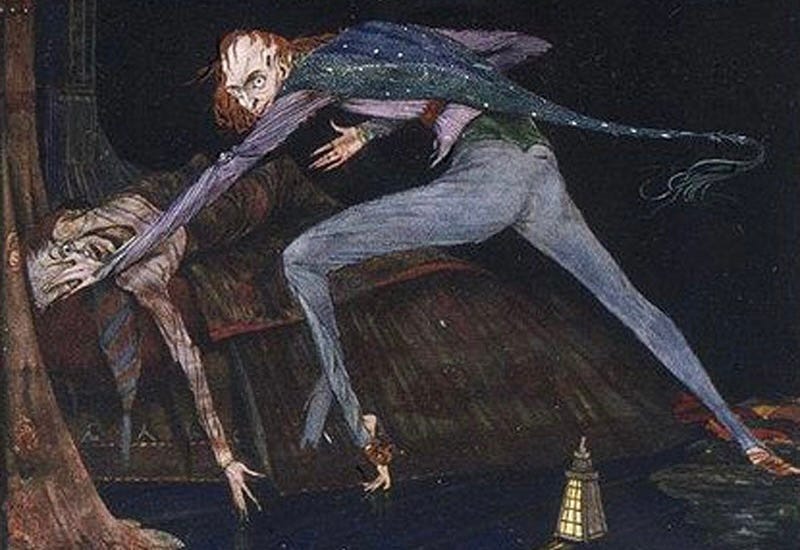
What makes the story unforgettable isn’t so much the crime itself as it is the mind of the man committing it. Long before psychological thrillers became commonplace, Poe understood that the most terrifying monsters often reside within your own mind. Each one of the story’s paragraphs thus tightens the emotional pressure on the narrator, until he finally loses his nerve at the tale’s climax.
Nearly two centuries after it was written, The Tell-Tale Heart remains a masterpiece on the delirious and destructive effects of guilt on the mind and soul.
2) How Much Land Does a Man Need?
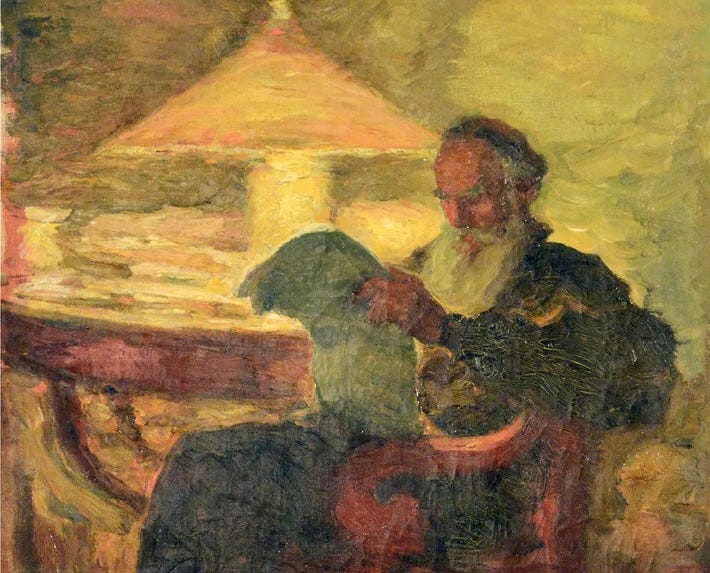
Leo Tolstoy spent much of his later life wrestling with questions of wealth, ambition, and the purpose of human existence. Nowhere are his thoughts on these issues more concisely communicated than in this short tale.
The story follows the peasant Pahom, who is convinced that “our only trouble is that we don’t have land enough. If I had plenty of land, I shouldn’t fear the Devil himself!” But as Pahom seeks to acquire more land, he predictably becomes even more greedy, and less satisfied.
The plot culminates with Pahom making an ambitious bargain, and dying in the process of winning it. The tale then concludes with one of the most famous lines in all of literature: a single sentence revealing exactly how much land it was that Pahom ever really needed.
3) Leaf by Niggle
Most people know J. R. R. Tolkien through The Lord of the Rings or The Hobbit, yet one of his deepest works can be read in under an hour. On the surface, Leaf by Niggle is a simple tale about a painter who dreams of painting a vast, beautiful tree. But the only thing is, he wants to get it just right.
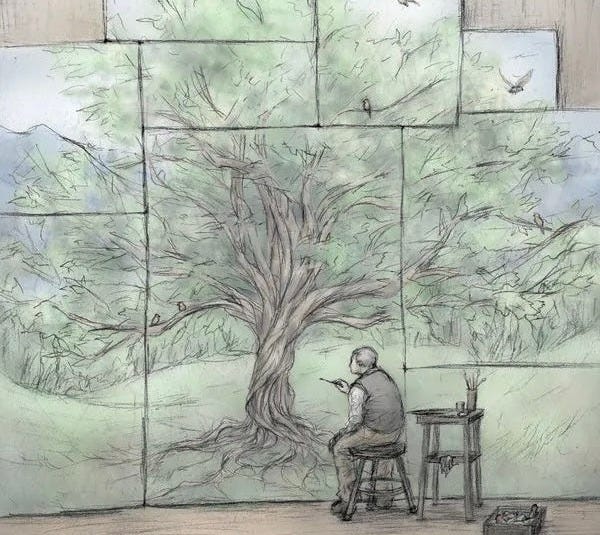
Niggle begins by sketching the outline of the tree, but soon gets fixated on a single leaf, revisiting and revising it endlessly while the rest of the canvas remains rough and unfinished. Along the way, he’s constantly interrupted by the duties of life. He grows frustrated but never adapts, returning again and again to that one leaf while the bigger vision fades.
Eventually, he dies, and the canvas is left incomplete.
Tolkien admitted this story was a kind of self-confession. It ends with Niggle’s vision of the afterlife, and the shocking realization he comes to. It’s Tolkien’s best reflection of the Christian art of sub-creation, and the idea that what you begin in love, even if you don’t live to see its completion, might still outlast you…
4) Boule de Suif
Guy de Maupassant remains one of history’s greatest practitioners of the short story, and Boule de Suif established his reputation almost overnight. Set during the Franco-Prussian War, it follows a group of French travelers who errantly stray into Prussian territory and get captured.
The real drama of the story arises once it is revealed that the group will be allowed to go only after one of its members — the prostitute “Boule de Suif” — sleeps with the Prussian officer. What follows is a story of self-interest and hypocrisy, as the more “respectable” members of society employ all their tricks to convince her to do so.
The story’s end provides a painfully honest look at how moral cowardice and the pressures of conformity can corrupt even the “best” in society, all while those who are truly generous and good suffer the consequences.
5) A Good Man Is Hard to Find
Southern Gothic author Flannery O’Connor wrote incessantly about the strange and mysterious workings of God’s grace. A Good Man Is Hard to Find, one of her best known stories, reveals how it can break through even in the most dismal of circumstances.
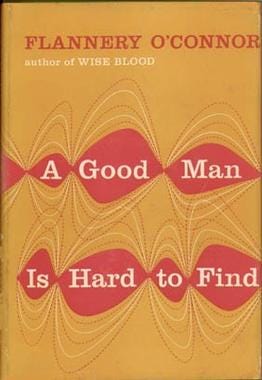
The story begins as an almost humorous tale of a dysfunctional family taking a road trip through the American South, but it soon takes a darker turn. An unexpected encounter transforms the narrative into something far more insidious, as the family crosses paths with an escaped convict known as the “Misfit”.
Most first-time readers of O’Connor’s literature never identify anything specifically “Christian” about it , and to some extent, that’s how O’Connor wanted it. But look beneath the surface, and you’ll find deeper meaning lurking unannounced. The final paragraphs of O’Connor’s short stories — of which she wrote over 30 — often transform the meaning of them from something unremarkable to something of extraordinary cosmic significance. The ending of A Good Man Is Hard to Find is no exception.
Thank you for reading!
Don’t forget to join our book club!
We’re currently reading Homer’s Odyssey together. You can watch back our previous discussions here in case you missed them.
The next discussion is today, July 1, at noon ET. See you very soon!
I strongly recommend listening to Flannery O'Connor herself read A Good Man Is Hard to Find. She has a wonderful accent.
Leaf By Niggle is also a lovely allegory.