

Two weeks ago, we explored some of the best short stories in the Western canon. Today, we continue on that theme, this time looking at a shortlist of history’s greatest novellas.
But first, what is a novella? The easy answer is that it’s something between a short story and a novel. While short stories can be read in one sitting, a novel can last you months, and include any number of characters or plotlines.
A novella, on the other hand, is far more concentrated: it typically follows one central plot with few characters, and can be read in 2-5 hours.
In this article, we look at five of the novellas that have most influenced Western culture over the past 150 years. They are presented in order of the average time it takes you to read them, beginning with the shortest (2-3 hrs) and ending with the longest (4-5 hrs).
Don’t forget to join our book club!
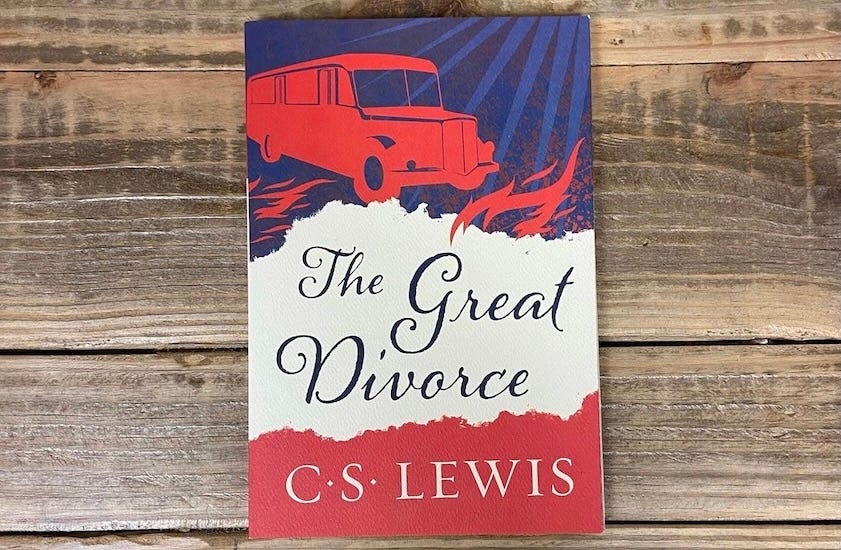
We are currently reading The Great Divorce by C.S. Lewis! The first discussion is TODAY, July 15, at noon Eastern Time — join us!
We are 100% reader-supported. This newsletter is free, but if you’re able to support, please consider a paid membership. You’ll get:
Full-length articles 2x per week
The entire archive (200+ articles, essays, and podcasts)
1) The Metamorphosis
Published in 1915, The Metamorphosis begins with one of the most arresting opening lines in all of literature:
When Gregor Samsa woke up one morning from unsettling dreams, he found himself changed in his bed into a monstrous vermin.
From this absurd premise, Kafka builds a haunting allegory of alienation and guilt. Gregor’s grotesque transformation into a literal insect exposes the fragility of human dignity, and shows how quickly family affection can dissolve into horror and disgust when usefulness disappears.
Yet despite its overt strangeness, the story is more complex than it seems: it can be read as a metaphor of a man trapped in heartbreaking circumstances, or — if you don’t trust the narrator in the opening line — as a story about a man who becomes the victim of his own decay.
Interpretations are aplenty, but one thing is certain: you won’t be bored reading it.
2) The Death of Ivan Ilyich
Tolstoy’s classic novella is among the most profound meditations on mortality ever written. The story follows a high-ranking judge whose comfortable, respectable life quickly unravels when he becomes terminally ill.
As Ivan faces death, he begins to see how hollow his existence has been, and how it was defined more by social propriety and career success than by truth and love. Over the course of about 90 pages, Tolstoy strips away every illusion of modern life until only the essential question remains: how should one live?
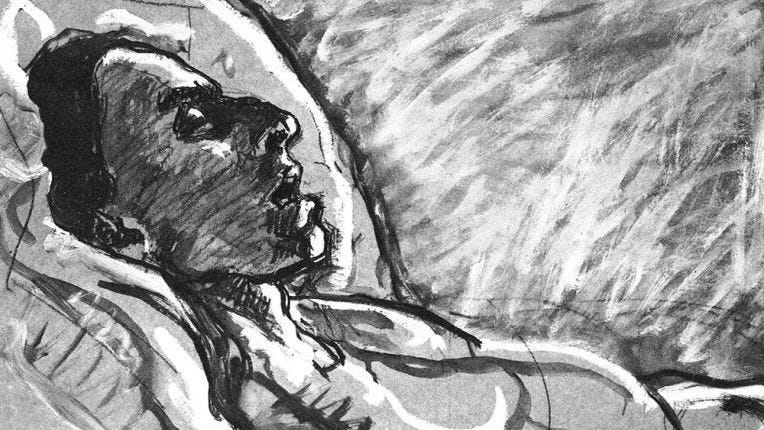
Few works so succinctly capture the terror of confronting the reality of one’s death. But, in the words of Tolstoy, “In place of death there was light” — a metaphor for the transcendence that occurs when you come to peace with your mortality…
3) The Shadow Over Innsmouth
H.P. Lovecraft was a prolific writer who transformed the genre of horror by making it about an unspeakable, haunting terror somewhere out there. Just like in Stephen King’s It or the tv show Stranger Things, the horror springs from something that is mysterious, foreign, and beyond human comprehension.
Knowledge of these hidden realities often leads Lovecraft’s characters to madness, as they succumb to an overwhelming sense of cosmic dread. Nowhere is this better on display than in his novella The Shadow Over Innsmouth, one of the main installments in his famous Cthulhu Mythos.
The story follows a man sent to investigate strange reports about the inhabitants of Innsmouth, and the saga of encounters that follows keeps you on the edge of your seat throughout. From the investigation to the discovery, the terrifying pursuit, and the tale’s tragic end, there is no shortage of exhilarating material.
But the most Lovecraftian aspect of all is the story’s conclusion, where the narrator comes to an unexpected and shocking revelation (sorry, we can’t give too much away!). It is textbook Lovecraft in that the line between worlds and cosmic realities is blurred, and in the end, you’re not sure which side is worse to be on…
4) The Old Man and the Sea
A cursory overview of this famous novella’s plot leaves much to be desired: a man goes out to sea and catches a giant fish, but then sees it eaten by sharks on the way home.
The deeper themes of the story, however, reveal a profound reflection on the nature of man’s dignity and the value of perseverance. “Man is not made for defeat,” Hemingway writes. “A man can be destroyed but not defeated.”
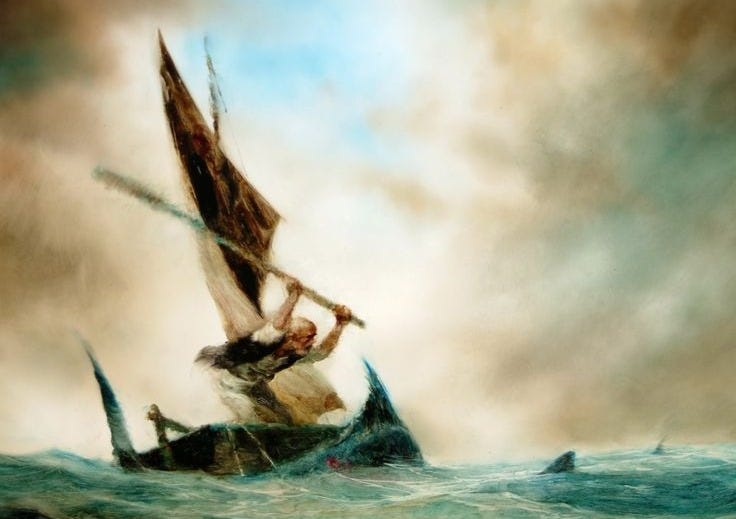
The true meaning of the novella is summed up in these lines, as ideals of courage and resilience define the (seemingly) futile conflict between the old man, the marlin, and the sharks. On top of this, Christian imagery permeates the novel in ways that are hardly perceptible. Though Hemingway refrains from making the story a religious allegory, attentive readers can’t help but notice the small details that render this novella something far greater than the sums of its parts.
Hemingway's final masterpiece offers an important insight into what success really means, and how we can strive to live out our own lives in the relentless pursuit of something meaningful. Your life's purpose, Hemingway instructs, will not be found in shallow waters, but in the task that you were made for.
5) Heart of Darkness
Before Francis Ford Coppola and Apocalypse Now, there was Joseph Conrad and Heart of Darkness, the inspiration for Coppola’s smashing box office success.
Conrad’s original novella takes place not in Vietnam but in Africa, where riverboat captain Charles Marlow is sent into the continent’s interior to confront Mr. Kurtz. The latter, an ivory agent who has gone beyond the bounds of civilization, has gone down in culture as a symbol of what happens when conscience collapses under the weight of violence and unchecked power.
But while Apocalypse Now makes that moral disintegration visible, Heart of Darkness instead implies it subtly, leaving the full scope of horror to the mind of the reader. Yet in both film and novella, the question remains: how thin is the line between man and monster, and what happens when the jungle overtakes the soul?
Don’t forget to join our book club!
We are currently reading The Great Divorce by C.S. Lewis. The first discussion is TODAY, July 15, at noon Eastern Time.
You can listen in to live the broadcast for free via Substack, or join the discussion directly via Zoom (reserved for our paid members). Join us!
Great piece, I would also add Notes from Underground here!
Abolition of Man!