

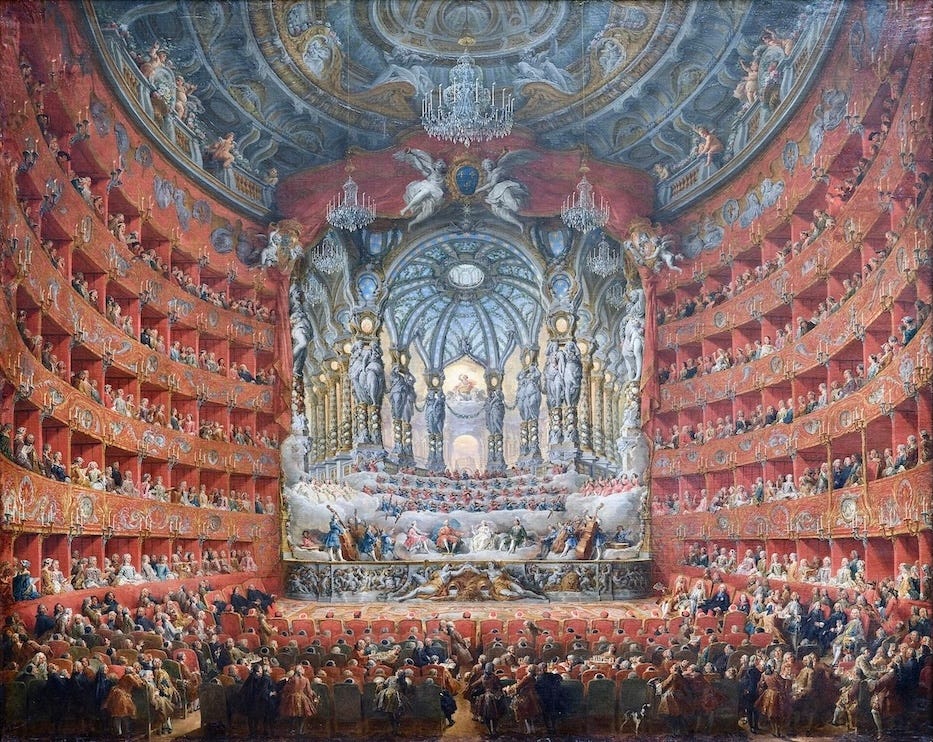
Last week, I wrote about how classical music changed me. In that article, I discussed my time living in London, and how one genre of classical music helped bridge the gap between the head and the heart more than any other: opera.
To most people, opera feels like a living relic. It conjures up comical images of fat women in viking helmets, not a profound connection to eternal beauty. And yet, it is with good reason that the composer Richard Wagner deemed opera a Gesamtkunstwerk, a “total work of art”.
Much like film, opera incorporates music, acting, set design, poetry and more to bring a world to life for the spectator. The only difference is, it does so in front of a live audience, and tells the story through music as opposed to mere dialogue. Indeed, most people are surprised at how much they enjoy opera when they attend their first one — the only problem is, they don’t often know where to start.
That’s why today, I want to share 5 of the most accessible operas, and excerpts of their famous arias and interludes. To be clear, this isn’t a list of the best operas, nor of my favorites.
It’s simply a list of five operas, each by a different composer, that provide a great first step into the world of opera, no matter where you start…
Reminder: this is a teaser of our paid subscriber essays.
If you’d like to support our work, please consider a subscription. You’ll get:
New, full-length articles 2x per week
The entire archive of content (200+ articles, essays, and podcasts)
1) Carmen
Georges Bizet’s Carmen has just about everything you want in a first opera: great costumes, world-famous arias, swaggering bravado, and an intoxicating femme fatale.
You probably already know some of its most famous excerpts: its prelude is played on the Formula 1 victors’ podium, while the “Habanera” and “Toreador” arias are among the best known pieces of operatic music in popular culture.
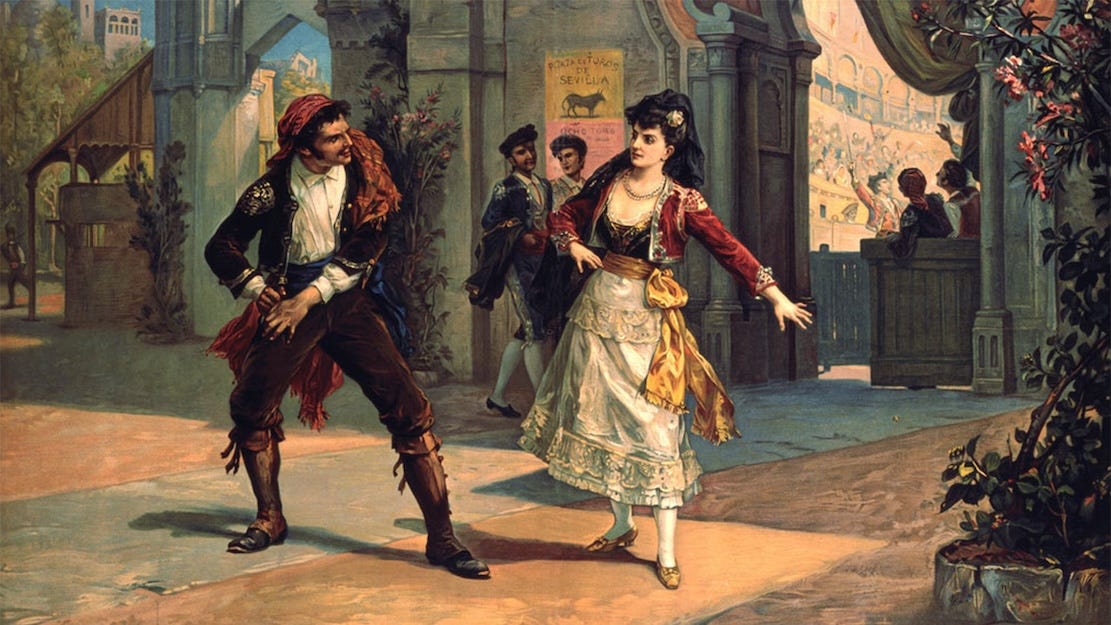
But beyond the hits, Carmen is also a poignant reflection on seduction, sin, and how lust can degrade a man to the role of supporting actor in the metaphorical movie of his own life. Attentive listeners will pick up on Bizet’s careful use of the children’s choir to contrast against the seedier scenes, especially in the first act. The children’s innocence serves as both refresher from and reminder of the brewing tragedy amongst the adults: a tragedy that will end in jealously, death, and, fortunately for us, an unforgettable score.
2) The Marriage of Figaro
This is the first opera I ever attended, and it’s the near opposite of Carmen. Although it’s a comedic opera about a young couple in love, Mozart’s score gives it a depth reminiscent of Shakespeare’s own romantic comedies, such as Much Ado About Nothing.
The Marriage of Figaro is considered by many (including myself) to be among Mozart’s best works, and with good reason. Mozart keeps you hooked for the entirety of the opera’s nearly three-hour runtime, kicking things off with his famous overture and brilliantly underscoring all the humor and wit of the story performed on-stage.
From Figaro ranting about the man trying to steal his bride, to the pubescent Cherubino discovering his attraction to women, to the heartfelt plea of a neglected countess, Mozart’s music touches on all aspects of the human experience. In addition to being a great opera, The Marriage of Figaro is a perfect encapsulation of all Mozart’s heart, humor, brilliance and depth. For this reason, if for no other, it deserves a listen.
3) La Traviata
Giuseppe Verdi’s La Traviata is one of my personal favorites. Although it’s often written off as being a typical “Italian opera” (read: love, loss, and a broken heroine), I believe the opera is far deeper than most people realize.
Hidden references to Dante and St. Paul, as well as the recurring phrase croce e delizia (“cross and delight”, i.e. the two meanings of “passion”) make La Traviata more than meets the eye. Its prelude foreshadows the tragedy of the plot in reverse, beginning with somber notes and working up to the present frivolity of the protagonist Violetta.
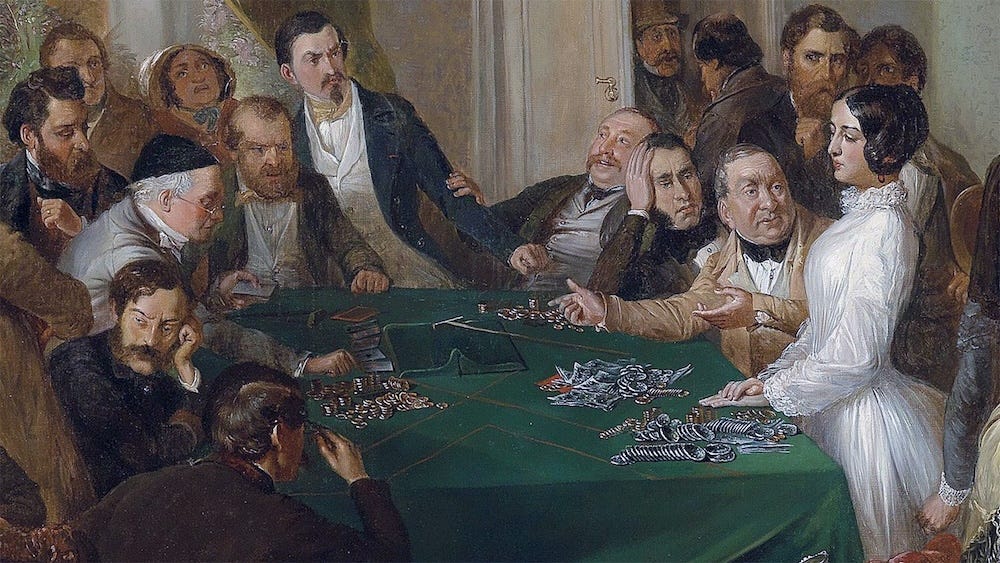
La Traviata also contains one of the most famous arias in all of opera, “Libiamo ne’ lieti calici”, which you are likely to have heard before. Overall, Verdi’s masterpiece (or more accurately, one of his many) makes for a phenomenal intro to opera, and is a must-see for anyone wanting to get into the genre.
4) Cavalleria Rusticana
This is the least popular of the operas on this list, which isn’t to say it’s not popular in operatic circles. Its shorter runtime often leads to it getting double-billed with the opera Pagliacci, and for the beginner, it’s a perfect way to get into opera without making as much of a time commitment.
Cavalleria Rusticana is set in Sicily, a fact which becomes apparent from its opening notes. The opera’s first aira, which comes right on the heels of the overture, is sung not in Italian but Sicilian, and further thrusts you into the heat — literal and metaphorical — of small-town life on the Mediterranean island. Both the overture and the haunting opening aria can be listened to here.
The plot of the opera centers on love, betrayal, and a fateful duel, but not before taking detours into matters of death and resurrection, such as in the Regina Coeli Easter Hymn. The result is nothing less than one of the most moving pieces in the operatic canon. Be sure to crank up your speakers for this one!
5) La Bohème
No list of accessible operas would be complete without Puccini. The “John Williams of opera”, composer Giacomo Puccini brought his operas to life like modern day movies, penning some of the most accessible works in the operatic catalog.
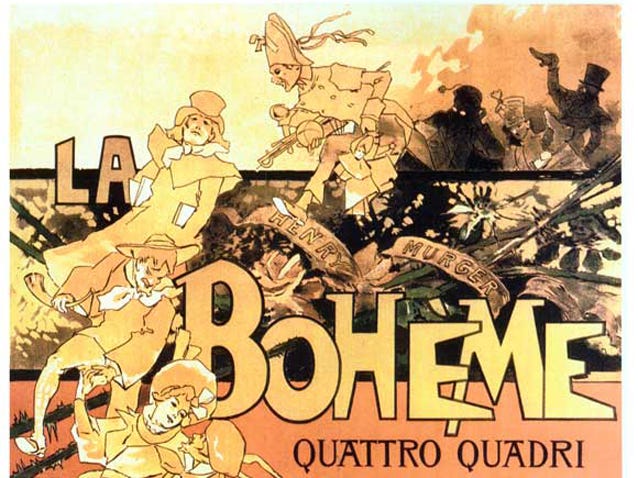
Of those works, La Bohème is arguably the most approachable, especially if you’re familiar with the movie Rent: the latter’s plot was essentially lifted and adapted from Puccini’s opera. Featuring a young man and woman in love in Paris, La Bohème tackles everything from romance, bohemian escapades, and an endearing portrayal of male camaraderie. Part of the plot was in fact inspired by Puccini’s experience mapping out his landlord’s daily route with his friends so that they could avoid meeting him in the city!
La Bohème is best taken in as a whole, otherwise you lose a lot of the context which lends the plot its emotional weight. That said, you can never go wrong with O soave fanciulla.
Were you hoping to see Wagner on the list? If so, don’t worry — he requires an article of his own, and we’ll be sure to get to that soon…
Opera is awesome
I’m not sure why, but my husband and I got season opera tickets in Houston when we were first married in our twenties. The city was enjoying an arts renaissance at the time. We went to them all and enjoyed all of them except Julius Caesar, which was a slog. The Magic Flute was a fun one for people who knew nothing about opera. It’s interesting looking back, as we just enjoyed them for the story, the spectacle (Turandot was amazingly lovely), and the music and singing. I don’t think I did any research at all before showing up. It’s a very fond memory.