



C.S. Lewis is widely regarded as one of the greatest thinkers of the 20th century. Having taught at both Cambridge and Oxford, he also encouraged Tolkien in his writing of The Lord of the Rings and authored about 30 books of his own. He greatly influenced theology and literature in postwar Britain, and continues to shape our own discourse today.
But with such a large catalog to choose from, it can be hard to know where to start with Lewis. Part of this depends on your own interests: do you want fantasy, theology, or science fiction? Lewis has something for everyone, but you need to know where to look.
That’s why today, we provide a list of the best places to start with C.S. Lewis. No matter what your interests are, you can’t go wrong with any of the works on this list…
We are 100% reader-supported. This newsletter is free, but if you’re able to support, please consider a paid membership — it helps us enormously. You’ll get:
Full-length articles 2x per week
The entire archive of content (200+ articles, essays, and podcasts)
We are currently reading Oscar Wilde’s The Picture of Dorian Gray in the book club. The next discussion is on Wednesday, May 20, at noon ET — join us!
1) The Lion, the Witch, and the Wardrobe
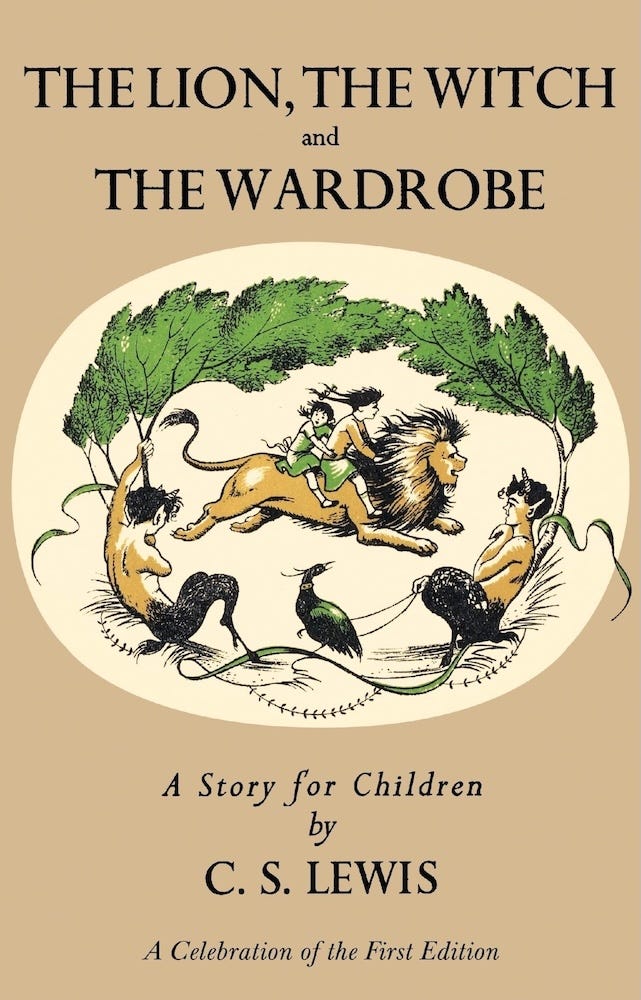
Lewis believed that stories shape children’s moral imagination long before they can understand abstract moral principles. This is one of the main reasons why he wrote The Chronicles of Narnia.
Of the seven installments in the Narnia series, The Lion, the Witch, and the Wardrobe is both the best known and the most accessible. It’s perfect for lovers of fantasy, and resonates especially with younger readers, since Lewis wrote it as a way to introduce children to a world where moral action matters.
If you want to explore theological truths through story and symbol, it’s hard to go wrong with The Chronicles of Narnia. If you’ve already read this specific volume, however, we suggest The Voyage of the Dawn Treader as another accessible and powerful installment in the series.
2) Mere Christianity
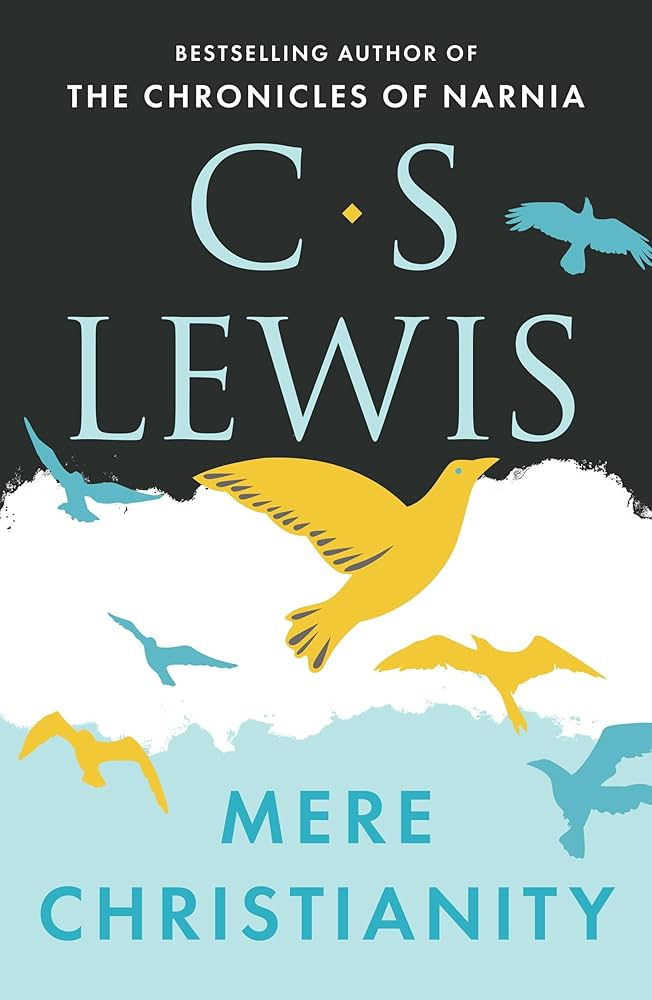
If you want to learn more about what Christians actually believe, look no further than this book. It remains one of Lewis’s bestsellers even to this day, and with good reason.
Mere Christianity was adapted from a series of BBC radio broadcasts Lewis did during WWII, and it covers everything from arguments for the existence of God to practical and everyday Christian ethics. This book is also where Lewis lays out his famous “Lord, Liar, or Lunatic” trilemma, and shows how if you take Jesus’s own words at face value, you can only believe him to be one of those three things (in other words, “good teacher” isn’t an option).
Whether you’re interested in learning about Christianity from a sociological point of view, or if you already believe and want to grow in the intellectual side of your faith, Mere Christianity should be next up on your list.
3) The Abolition of Man
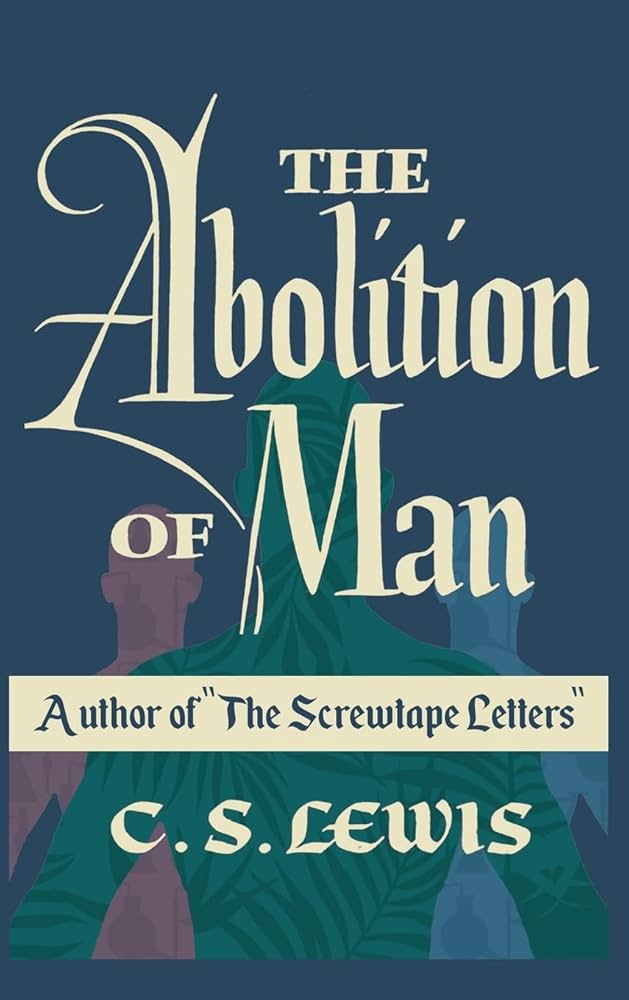
In The Abolition of Man, Lewis argues that modern philosophy’s rejection of objective values produces “men without chests”: creatures governed only by instinct or by the manipulations of others.
It’s a pretty strong claim, but Lewis goes to impressive lengths to defend it. Over the course of this (surprisingly small) book, he shows why reason, when stripped of its grounding in moral truth, becomes a tool of power. If you enjoy philosophy, this is Lewis at his best.
For Lewis, to recover reason means to recover humanity itself. The vision he lays out in The Abolition of Man complements the earlier traditions of Aristotle and Aquinas, yet is sharpened by the modern experience of relativism and nihilism. If you want to dive deep into the philosophical side of Lewis, start here.
4) The Screwtape Letters
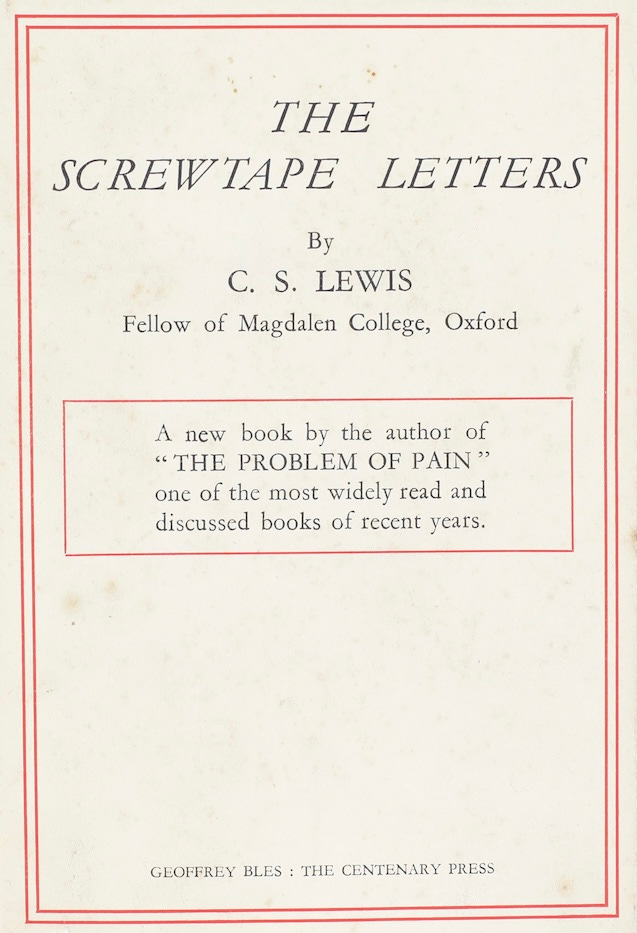
Written, or rather “found” by C.S. Lewis, this book is a collection of epistles from senior demon Screwtape to his nephew Wormwood. In them, Screwtape offers his nephew advice on how to tempt humans away from God (“the Enemy”) and into hell.
The correspondence opens with Screwtape admonishing Wormwood for a rookie mistake: choosing to focus on argument over distraction. “From the way some of you young fiends talk,” he writes, “anyone would suppose it was our job to teach!” He goes on to explain why distraction is key to the corruption of souls, and gives a specific example of how he once used it to lead a man to hell.
Each chapter is filled with similar examples of how demons try to tempt humans and ruin their lives. But in outlining their methods, Screwtape unintentionally reveals the key to resisting the demons’ tricks. If you want a combination of engaging fiction, sharp theology, and practical insight on how to resist temptation, there are few books better than The Screwtape Letters.
5) The Great Divorce
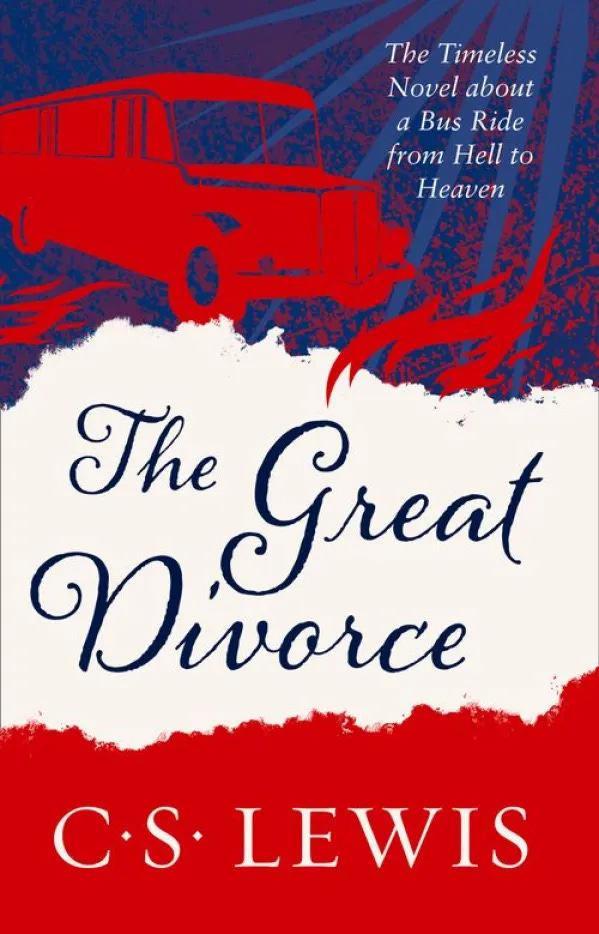
Unlike the diabolical fun of The Screwtape Letters or the fairy-tale charm of Narnia, The Great Divorce is one of the stranger entries in Lewis’s catalog. It is simultaneously wholesome and haunting, in many unexpected ways.
In The Great Divorce, Lewis imagines a fantastical bus ride from Hell to the outskirts of Heaven, where souls who reside in the former are allowed to step into the latter. Yet one by one, nearly all of them choose to return. One clings to his intellect, another to his bitterness. Each insists on keeping some part of the self, even if it costs them everything.
The Great Divorce, therefore, is Lewis’s take on the idea that “those who are in Hell choose to be there.” It’s a short and eye-opening book that is a must-read if you want to explore the theology of the afterlife.
6) A Grief Observed
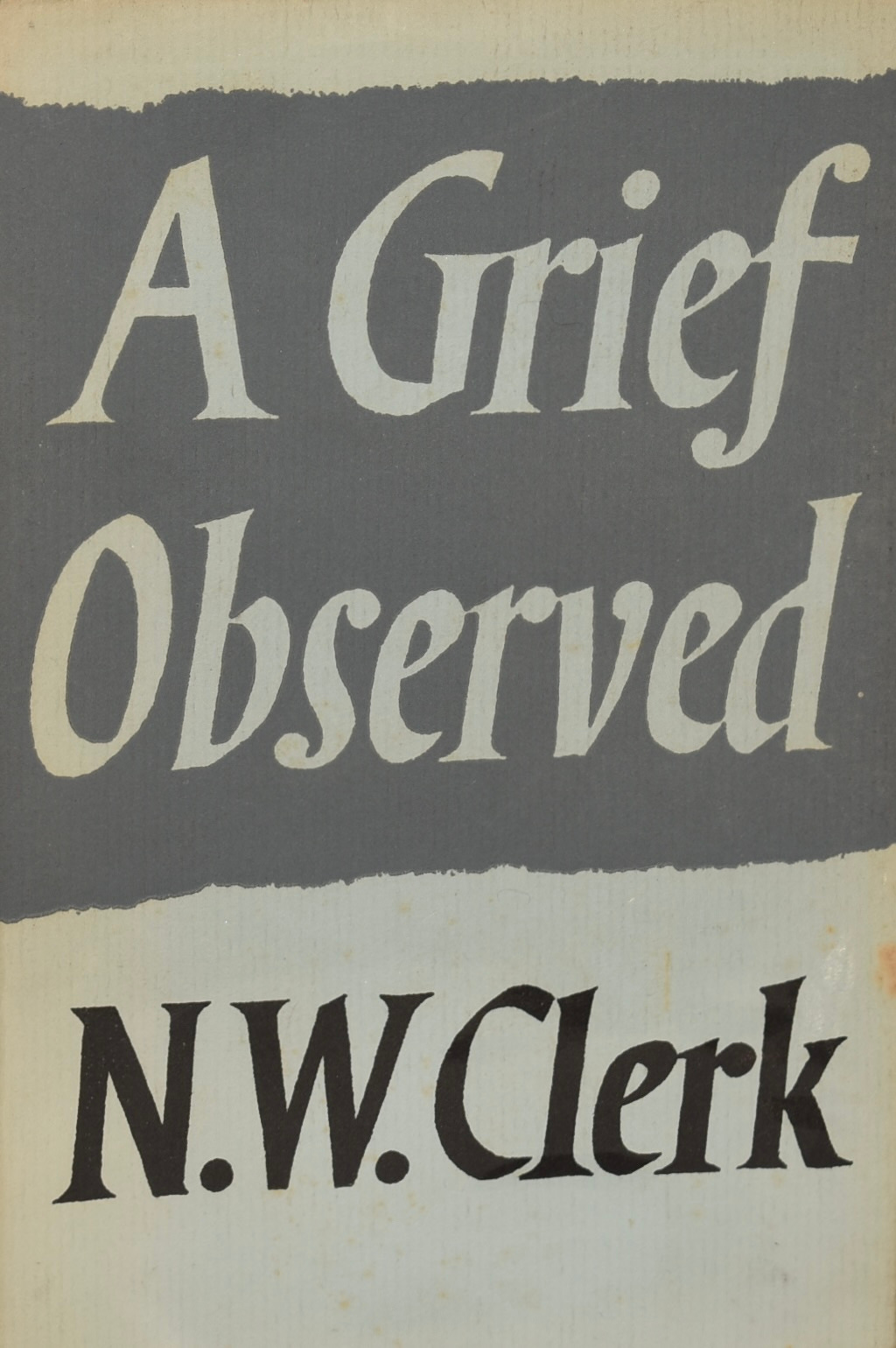
The question of why God allows suffering has been posed by both believers and atheists alike for centuries. That’s why in 1940, C.S. Lewis set out to finally answer it with his book The Problem of Pain. In it, he offered a robust explanation of why a loving God exists even in a world filled with suffering.
But 20 years later, Lewis’s theory was put to the ultimate test. When his wife died, Lewis was forced to wrestle with the ideas he had previously outlined so deftly — but he found the practice much harder than the theory.
Originally published under a pseudonym (N.W. Clerk), A Grief Observed is the work that resulted from Lewis’s anguish, a book compiled from the notebooks he kept following the death of his wife. In writing this work, Lewis discovered something that changed his entire understanding of God and the problem of pain…
Thank you for reading!
And don’t forget to join our book club if you haven’t already.
We have already read Lewis’s Screwtape Letters together, and we’ll certainly be reading more of his works in the near future.
Right now, we’re reading Oscar Wilde’s The Picture of Dorian Gray — please join us!

All good books, so this next is a difficult judgment call: I just finished rereading Surprised by Joy for the umpteenth time and as good as Screwtape or the Narnia books are, they would just be edged out by his own account of his life. His autobiography is the man himself as he saw himself. Also, if a whole book is too big a bite, the essays in The Weight of Glory are all excellent.
That Hideous Strength is a very interesting read and completely different than the other books in his space trilogy.